
Your first payslip decoded: how PAYE, NSSF, SHIF and the Housing Levy shrink your salary, and what to do with the rest
Your first payslip arrives and the number at the bottom is noticeably smaller than the salary in your offer letter. Nobody stole from you. Four statutory deductions came off first, and understanding them is the first step to managing money like an adult. Here is what each one is, how much it takes, and what to do with what is left.
The four deductions on every Kenyan payslip
- NSSF (pension): since February 2026, the fourth year of the NSSF Act rates, you contribute 6 per cent of your pensionable pay up to an upper limit of Sh108,000. Tier I covers the first Sh9,000 (Sh540 from you); Tier II covers pay between Sh9,000 and Sh108,000. The most an employee pays is Sh6,480 a month, and your employer matches it.
- SHIF (health cover under the Social Health Authority): 2.75 per cent of gross pay, with a minimum of Sh300 a month and no upper limit. Your employer deducts and remits it.
- Affordable Housing Levy: 1.5 per cent of gross pay from you, matched by another 1.5 per cent from your employer.
- PAYE (income tax): charged on taxable pay in bands: 10 per cent on the first Sh24,000 a month, 25 per cent on the next Sh8,333, 30 per cent on the next Sh467,667, 32.5 per cent on the next Sh300,000 and 35 per cent above Sh800,000. You then get a personal relief of Sh2,400 a month.
KRA lists SHIF contributions and the Housing Levy among the amounts deducted before taxable pay is worked out, and your pension contribution is also deducted, so PAYE is charged on what remains.
A worked example: Sh50,000 gross
- NSSF: Sh540 + 6 per cent of Sh41,000 = Sh3,000
- SHIF: 2.75 per cent = Sh1,375
- Housing Levy: 1.5 per cent = Sh750
- Taxable pay: Sh50,000 - Sh3,000 - Sh1,375 - Sh750 = Sh44,875
- PAYE before relief: Sh2,400 + Sh2,083 + Sh3,763 = Sh8,246; after Sh2,400 relief, about Sh5,846
- Take-home: about Sh39,029
Your actual payslip may differ slightly because of rounding, insurance relief, pension schemes, sacco deductions or loan repayments. If something looks wrong, ask HR for a breakdown; you are entitled to understand every line. Check that the money really reaches the agencies: confirm your NSSF statement through NSSF's official channels and your SHA registration on sha.go.ke, and download your P9 form at year-end for your KRA return, due by 30 June.
Budget the net, not the gross
Plan with the take-home figure. A simple order of priorities works better than a complicated spreadsheet:
- Fixed needs first: rent, transport, food, phone and any HELB repayment. HELB penalties grow quickly, so set this up early.
- Pay yourself next: move a fixed amount to savings the day salary lands, before you spend.
- Then wants: clothes, outings, gadgets.
- Write down Black Tax honestly. Supporting family is real; give it a monthly figure instead of answering every request from your savings.
Build an emergency fund before anything else
Aim for three to six months of essential expenses, built slowly. This is what keeps a job loss, a hospital bill or a broken phone from becoming a debt. Keep it somewhere you can reach within days but are not tempted to touch.
Saccos and money market funds: the basics
- Saccos: you save monthly and can borrow against your deposits, often at lower rates than digital lenders. Deposit-taking saccos are licensed by the Sacco Societies Regulatory Authority; check a sacco's status at sasra.go.ke before joining, and read the by-laws on withdrawals.
- Money market funds: pooled funds that invest in short-term instruments and are popular for emergency funds. They are run by fund managers approved by the Capital Markets Authority; confirm a fund on cma.or.ke. Returns are not guaranteed, rates change, and fees reduce what you earn.
This is general education, not advice to buy any particular product. Compare fees, access rules and regulation before committing.
Avoid the digital loan trap
Instant loan apps feel harmless until the third loan is paying off the second. Rules of thumb:
- Borrow only from lenders on the Central Bank of Kenya's directory of licensed digital credit providers (centralbank.go.ke). Unlicensed apps are the ones most associated with harassing borrowers' contacts.
- Compare the total cost, not the "fee". A 10 per cent charge on a 30-day loan is far more expensive than it sounds over a year.
- Never borrow to repay another loan.
- Under CBK's credit reference bureau rules, a lender must give you 30 days' written notice before sending negative information about you to a CRB, and debts below Sh1,000 should not be negatively listed. A bad listing can follow you when you need a bank loan, a mortgage or, for some jobs, a clearance certificate.
- If you do fall behind, talk to the lender early and ask for a repayment plan in writing.
Quick checklist
- Read every payslip line: NSSF, SHIF, Housing Levy, PAYE
- Confirm contributions reach NSSF and SHA; keep your P9 for the June tax return
- Budget the take-home, with savings deducted first
- Emergency fund target: three to six months of essentials
- Check SASRA and CMA before joining a sacco or fund
- Only CBK-licensed digital lenders, and never borrow to repay borrowing
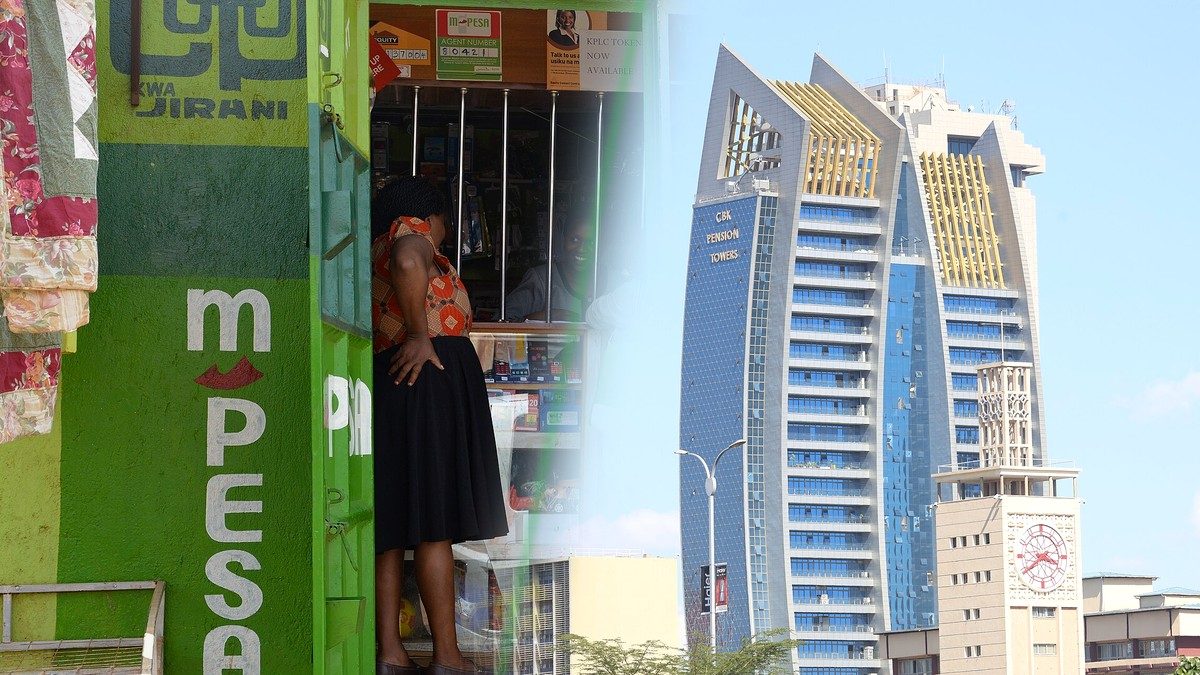
Photos: M-PESA and Equity agent, Nairobi by Fiona Graham (CC BY-SA 2.0); CBK Pension Towers, Nairobi by Francis Akuka for the Wikimedia Foundation (CC0), via Wikimedia Commons. Thumbnail design: HAMASTA MEDIA.

Tell your story on screen.
Commercials, documentaries, interviews and social video, from script to final cut.





More in Lifestyle
See all
Foreign Woman Seen Wandering Lodwar for a Week Draws Crowds and Questions

They paid for the coffin, travelled for the burial, then found the boy playing: Meru mourners discover a 'dead' child alive after sending Sh20,000

A fifth archdiocese for Kenya: Pope Leo XIV raises Eldoret's rank and hands Bishop Obanyi 1.76 million Catholics to lead

The mysterious love story between men and that one ancient boxer

Village girls becoming baddies Overnight:Chapo Dengu Sponsored Baddies

Global Community Remarks
0