
High Court orders IG Kanja to restore Governor Natembeya's security detail
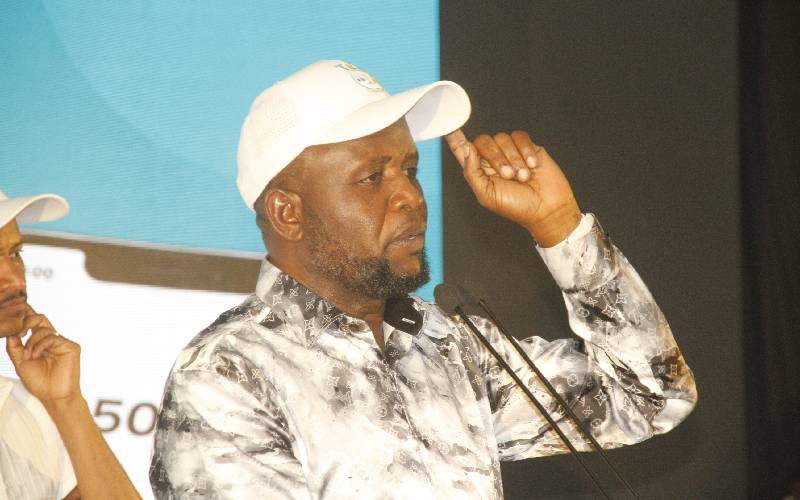
The High Court has directed Inspector General of Police Douglas Kanja to immediately restore the armed security detail of Trans Nzoia Governor George Natembeya, ruling that its withdrawal was unconstitutional, according to The Standard.
In a judgment delivered on Monday, Justice Roselyn Aburili held that the Inspector General acted unlawfully by pulling the governor's guards without giving him reasons or a chance to contest the decision.
The judge found that the move breached Natembeya's rights to fair administrative action, equality and freedom from discrimination, and security of the person, as protected under Articles 47, 27 and 29 of the Constitution.
No evidence linking governor to violence
The State had argued that the withdrawal was a lawful use of discretion following incidents of violence during by-election campaigns in Western Kenya. Justice Aburili rejected that argument, saying there was no evidence tying the governor to the violence or to any breach of the peace.
She noted that claims made in the State's submissions did not amount to evidence, and that nothing showed Natembeya had broken any law or violated the conditions of the policy the State relied on.
The court also found no proof that the governor had been informed of any investigations against him or told why his security was being withdrawn before the decision was made.
According to the judge, even if the Inspector General had the power to withdraw the security, he was obliged to explain his reasons and allow the governor to challenge the decision before acting on it. She described the decision as arbitrary, procedurally unfair and an abuse of power, contrary to the policy governing protective security for VIPs and State officers.
Legitimate expectation
Justice Aburili further ruled that Natembeya, who has served as an elected governor since 2022 and enjoyed armed police protection throughout his term, had a legitimate expectation to continue receiving the same security given to other governors.
Such protection, she said, could not be removed arbitrarily or without justification, and the governor was entitled to be told the reasons and allowed to respond.
Court orders
The court issued the following orders:
- A declaration that the Inspector General's decision to withdraw the governor's security was illegal and unconstitutional.
- An order of mandamus compelling the Inspector General to immediately restore the governor's police security detail.
- An order barring the Inspector General from arbitrarily withdrawing or recalling the governor's security without lawful justification and proper procedure.
In a pointed warning, the judge declared that any attempt by the Inspector General, or anyone acting under his command, to use police powers for political or punitive purposes was unlawful and unconstitutional.
She also criticised the use of public funds to cover legal costs arising from the conduct of State officers, saying she would have ordered the Inspector General to pay the costs personally had he been sued in his individual capacity.
"The people of Kenya did not establish these offices for the occupants to punish or rule them, but to serve them," Justice Aburili said.
Background to the case
Natembeya went to court after his security was withdrawn, arguing that the decision put him in danger and violated his constitutional rights.
In his petition, he linked the withdrawal to his political activities during the Kabuchai Constituency by-election campaigns. He claimed that his criticism of the government and his support for a candidate opposed to the ruling party had set him at odds with the State.
The respondents, including the Inspector General and the Attorney General, opposed the petition, arguing that it was legally defective and did not show precisely how the governor's rights had been violated.
This story was prepared by the Hamasta Newsdesk with AI assistance, based on reporting by The Standard. Read the original report. Photo: The Standard.
Every moment, captured beautifully.
Events, corporate portraits, products and editorial shoots by our newsroom photographers.





More in Crime & Justice
See all
Man Charged in Busia Over Alleged Ksh1.1M Fake KDF Recruitment Scheme

Luo elders' trustees set to re-enter disputed Ofafa Hall after Kisumu court ruling
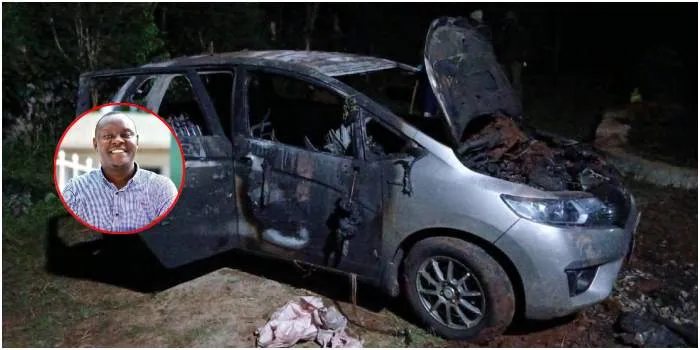
Natembeya Aide in ICU After Machete Attack at Kitale Home, Car Torched
AP officer charged over Ksh1.5m Kenya Prisons jobs scam, denies charges
Man jailed for life over 2023 Dublin school stabbing that sparked riots
Global Community Remarks
0