
Ethiopia-Eritrea border clashes stoke fears of a wider war in the Horn of Africa
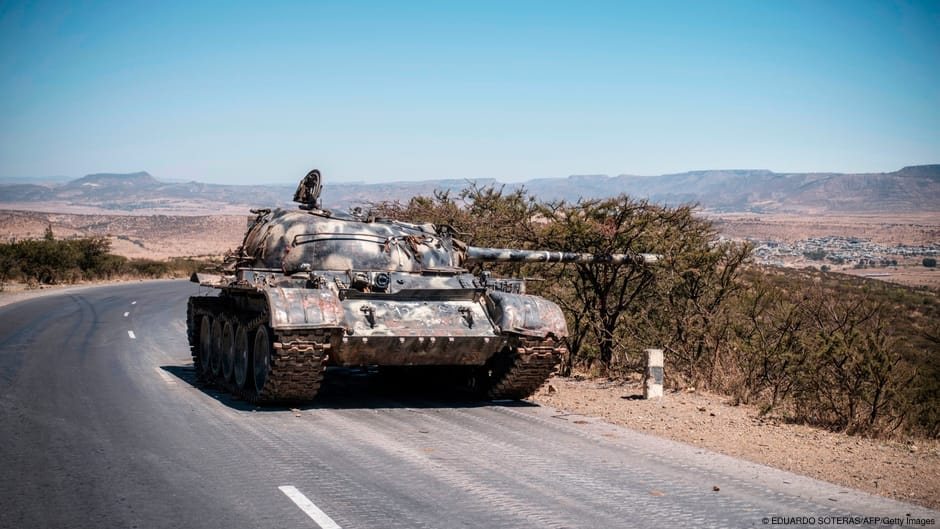
Renewed fighting along the disputed Ethiopia-Eritrea border has raised fears that the Horn of Africa could slide into a new regional war, according to DW News. Ethiopian forces are pushing Tigrayan fighters towards the Eritrean frontier.
The clashes follow several weeks of relative calm. They come as Addis Ababa's relations with both Asmara and Khartoum deteriorate.
Fighting near Badme
According to DW News, fighters allied with the Tigray People's Liberation Front (TPLF) began an offensive on September 23. They were part of a wider rebel coalition seeking to overthrow the Ethiopian government.
The Ethiopian National Defense Forces (ENDF), supported by pro-government militia, have since steadily forced the TPLF out of Tigray. Data from the conflict monitor ACLED shows the army advancing further into the region and driving the Tigrayan Defense Forces towards Eritrea.
Skirmishes have been reported in several places. Ethiopian forces have also fired heavy artillery at homes near the Eritrean border town of Badme.
Badme appears to be a small rural settlement, but it carries great symbolic weight. It was the starting point of the 1998–2000 Eritrean-Ethiopian War. That war ended with the Algiers Agreement, under which a boundary commission awarded the town to Eritrea. Ethiopia has at times disputed that ruling.
A shift in alliances
Eritrean and Ethiopian government troops fought on the same side against Tigrayan forces during the 2020–22 Tigray conflict. Since then, Eritrea has moved closer to the TPLF and away from Prime Minister Abiy Ahmed's government.
The two neighbours cut diplomatic ties in October. Eritrean troops are reported to have crossed into Tigray at one point.
Abdurahman Sayed, director of the London-based Horn of Africa Center for Regional Integration, told DW News that Ethiopia might see reclaiming Badme as a way to ease its internal troubles. He suggested that territorial gains for Tigray could help figures such as Getachew Reda bring Tigrayans over to the federal government's side. Reda is a former TPLF spokesman who now advises Abiy.
"The coming of the forces to the Eritrean-Ethiopian border clearly indicates that the conflict can be triggered any time," Sayed said.
Securing the north, and the sea
Magnus Taylor, a regional analyst with the International Crisis Group, offered a different reading. He told DW News that Addis Ababa's main aim may be to secure its northern border and cut supply lines between Eritrea and Tigrayan forces.
Taylor warned, however, that consolidating control of Tigray could eventually bring Ethiopia into direct conflict with Eritrea. If that happened, he said, Ethiopia would probably try to achieve all of its objectives there at once.
Ethiopia has been landlocked since Eritrea seceded in 1993, and it is the world's most populous landlocked country. Abiy has repeatedly described the lack of sea access as an existential threat. He says he prefers peaceful means, but analysts say this could also mean seizing Eritrea's port of Assab by force.
Tensions with Sudan
At the same time, relations between Ethiopia and Sudan have hit new lows. Sudan and Egypt, which both lie downstream on the Nile, have long objected to Ethiopia's Grand Ethiopian Renaissance Dam. The dam sits on the Blue Nile close to the Sudanese border and gives Addis Ababa considerable influence over water flows downstream. Ethiopia denies that it would use the dam to pressure its neighbours.
Sudan has been at war since 2023. The fighting pits the Sudanese Armed Forces under General Abdel Fattah al-Burhan against the Rapid Support Forces led by Mohamed Hamdan Dagalo, known as Hemedti. In mid-November, Ethiopia and Sudan each accused the other of direct involvement in its internal conflict.
Taylor said a direct clash between the two armies remains a risk, though not an immediate one. He expects both sides to keep backing each other's opponents by proxy.
Sayed agreed that direct confrontation is unnecessary for now, since the RSF can serve the interests of its backers. He warned, however, that Ethiopia's army could be drawn in if the RSF begins to fail.
This story was prepared by the Hamasta Newsdesk with AI assistance, based on reporting by DW News. Read the original report. Photo: DW News.




Show the impact of your work.
Impact stories, campaign videos and community engagement for NGOs and programmes.

More in International
See all
Ukraine reportedly hits Krasnodar oil refineries a day after Kerch bridge strike

Family seeks embassy help as Kenyan man goes missing in freezing Belarus forest
First MINURSO contingent leaves Laayoune as UN mission begins phased withdrawal
Ghana defends $60m presidential jet as critics cite cost-of-living strain
Xi says China and Russia should lead push for multipolar world at APEC summit
Global Community Remarks
0