
Houthi push towards Aden could revive Yemen's weakened southern separatists
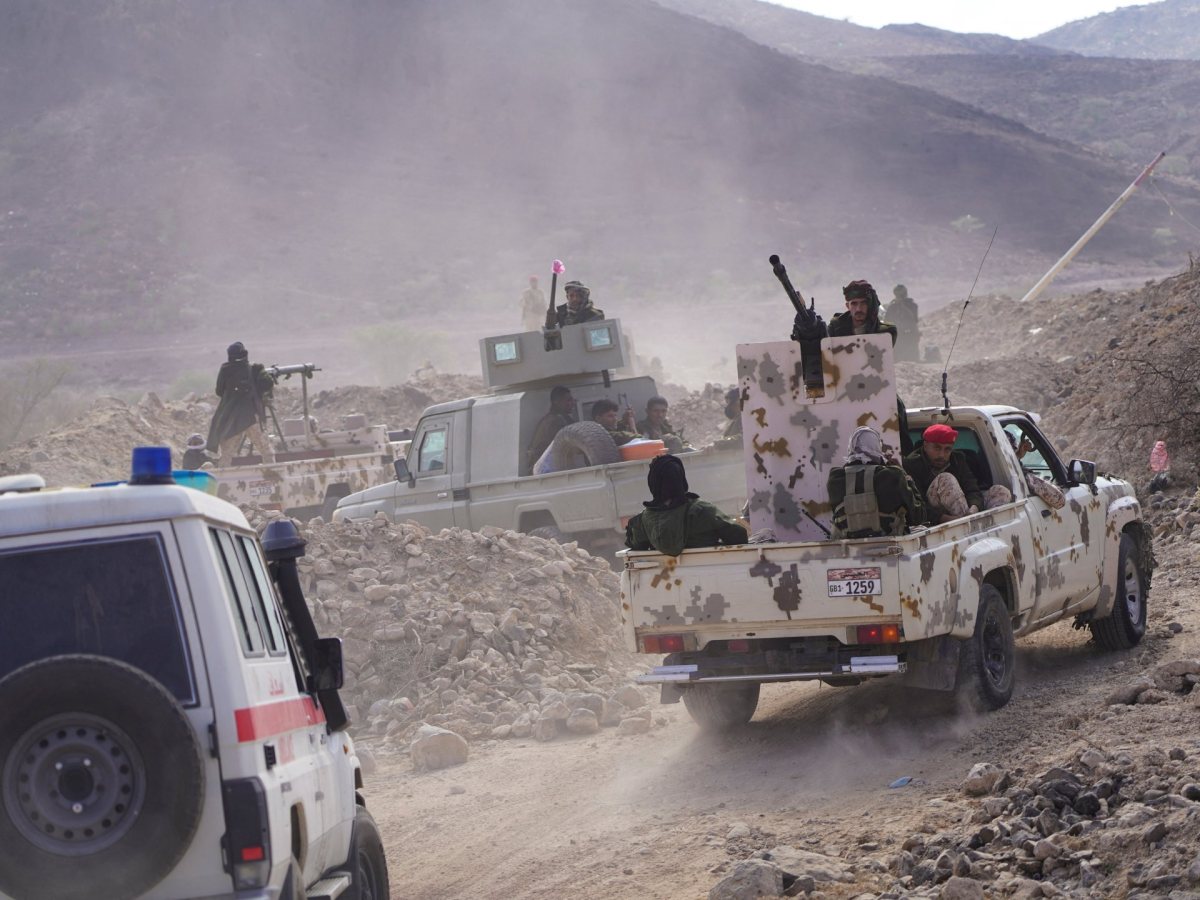
A Houthi advance to within about 60km of Aden, the Yemeni government's de facto capital, has handed a fresh opening to the Southern Transitional Council (STC), the southern secessionist movement that was badly weakened earlier this year, analysts have told Al Jazeera.
Factions linked to the STC have moved to defend the southern port city after forces aligned with Yemen's internationally recognised government abruptly pulled out of key positions on the Red Sea coast this week, according to Al Jazeera.
The shift comes as Saudi Arabia, which leads the coalition backing the government, reshuffles the command of its forces fighting the Houthis, who are also known as Ansar Allah.
A movement that was declared dissolved
The STC, which is believed to enjoy the backing of the United Arab Emirates, wants an independent state in southern Yemen. At the start of the year, an announcement said the group had been disbanded following a Saudi-backed military campaign by government forces against it. Other senior STC figures rejected the dissolution as "null and void", but the movement remained diminished in the months that followed.
That confrontation had its roots in December 2025, when the STC made advances in the south. The Saudi-led coalition responded with air strikes on what it alleged was a UAE-linked weapons shipment bound for the separatists. STC leader Aidarous al-Zubaidi left Yemen, some STC units were placed under Saudi-backed commanders, and the Southern Giants Brigades, one of the most powerful forces affiliated with the movement, is now aligned with Riyadh.
Al-Zubaidi, who is believed to be based in the UAE, has since launched a mobilisation drive across the south to prepare defences for Aden, Lahij and al-Dhalea.
STC blames Riyadh for losses
Amr al-Bidh, a special representative for the STC president, attributed the collapse of government forces on the Red Sea coast and the Houthis' recent gains to the campaign against the separatists.
"In January, the most effective anti-Houthi force in Yemen was taken apart by decisions in Riyadh," al-Bidh told Al Jazeera.
He said STC units would need autonomy on the battlefield to halt the Houthi push, arguing that southerners should be allowed to lead their own defence. He added that the movement was ready to commit all its capacity to protecting Aden, and insisted that any lasting peace must address the right of southern Yemenis to decide their own future rather than be agreed by people who do not represent them.
Analysts divided
Abdy Yeganeh, policy director at Independent Diplomat, said the STC could act as a significant barrier to the Houthi offensive. He told Al Jazeera that although the January fallout with Saudi Arabia had weakened the group, recent events showed it remained a credible local force with strong popular backing, citing weekly marches by tens of thousands of supporters across the south and a capable military.
Military and strategic affairs expert Ali al-Dahab was more sceptical. He said the STC was politically divided, with parts of it now heavily reliant on Saudi funding, and could not repel the Houthis without government and Saudi support. He argued that Houthi capabilities now exceeded those of the government and the STC combined.
Saudi command change
On Monday, Saudi Arabia's King Salman issued a royal decree replacing Lieutenant General Fahd bin Hamad al-Salman with General Fayyad al-Ruwaili, the kingdom's chief of the general staff, as commander of its forces fighting the Houthis.
Al-Dahab said the appointment concentrates decision-making at a critical moment and strengthens the post, since the joint forces will now be led by the Saudi chief of staff himself.
The STC and government forces have fought side by side against the Houthis, who seized the capital Sanaa in September 2014, but their alliance has been marked by rivalry, including clashes over positions and facilities in Aden and elsewhere in the south. The Saudi-led coalition has supported the government militarily since March 2015.
This story was prepared by the Hamasta Newsdesk with AI assistance, based on reporting by Al Jazeera. Read the original report. Photo: Al Jazeera.




Show the impact of your work.
Impact stories, campaign videos and community engagement for NGOs and programmes.

More in International
See all
Ukraine reportedly hits Krasnodar oil refineries a day after Kerch bridge strike

Family seeks embassy help as Kenyan man goes missing in freezing Belarus forest
First MINURSO contingent leaves Laayoune as UN mission begins phased withdrawal
Ghana defends $60m presidential jet as critics cite cost-of-living strain
Xi says China and Russia should lead push for multipolar world at APEC summit
Global Community Remarks
0