
Yemen's parliament passes law branding Houthis a 'terrorist organisation'
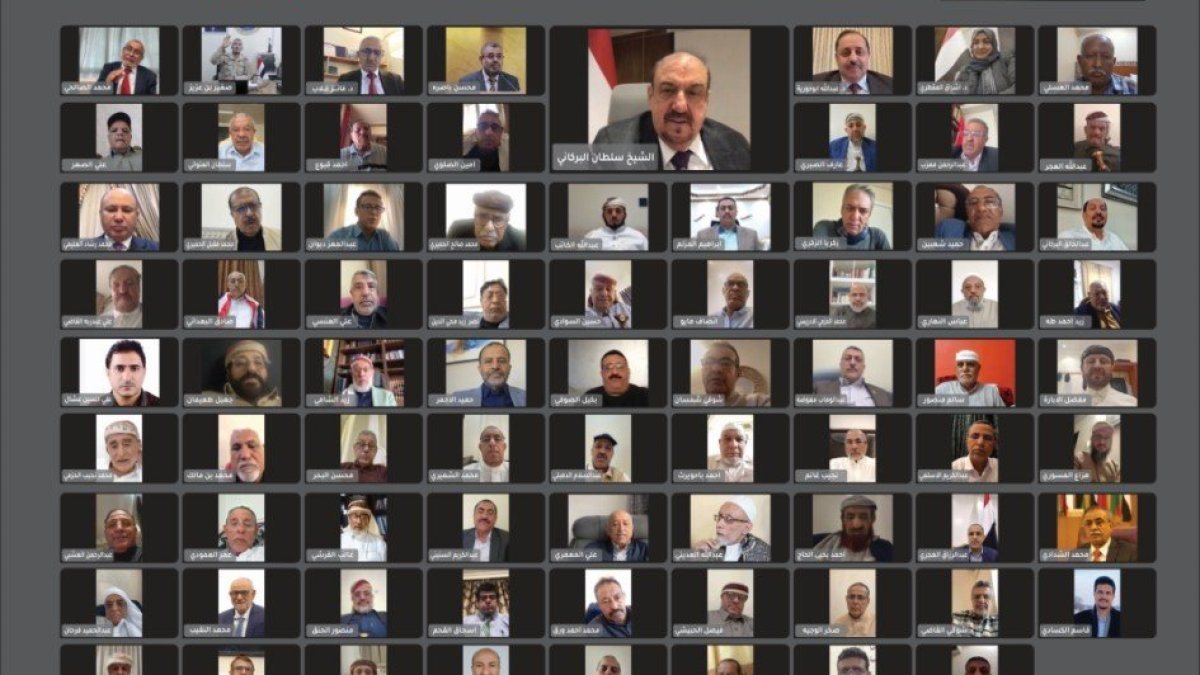
Yemen's parliament has unanimously passed a law designating the Houthi movement a "terrorist organisation" and criminalising its activities and sources of funding, according to Al Jazeera, as clashes between the group and government-aligned forces intensify.
Lawmakers voted on the measure across two sessions held by videolink on Monday. The bill was first tabled in April 2019 at a session in the city of Seiyun, but parliament said it had held it back for seven years to give peace efforts room to succeed.
The legislation was handed to Rashad al-Alimi, who heads the Presidential Leadership Council, on Tuesday for his signature, the state-run Saba news agency reported.
What the law does
The 55-article law classifies the Houthis, also known as Ansar Allah, including all their political, military and civilian wings, as both a terrorist organisation and a "rebellious faction".
It introduces tougher penalties for a range of offences, among them seizing state power, besieging cities, attacking civilians, planting landmines and targeting international shipping. Some offences could attract the death penalty.
The law also lays out procedures for identifying, tracing, freezing and seizing assets tied to the group and entities linked to it.
In justifying the vote, parliament cited Houthi attacks on government-held parts of Yemen and on Saudi Arabia, and accused the group of rejecting every avenue towards peace.
Yemen's cabinet endorsed the draft law on 11 October. The country's National Defence Council had already designated the Houthis a terrorist group through an executive decision in October 2022. The United States lists the group as a terrorist organisation, while Saudi Arabia treats it as one.
Renewed fighting
The vote follows months of renewed hostilities after several years of relative calm along Yemen's front lines. In late June, the Houthis announced an escalation against government forces and Saudi Arabia, saying they wanted to end what they call a "blockade".
In early September, a Houthi ground push on the western coast handed the group control of parts of Taiz and Hodeidah governorates after government troops pulled out of the port city of Mocha and the strategic Bab al-Mandeb area.
Government forces responded in early October with an operation dubbed "Dawn of Yemen", aimed at retaking Houthi-held territory including the capital, Sanaa. After limited early gains on the Red Sea coast, pro-government forces withdrew from those areas on Sunday, allowing the Houthis to advance further.
Heavy fighting is continuing in Marib, al-Jawf and Lahij governorates. The Houthis are also pushing to capture the city of Taiz, which the government and rights groups describe as being under tight siege. The group has stepped up attacks on Saudi targets, while the Saudi-led coalition says it is hitting facilities that finance the Houthi war effort.
The Houthis took Sanaa in September 2014, and neither UN-sponsored talks nor regional mediation have ended the conflict since.
Implications for peace and aid
Ismail al-Suhaili, a political science professor and senior researcher at the Mokha Center for Strategic Studies, said the law signals a harder government stance after failed peace efforts. Turning an executive decision into legislation, he said, gives the designation broader legal weight.
He suggested it could complicate future talks by moving the focus away from power-sharing towards restoring state institutions, disarmament and UN Security Council Resolution 2216.
Al-Suhaili also warned that banks, traders and companies working across government and Houthi-controlled areas could face added pressure, deepening Yemen's financial divide. Donors and aid agencies might hesitate to operate in Houthi-held areas, potentially disrupting essential supplies to civilians. The Houthis, he said, could react with further military escalation or measures targeting government leaders.
Tawfiq al-Hamidi, head of the SAM Organization for Rights and Liberties, told Al Jazeera the law was "a late step" but offered a legal basis for holding abusers to account and compensating victims. While it narrows room for negotiation in favour of military action, he said, it does not completely rule out a future settlement.
This story was prepared by the Hamasta Newsdesk with AI assistance, based on reporting by Al Jazeera. Read the original report. Photo: Al Jazeera.



Know what people say about you.
Media monitoring, audience insights and strategic communication for your brand.


More in International
See all
Ukraine reportedly hits Krasnodar oil refineries a day after Kerch bridge strike

Family seeks embassy help as Kenyan man goes missing in freezing Belarus forest
First MINURSO contingent leaves Laayoune as UN mission begins phased withdrawal

Ghana defends $60m presidential jet as critics cite cost-of-living strain

Xi says China and Russia should lead push for multipolar world at APEC summit
Global Community Remarks
0