
Over 100,000 march across France as public workers demand higher pay
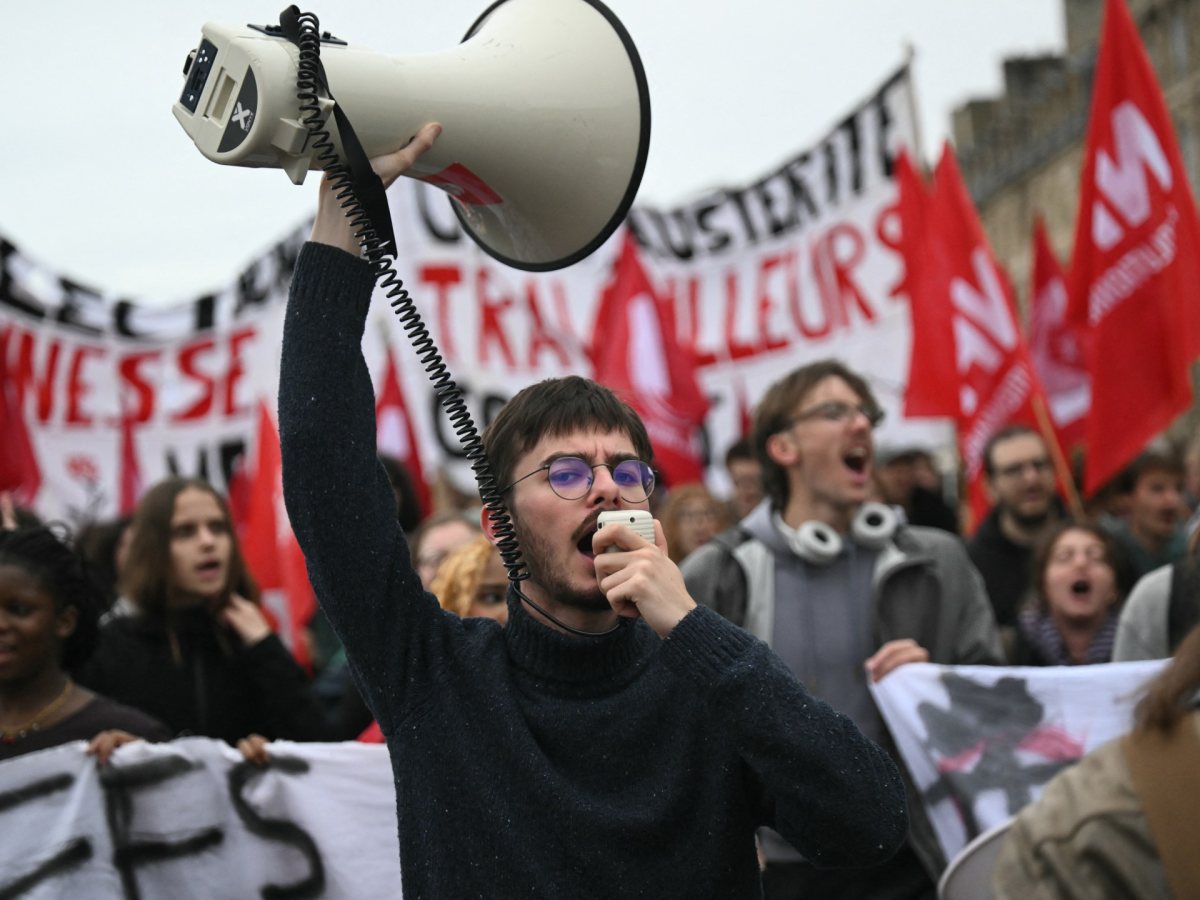
More than 100,000 people took to the streets across France on Tuesday to protest against the rising cost of living, with public sector employees leading calls for higher wages, according to Al Jazeera.
France's Interior Ministry put total turnout at 146,000 people nationwide, including 28,000 in the capital, Paris. The CGT trade union gave a far higher estimate, saying slightly more than 500,000 people had joined the demonstrations.
Several trade unions had called for a day of strikes. Alongside public sector workers, the marches drew school pupils and university students.
Talks with prime minister collapse
The mobilisation of France's 5.8 million public sector employees followed failed talks on Friday with Prime Minister Sebastien Lecornu. Union representatives walked out of the meeting, saying the measures on offer did not reflect how urgent the pay situation had become.
Tuesday's action was the third united day of public sector strikes and protests called since September.
Unions have been pressing for pay rises across the board since the minimum wage for private sector workers was increased last week.
'Can't make ends meet'
Reporting from Paris, Al Jazeera's Natacha Butler said protesters felt they could no longer cover their basic costs and wanted the government to put more money into salaries and raise the minimum wage.
She noted that the government had already offered roughly $30 more a month on the minimum wage, but demonstrators said this fell short given inflation and climbing prices.
According to the unions, public servants have lost 16 percent of their purchasing power since 2017. As a result, a growing number of public employees now earn at or near the minimum wage.
A central demand of public sector workers is that the government unfreeze the pay scale point used to calculate their basic salaries. However, the government's draft budget rules out any general pay rise for public servants, which would make it the fourth year in a row without one.
Little room in the budget
Butler said the government had limited financial flexibility because of France's growing debt, and was attempting to pass a budget that includes spending cuts.
"Yet nobody really is coming up with another solution," Butler said.
She added that both the protesters and the government understood the constraints, leaving the two sides at an impasse.
Weeks of unrest
Despite government efforts to calm tensions, demonstrations have shaken France for more than a month. The wave of protests began in mid-September with student-led action calling for better conditions in education.
The movement has since widened to take in a range of grievances, including high fuel prices, wages and social housing.
Al Jazeera reported that protests over wages, the cost of living and the state of public services have also spread to other parts of Europe.
For many Kenyan readers, the scenes in France will feel familiar: disputes between governments under budget pressure and workers seeking relief from rising prices have become a recurring feature of public life in many countries.
This story was prepared by the Hamasta Newsdesk with AI assistance, based on reporting by Al Jazeera. Read the original report. Photo: Al Jazeera.

Tell your story on screen.
Commercials, documentaries, interviews and social video, from script to final cut.





More in International
See all
Ukraine reportedly hits Krasnodar oil refineries a day after Kerch bridge strike

Family seeks embassy help as Kenyan man goes missing in freezing Belarus forest

First MINURSO contingent leaves Laayoune as UN mission begins phased withdrawal

Ghana defends $60m presidential jet as critics cite cost-of-living strain

Xi says China and Russia should lead push for multipolar world at APEC summit
Global Community Remarks
0