
Iraqi PM visits Lebanon as Baghdad seeks oil export routes that avoid Hormuz
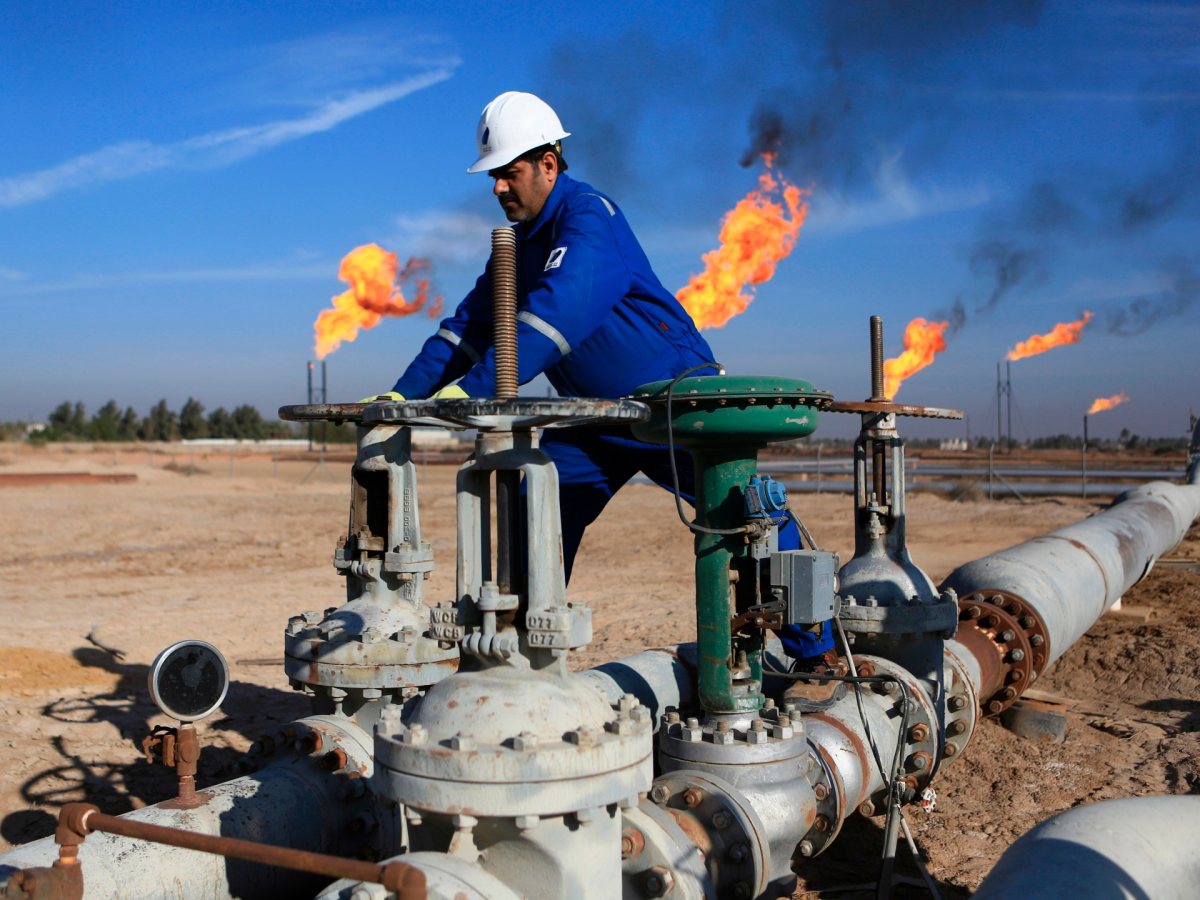
Iraq's Prime Minister Ali al-Zaidi is due in Lebanon on Wednesday for talks expected to include a proposed oil pipeline link to the northern Lebanese city of Tripoli. The plan forms part of a wider Iraqi effort to find export routes that avoid the Strait of Hormuz, according to Al Jazeera.
Al-Zaidi is scheduled to meet Lebanese President Joseph Aoun, Prime Minister Nawaf Salam and Parliament Speaker Nabih Berri in Beirut. His visit is the latest leg of a regional tour aimed at strengthening economic ties following the US-Israel war on Iran.
Trade, security and oil on the agenda
The discussions are expected to cover bilateral trade, customs exemption arrangements, and coordination on security and the fight against drug trafficking.
Also on the table is a proposal to carry Iraqi crude from Kirkuk through Syria's Mediterranean port of Baniyas and on to Tripoli. The aim is to give Iraq an outlet that does not depend on the Strait of Hormuz. The waterway has faced severe disruption since the war on Iran began in late February. In peacetime, about a fifth of the world's energy supplies pass through it.
Walid Marrouch, an economics professor at the Lebanese American University in Beirut, told Al Jazeera that Iraq was searching for other ways to move its oil after the upheaval in the Gulf.
Iraq's exports recovering but still below pre-war levels
Iraq's oil exports fell sharply after the war started and Hormuz was effectively closed. According to Iraq's Ministry of Oil, crude exports reached about 2.7 million barrels per day (bpd) last month. That was up from roughly 200,000 bpd in May but still short of the 3.5 million bpd shipped before the conflict.
The recovery has been helped by pumping through the Iraqi-Turkish pipeline, which resumed this week at an initial 120,000 bpd.
Routing oil through Syria was previously difficult because of international sanctions imposed during the rule of Bashar al-Assad, who was overthrown in late 2024. Weeks before the Beirut trip, al-Zaidi met Syrian President Ahmed al-Sharaa in Damascus. The two countries signed an agreement there to rehabilitate the Kirkuk-Baniyas pipeline, with US energy company Chevron to carry out the work.
The US Department of State said the rehabilitated line would initially be able to carry 2 million bpd of crude.
Tamer Badawi, an associate fellow at the Royal United Services Institute, said the Lebanon visit was likely shaped by US envoy Tom Barrack's efforts to diversify Iraq's export routes through Turkiye, Saudi Arabia, Syria and Lebanon.
Tripoli's dormant infrastructure
Tripoli is under consideration because of a long-disused pipeline from Kirkuk and an old refinery. According to Lebanon's Directorate General of Oil, the refinery processed 21,000 bpd of Iraqi crude in 1940. It closed in 1992, shortly after the end of Lebanon's 15-year civil war.
Industry insiders say the city has three legacy lines that once had a combined peak capacity of 900,000 bpd. The facilities would need repairs.
A report this year by the Basil Fuleihan Institute of Finance (BFIF), an autonomous body under Lebanon's Finance Ministry, estimated that a moderate flow of 300,000 to 500,000 bpd could earn Lebanon between $80m and $275m a year.
Such income would matter to a country that has been in economic and banking crisis since 2019. In that time its currency has lost more than 90 percent of its value, and most of its population now lives in poverty.
Risk of being bypassed
Experts warned that Lebanon could be left out if its officials fail to secure a role in any three-way arrangement with Iraq and Syria. Marrouch noted that Iraq can already reach the sea through Syria.
"Lebanon can benefit, but if Lebanon does not get a seat at the table..." – Walid Marrouch
Iraqi crude would have to cross about 250km of Syrian territory to reach Tripoli. According to the BFIF, Syria's refineries at Baniyas and Homs can handle roughly 350,000 to 500,000 bpd. The country also has ports at Tartous and Latakia.
The same report argues that Tripoli has clear advantages. Its deepwater quays can take larger vessels, which would lower freight costs per barrel. Its coastline is also sheltered from rough southern weather, so loading could continue through winter storms that often halt offshore operations at Baniyas.
This story was prepared by the Hamasta Newsdesk with AI assistance, based on reporting by Al Jazeera. Read the original report. Photo: Al Jazeera.
Every moment, captured beautifully.
Events, corporate portraits, products and editorial shoots by our newsroom photographers.





More in International
See all
Ukraine reportedly hits Krasnodar oil refineries a day after Kerch bridge strike

Family seeks embassy help as Kenyan man goes missing in freezing Belarus forest
First MINURSO contingent leaves Laayoune as UN mission begins phased withdrawal
Ghana defends $60m presidential jet as critics cite cost-of-living strain
Xi says China and Russia should lead push for multipolar world at APEC summit
Global Community Remarks
0