
Nvidia spy scandal casts shadow over Trump-Xi summit in Shenzhen
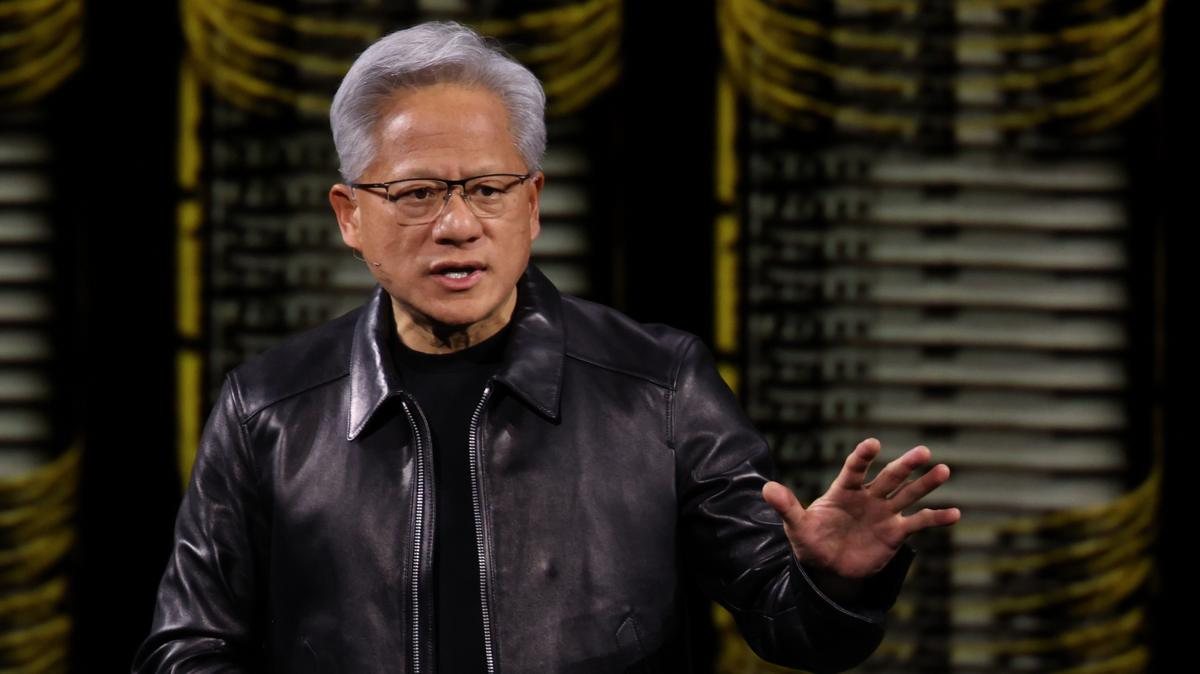
A spy scandal involving former Nvidia chief executive Jensen Huang has emerged as an unexpected complication ahead of this week's meeting between US President Donald Trump and Chinese President Xi Jinping, according to BBC News World.
The allegations centre on Huang's affair with Chinese businesswoman Alice Huang. US intelligence reports claim she had links to China's Ministry of State Security, the country's main civilian intelligence agency. The claim has not been proven, but it has already reopened debate in Washington over whether the Trump administration has gone too far in easing restrictions on advanced chip sales to China.
Fresh pressure on chip exports
Advanced semiconductors have for years been a central front in the rivalry between the two powers, because they power artificial intelligence, supercomputing and military systems. Chinese officials fear the scandal will strengthen those in Washington pushing for further limits on Beijing's access to cutting-edge American technology.
This week, the Trump administration introduced new export rules targeting Chinese companies that use advanced US chips in third countries such as Malaysia, Thailand and Brazil, often by renting computing power in overseas data centres to train AI models. Some of these firms, including the one where Alice Huang worked, are also accused of smuggling chips into China, an allegation they deny.
Beijing has described the new measures as economic coercion, a charge made on the eve of Mr Trump's arrival in Shenzhen.
Democrats signal tougher stance
Democrats, who take control of Congress in January, have indicated they want a harder line. Congressman Ted Lieu told Politico the administration had been far too deferential to Nvidia, endangering national security, while fellow Democrat Zoe Lofgren suggested Congress was now more likely to restrict AI chip sales to China.
China's foreign ministry has dismissed the espionage claims as a smear. "The US should stop fabricating so-called espionage narratives," spokesperson Mao Ning said last week, adding that such stories were being used to justify technology blockades. The ministry nonetheless signalled it wanted the summit to proceed, saying both sides had maintained close communication about the leaders' meeting.
Echoes of the 2023 balloon row
The scandal comes as the two countries try to stabilise ties after a damaging tariff war. In late 2025, Washington allowed sales of Nvidia's advanced H200 chips to China, a rare concession after years of restrictions. Jensen Huang had argued in favour of lifting such bans, rejecting claims that the chips would bolster China's military and surveillance capabilities.
Analysts in China have compared the situation to 2023, when a suspected Chinese surveillance balloon crossed the US before being shot down by an American fighter jet. Beijing said it was a civilian weather airship that had drifted off course. The episode led to the cancellation of a planned visit by then Secretary of State Antony Blinken and a sharp breakdown in communication.
China's state-run Global Times drew a direct comparison this week and questioned why the Nvidia story had surfaced so soon after the leaders' September meeting.
Incentives to keep talking
Both leaders have strong reasons to keep the dialogue on track. China's economy is under strain and increasingly dependent on exports, and the current trade truce is due to expire in January. Mr Trump, in the final two years of his presidency and facing a difficult legislative path after the midterms, may be seeking foreign policy wins, including possible help from Mr Xi in ending the war in the Middle East.
Beijing has chosen Shenzhen, home to many of its largest technology firms, to showcase its ambitions in AI and advanced manufacturing.
However, China retains significant leverage if tensions escalate, notably its dominance in processing rare earth minerals used in electric vehicles, smartphones and military equipment. Analysts warn that tit-for-tat technology restrictions could push the relationship back from engagement towards mutual suspicion.
This story was prepared by the Hamasta Newsdesk with AI assistance, based on reporting by BBC News World. Read the original report. Photo: BBC News World.


Grow an audience that listens.
Social media management, digital campaigns and online storytelling that converts.



More in International
See all
Ukraine reportedly hits Krasnodar oil refineries a day after Kerch bridge strike

Family seeks embassy help as Kenyan man goes missing in freezing Belarus forest

First MINURSO contingent leaves Laayoune as UN mission begins phased withdrawal

Ghana defends $60m presidential jet as critics cite cost-of-living strain
Xi says China and Russia should lead push for multipolar world at APEC summit
Global Community Remarks
0