
Pope Leo XIV's visit to Zaña puts Peru's Afro-Peruvian heritage in global view
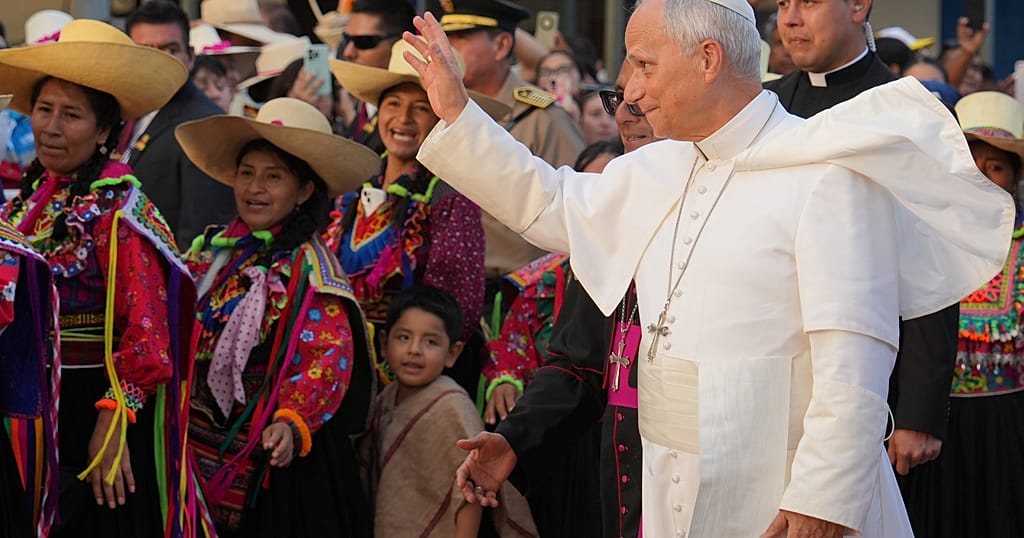
Pope Leo XIV's visit to Zaña, a small town in northern Peru, has drawn international attention to the area's long African heritage and its mix of cultures, according to Africanews.
The head of the Catholic Church returned to the Lambayeque region, where he spent years as a local bishop before his election as pontiff. During that time, he often travelled to the area and built close relationships with poor and marginalised rural communities, the report says.
A centre of Afro-Peruvian memory
Zaña has a special place in the history of Peruvians of African descent. The town's Afro-Peruvian Museum holds artefacts and exhibits that tell the story of Africans brought to the region during the colonial period, and the lasting mark their descendants have left.
The town is also linked to Saint Toribio de Mogrovejo, a 16th-century archbishop remembered for standing up for local communities under Spanish rule, Africanews reported.
Indigenous and Afro-Peruvian groups invited
For his return as pope, Leo XIV made a point of inviting delegations from nearby Indigenous communities, among them the Incahuasi and Cañaris, as well as Afro-Peruvian groups from across the region.
The groups were asked to gather in front of Zaña's main church, a gesture that placed the region's diverse communities at the centre of the papal visit.
Residents celebrate recognition
According to Africanews, residents and community leaders welcomed the pope's acknowledgement of their multicultural identity. Many saw the visit as a landmark moment for the visibility and inclusion of groups that have often been overlooked.
Across the town, murals painted on walls and banners welcoming the pontiff reflected local pride, as Zaña marked its African roots in front of a worldwide audience.
A pope with Peruvian ties
Leo XIV, formerly Cardinal Robert Prevost, was elected in 2025 as the first pope from the United States. He spent much of his ministry in Peru and served as Bishop of Chiclayo, the diocese covering much of the Lambayeque region, before his elevation.
His connection with the region has made his return especially meaningful for local communities, who knew him as their bishop long before he took charge of the global church.
Why it matters for Africa and its diaspora
The African diaspora in Latin America is a legacy of the transatlantic slave trade, which forcibly moved millions of Africans to the Americas over several centuries. Communities of African descent remain present across the continent, including in Peru, where their contributions to culture, music and food are widely recognised.
By choosing to gather Afro-Peruvian and Indigenous groups together at Zaña, the visit has offered a rare global platform for communities whose histories are often left out of mainstream narratives.
For the people of Zaña, the occasion has turned a small northern town into a symbol of cultural diversity and shared heritage on the world stage.
This story was prepared by the Hamasta Newsdesk with AI assistance, based on reporting by Africanews. Read the original report. Photo: Africanews.




Show the impact of your work.
Impact stories, campaign videos and community engagement for NGOs and programmes.

More in International
See all
Ukraine reportedly hits Krasnodar oil refineries a day after Kerch bridge strike
Family seeks embassy help as Kenyan man goes missing in freezing Belarus forest
First MINURSO contingent leaves Laayoune as UN mission begins phased withdrawal
Ghana defends $60m presidential jet as critics cite cost-of-living strain

Xi says China and Russia should lead push for multipolar world at APEC summit
Global Community Remarks
0