
Lobito Corridor: Can a US-backed mineral railway bring peace to DR Congo?
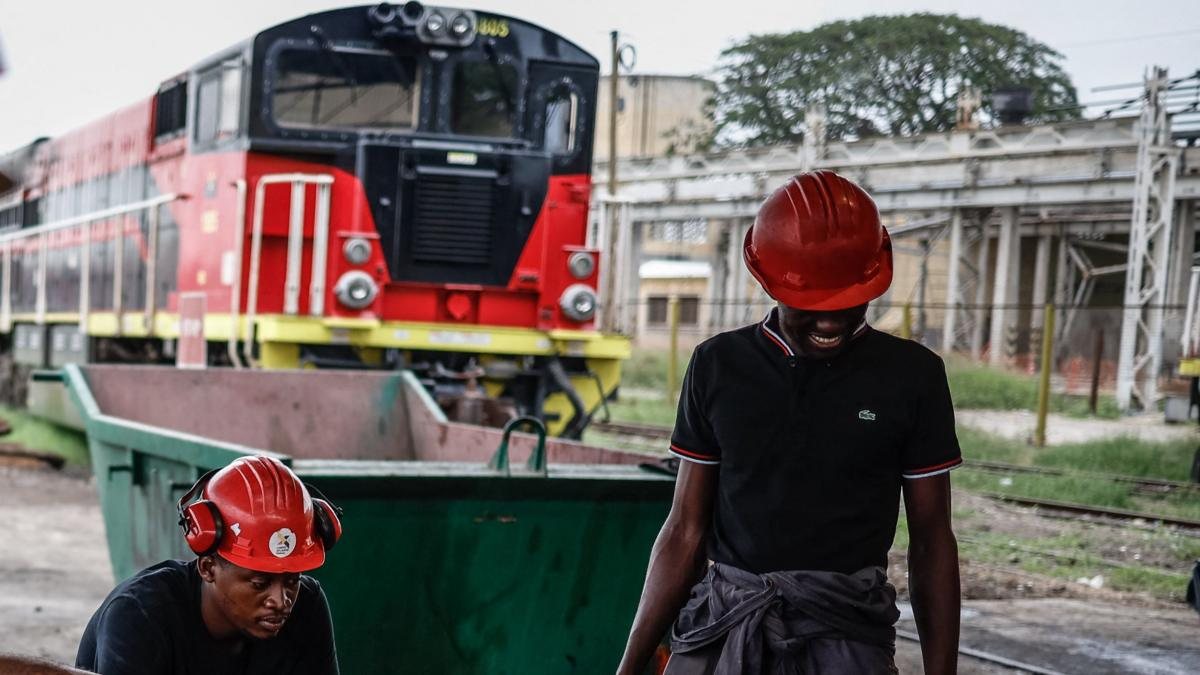
A century-old railway linking the Democratic Republic of Congo's copper belt to Angola's Atlantic coast has become the centrepiece of a US effort to secure Africa's critical minerals, with Washington hoping the route can also help calm conflict in eastern DR Congo, according to BBC News Africa.
The Lobito Corridor connects DR Congo's mineral-rich south to the Port of Lobito through the Benguela Railway. It has drawn more than $750m in investment, including funding backed by the US International Development Finance Corporation and the Development Bank of Southern Africa, to upgrade tracks, signalling and trains.
A shift in mineral routes
Most minerals from the region currently head east towards China. The corridor instead sends them west to Western markets via Angola. The US sees the route as a way to diversify supplies of copper and cobalt and reduce its reliance on China, which controls much of the world's mineral processing capacity.
DR Congo is the world's largest cobalt producer and, alongside Zambia, one of the biggest copper producers. Both metals are vital for electrical components, and demand has risen with the global shift to cleaner energy.
Under agreements brokered by US President Donald Trump, DR Congo and Rwanda have committed to closer economic cooperation, including more transparent mineral supply chains and regional infrastructure. The wider plan envisages tying these initiatives to the corridor, in the hope that formalising the mineral trade will choke off illicit markets that have financed armed groups.
US involvement began under former President Joe Biden and has continued under Mr Trump.
Freight volumes rising
The railway was built in 1902 under Portuguese colonial rule and was rebuilt and fully reopened in 2015 after disruption during Angola's civil war. Lobito Atlantic Railway (LAR), which holds a 30-year concession for freight services and the mineral terminal, says volumes have more than doubled since it took over in January 2024. It expects to carry about 200,000 tonnes of copper through the corridor in 2026.
When the BBC visited the Lobito terminal, a train carrying about 12,000 tonnes of copper cathodes from DR Congo had just arrived, with most of the cargo bound for the US.
The port handled about 1.8 million tonnes of cargo in 2025, around 158,000 tonnes of it minerals, though its mineral terminal can handle up to 3.6 million tonnes a year. Port authority executive director Kátila Vanessa Monteiro da Silva Neto said the bottleneck is now railway capacity and rolling stock.
Zambia also plans to link its Copperbelt to Lobito through a proposed 830km railway.
Benefits for local communities
State-owned passenger operator Caminho de Ferro de Benguela carried a record 1.6 million passengers in 2025. LAR says it directly employs nearly 1,000 people, 98% of them Angolan. Residents such as 20-year-old Manuela Julia in Catumbela say the train has made travel cheaper than taxis.
Businessman Adérito Areias described the route as a "corridor of development", noting it passes through productive farming regions where produce often goes to waste without transport to markets.
Doubts over peace and value
Johannesburg-based political risk analyst Wellington Muzengeza cautioned that access to a corridor does not equal industrialisation, arguing Angolan firms need feeder roads, electricity and storage to benefit.
In eastern DR Congo, the M23 rebel group has seized many mineral-rich areas. Kinshasa accuses Rwanda of backing the rebels to access its minerals, a charge Rwanda denies despite what the BBC describes as overwhelming evidence. Better infrastructure alone, the BBC notes, will not resolve the political and security tensions behind the conflict.
At a meeting in Paris in November, DR Congo's Economy Minister Daniel Mukoko Samba urged the US to turn agreements into concrete investments supporting local processing, electricity and peace in the east.
Much of the copper and cobalt is processed outside Africa, leaving Angola largely with transit fees and logistics jobs. Angola's Foreign Affairs Minister Téte António told the BBC the continent should move up the value chain:
"We should not export lithium but export batteries."
This story was prepared by the Hamasta Newsdesk with AI assistance, based on reporting by BBC News Africa. Read the original report. Photo: BBC News Africa.



Know what people say about you.
Media monitoring, audience insights and strategic communication for your brand.


More in International
See all
Xi says China and Russia should lead push for multipolar world at APEC summit

Five foreigners appear in Johannesburg court over alleged bid to fight for Russia

Nigeria's 36 states back constitutional change to create state police forces
.jpeg)
WFP feeds thousands in Moyale after 30,000 flee Ethiopia clashes into Kenya
Grossi's UN secretary-general bid faces hurdles over ties to Trump and Milei
Global Community Remarks
0