
Treasury Under Fire as CS Mbadi Faces MPs Over KSh 1.1 Trillion Deficit and Controversial 16% M-Pesa VAT

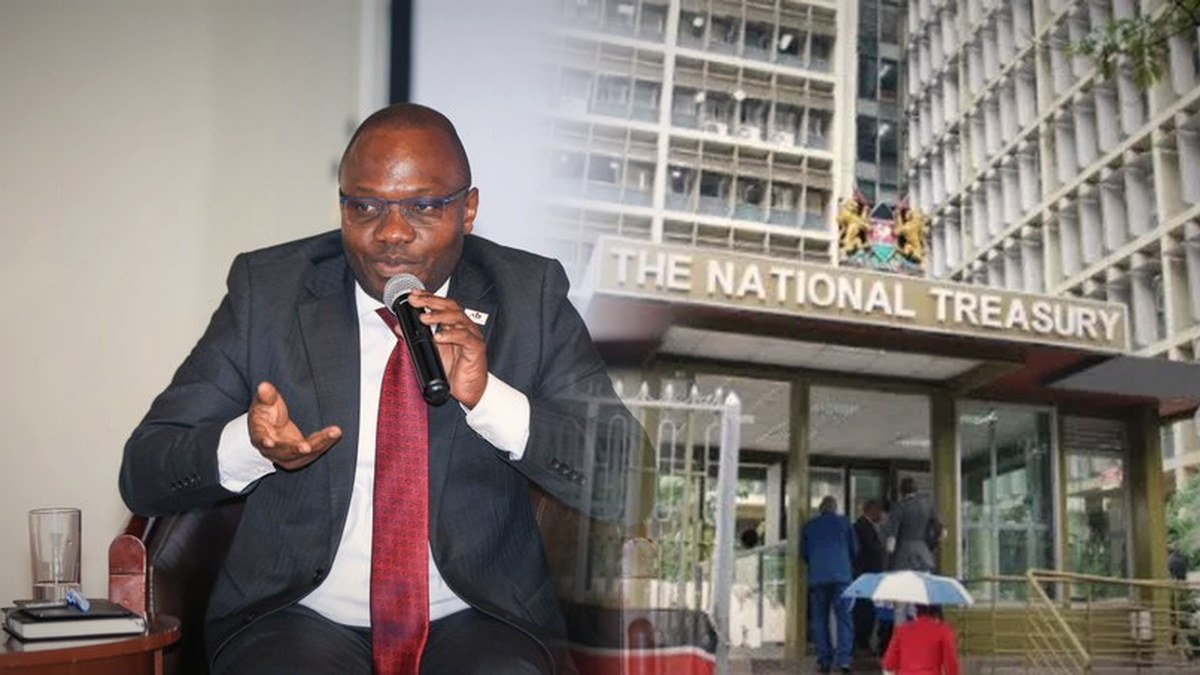
National Treasury Cabinet Secretary John Mbadi has run into a wall of fierce resistance in Parliament, facing intense grilling from lawmakers over the sustainability of the expansive KSh 4.785 Trillion budget estimates for the 2026/2027 financial year.
Appearing before the House Budget and Appropriations Committee, a visibly frustrated Mbadi delivered a stark, sobering assessment of Kenya’s public finances, admitting that the state has officially "boxed itself in" with a rigid, highly inflexible budget.
With ordinary revenue collection consistently underperforming and a massive KSh 1.111 Trillion fiscal deficit looming, MPs have demanded deep spending cuts. However, Mbadi shot back, arguing that nearly the entire projected revenue of KSh 3.63 trillion is already completely swallowed up by non-discretionary statutory obligations.
The Bitter Budget Arithmetic: Where the Money Goes
Defending the Treasury's aggressive spending plan, Mbadi laid out the brutal mathematics of Kenya's structural debt and administrative costs, demonstrating why cutting the budget is a logistical nightmare:
That is why I keep saying this budget is rigid. It is inflexible. We have boxed ourselves in," Mbadi told the committee, pointing out that even after factoring in these costs, the government is hit by external global economic shocks and geopolitical tensions that make achieving the KSh 3.63 trillion tax target highly unlikely.
The heavy reliance on domestic borrowing to plug the KSh 1.11 Trillion deficit has triggered immediate warnings from financial analysts. Experts note that by borrowing aggressively from local commercial banks, the state will aggressively crowd out the private sector, starving small businesses of much-needed credit and stifling job creation.
The Flashpoint: 16% VAT on Digital Payment Providers
While Parliament wrangles over deficits, public anxiety across Kenya has reached a boiling point over provisions in the proposed Finance Bill 2026. The most explosive clause seeks to slap a 16% Value Added Tax (VAT) on transaction fees charged by the country’s 42 licensed Payment Service Providers (PSPs)—a list that includes digital lifelines like Safaricom’s M-Pesa, Airtel Money, Kenswitch, and Pesapal.
The proposal is a direct legislative attempt by the Treasury to bypass a previous High Court ruling that had protected mobile money platforms from VAT by classifying them under exempt financial services.
The Passing-the-Buck Reality
The Treasury’s Director-General of Budget, Albert Mwenda, attempted to calm the public by claiming that the tax targets the corporate platforms providing the ICT infrastructure (like PayBills and Tills) rather than ordinary citizens.
However, tax experts and fintech analysts have flatly dismissed this distinction. Because VAT is legally and economically a consumption tax, providers are expected to immediately pass the 16% cost down to consumers.
- The Impact at the Till: For a standard M-Pesa transfer fee of KSh 108 (for amounts above KSh 20,000), consumers would see an immediate jump of roughly KSh 17 in extra VAT, stacked on top of the existing 20% excise duty. Even a small KSh 7 fee paid by a mama mboga for a KSh 500 transaction would tick upward.
- The Scale: Given that M-Pesa alone processed a staggering 46.4 billion transactions in the year ending March 2026, the cumulative financial drag on ordinary Kenyans and small micro-enterprises would be massive.
- The Bizarre Exemption Split: Curiously, the bill leaves mobile lending loops like Fuliza and M-Shwari completely VAT-exempt. This is because those specific products operate through direct commercial banking partnerships, which remain protected under traditional banking tax exemptions—creating a bizarre loophole where a direct mobile transfer is taxed, but an overdraft transfer is not.
Mbadi’s Damage Control: What is NOT in the Bill
Fearing a rerun of historic tax protests, CS Mbadi held an emergency briefing to clarify the scope of the Finance Bill 2026, explicitly refuting several viral rumors circulating on social media.
Mbadi clarified that the state is not accessing private mobile money data, is not taxing freehold land, and has completely dropped the previously controversial eco-levy and VAT on bread. Furthermore, he announced a "tax simplification" strategy for smartphones: instead of cascading VAT and import duties at the border, the state plans to collapse those charges into a single 25% excise duty payable only when a handset is actively activated by the buyer, which the Treasury claims could lower overall phone prices.
With the Budget Committee wrapping up public participation and preparing to table its final report to the National Assembly, the Ruto administration finds itself walking a dangerous fiscal tightrope: trying to satisfy insatiable debt obligations without triggering a mass public revolt over the cost of digital living.

Tell your story on screen.
Commercials, documentaries, interviews and social video, from script to final cut.





More in Business
See all
Kirima's widow warns Kenyans against buying plots on disputed 1,000-acre Njiru land

Kenya woos foreign building materials makers to set up factories and boost affordable housing
Bankers push for PAYE cut for all workers as Ruto targets low earners

Second shipment of heavy machinery for Dangote refinery docks at Lamu port

UK government arm takes Sh1.94bn stake in Quickmart IPO

Global Community Remarks
0