
Kenya prints national exam papers locally for first time in 65 years, Ruto says
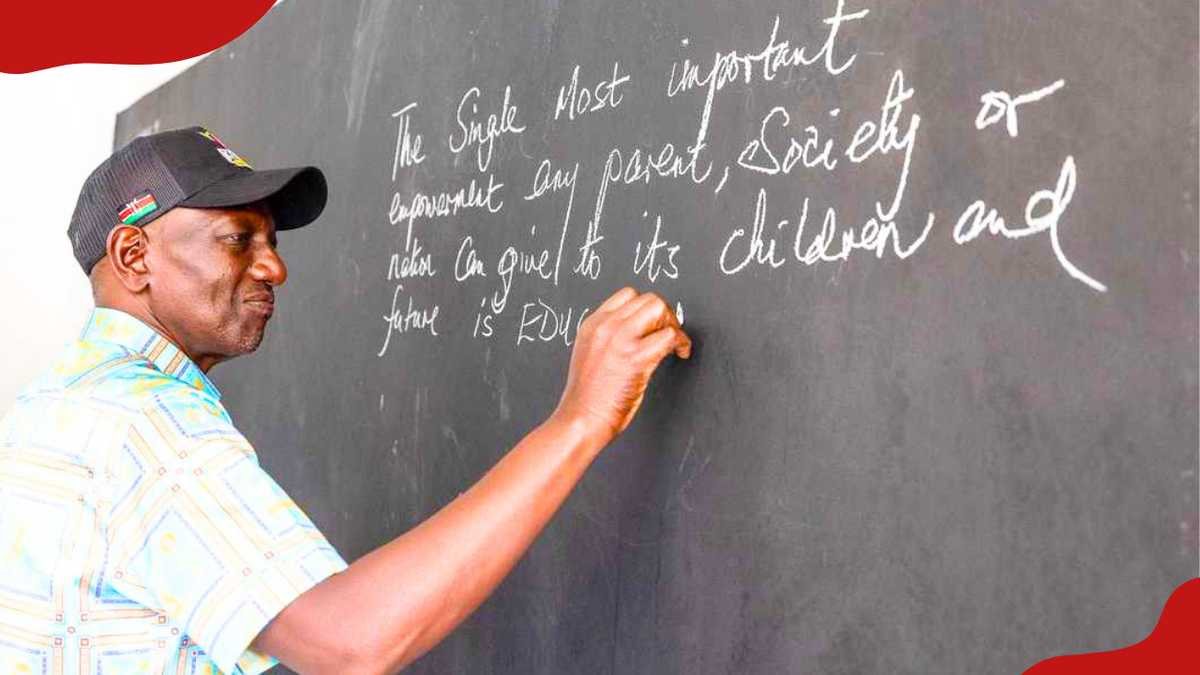
Kenya has printed its national examination papers within the country for the first time in 65 years, President William Ruto has announced, marking the end of a long dependence on foreign security printing firms.
The president made the announcement on Wednesday, November 18, while delivering his State of the Nation Address before Parliament, according to Tuko.
Ruto described the move as a significant milestone, noting that it came in a year when more than 3.6 million learners registered for national examinations and assessments.
Decades of foreign printing
For many years, the Kenya National Examinations Council (KNEC) relied on overseas security printing companies, particularly in the United Kingdom, to produce examination materials, Tuko reported.
Education officials had largely defended the arrangement on security grounds. They argued that printing the papers abroad helped prevent them from being accessed before the scheduled examination dates.
The practice, however, drew criticism over several issues, including:
- The costs involved in contracting foreign firms;
- Logistical challenges in transporting the materials; and
- The country's continued reliance on outside companies to produce important national documents.
Why the change
According to Tuko, Ruto said he had questioned why Kenya could not print its own examination papers when it already had the capacity to produce currency and other sensitive documents locally.
The government then began building local capacity to take over the exercise, culminating in this year's locally printed papers.
A calmer examination season
Beyond the shift in printing, the president also pointed to changes in how national examinations are administered.
He said the 2026 examinations had been conducted in a calm environment, without the intimidating security presence that characterised the exercise in previous years.
The government has introduced other measures aimed at protecting the integrity of the examinations. These include smart storage containers for examination materials and personalised question papers, Tuko reported.
3.6 million candidates
Figures from KNEC show that 3,634,846 candidates registered for the 2026 national examinations and assessments.
The candidates span different levels of the Competency-Based Education (CBE) system as well as the Kenya Certificate of Secondary Education (KCSE).
The scale of the exercise makes the printing of examination papers one of the largest and most sensitive logistical operations handled by the education sector each year.
The move to local printing is likely to be closely watched by parents, teachers and education stakeholders, given that security concerns were the main reason long cited for keeping the work outside the country.
The president did not give details in the reported remarks on the cost of the local printing exercise or the specific institutions that handled it.
This story was prepared by the Hamasta Newsdesk with AI assistance, based on reporting by Tuko. Read the original report. Photo: Tuko.
Every moment, captured beautifully.
Events, corporate portraits, products and editorial shoots by our newsroom photographers.





More in Education
See all
Kenyans have until December 8 to apply for 2027 fully funded UK master's scholarships

Nigerian Woman Earns Maths PhD After Decade-Long Break to Raise Her Children

University lecturers warn of fresh strike over unfulfilled CBA deal
Cheptumo Ayabei named TSC chief after 27 years at the commission
HELB Clarifies How Loan Repayments Are Split Amid Penalty Waiver Questions

Global Community Remarks
0