
Senegal's Faye enacts 2026 budget by decree to unlock $2.2bn IMF bailout
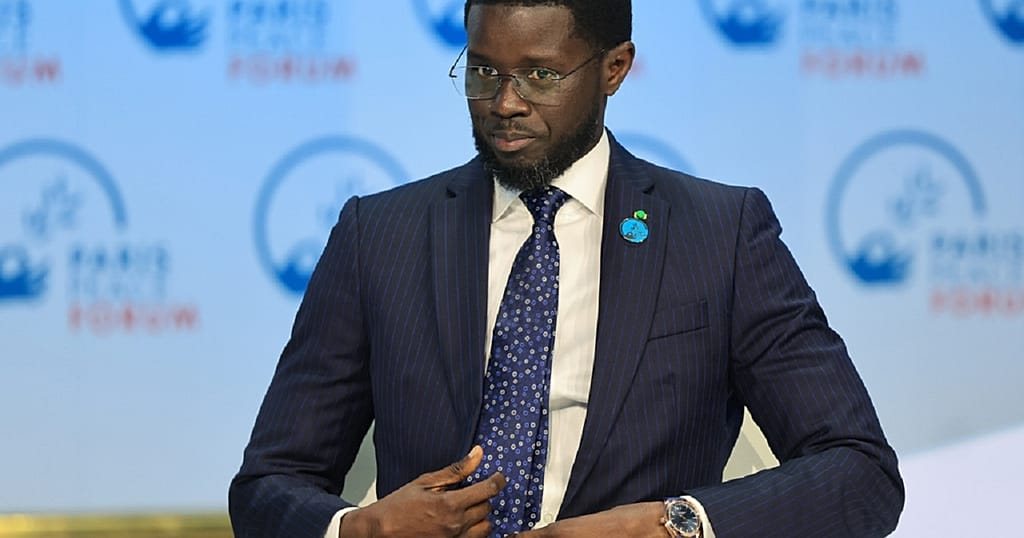
Senegalese President Bassirou Diomaye Faye has put a revised 2026 national budget into force by presidential decree, bypassing parliament in a move regarded as crucial to securing a 2.2-billion-dollar bailout from the International Monetary Fund (IMF), according to Africanews.
The decision was announced on Thursday. It follows a political standoff between the executive and the legislature, where opposition lawmakers have pushed back against the government's budget measures.
A deal awaiting final approval
The IMF and Senegal reached a staff-level agreement in September on a financial programme designed to stabilise the country's public finances and tackle its growing debt burden, Africanews reported.
A staff-level agreement is an early stage in the IMF lending process. It reflects a deal struck between the Fund's technical team and a government, but the money is not released until the programme receives final approval.
In Senegal's case, that approval is still pending. According to Africanews, the Fund has insisted that the budgetary reforms agreed with Dakar must be completed before the programme can move forward. By enacting the revised budget through a decree, the presidency appears to be trying to clear that hurdle without waiting for lawmakers to end their resistance.
Debt at 132 percent of GDP
The pressure on Senegal's finances is considerable. The country's public-sector debt was estimated at 132 percent of gross domestic product (GDP) at the end of 2024, Africanews reported, a level that has raised concerns about the West African nation's financial stability.
A debt ratio above 100 percent means the state owes more than the total value of goods and services the economy produces in a year. Such levels typically limit a government's room to borrow and increase the share of revenue spent on servicing loans.
Political risks remain
While the decree could help advance talks with the IMF, the bailout is not yet guaranteed. Africanews noted that political tensions over debt restructuring and questions of economic sovereignty continue to pose a threat to the programme.
Bypassing parliament on a matter as central as the national budget is likely to deepen the friction between the president and opposition legislators who had resisted the measures.
For Faye, the task ahead is twofold: rebuilding confidence in Senegal's public finances among lenders and investors, while managing widening political divisions at home, according to Africanews.
A familiar balancing act
Senegal's situation reflects a challenge faced by several African governments that have turned to the IMF in recent years, where fiscal reforms tied to lending programmes have often proved politically sensitive.
Kenya experienced a similar tension in 2024, when tax proposals in the Finance Bill sparked nationwide youth-led protests, leading President William Ruto to withdraw the bill.
How Senegal's opposition responds to the decree, and whether the IMF accepts the revised budget as meeting its conditions, will determine whether the long-awaited funding is finally unlocked.
This story was prepared by the Hamasta Newsdesk with AI assistance, based on reporting by Africanews. Read the original report. Photo: Africanews.



Know what people say about you.
Media monitoring, audience insights and strategic communication for your brand.


More in International
See all
Venezuela and US sign military pact months after Maduro's capture
Trump, Putin and Xi issue joint peace declaration after first three-way talks
Somalia expels UAE ambassador, accuses Abu Dhabi of 'open invasion'
Germany's Wadephul says Berlin talks send Moscow a strong signal on Ukraine peace
Sudan court sentences RSF leader Hemedti to death again over $396m medical fund looting
Global Community Remarks
0