
Gaza rescue crews run on foot as 85% of Civil Defence vehicles break down
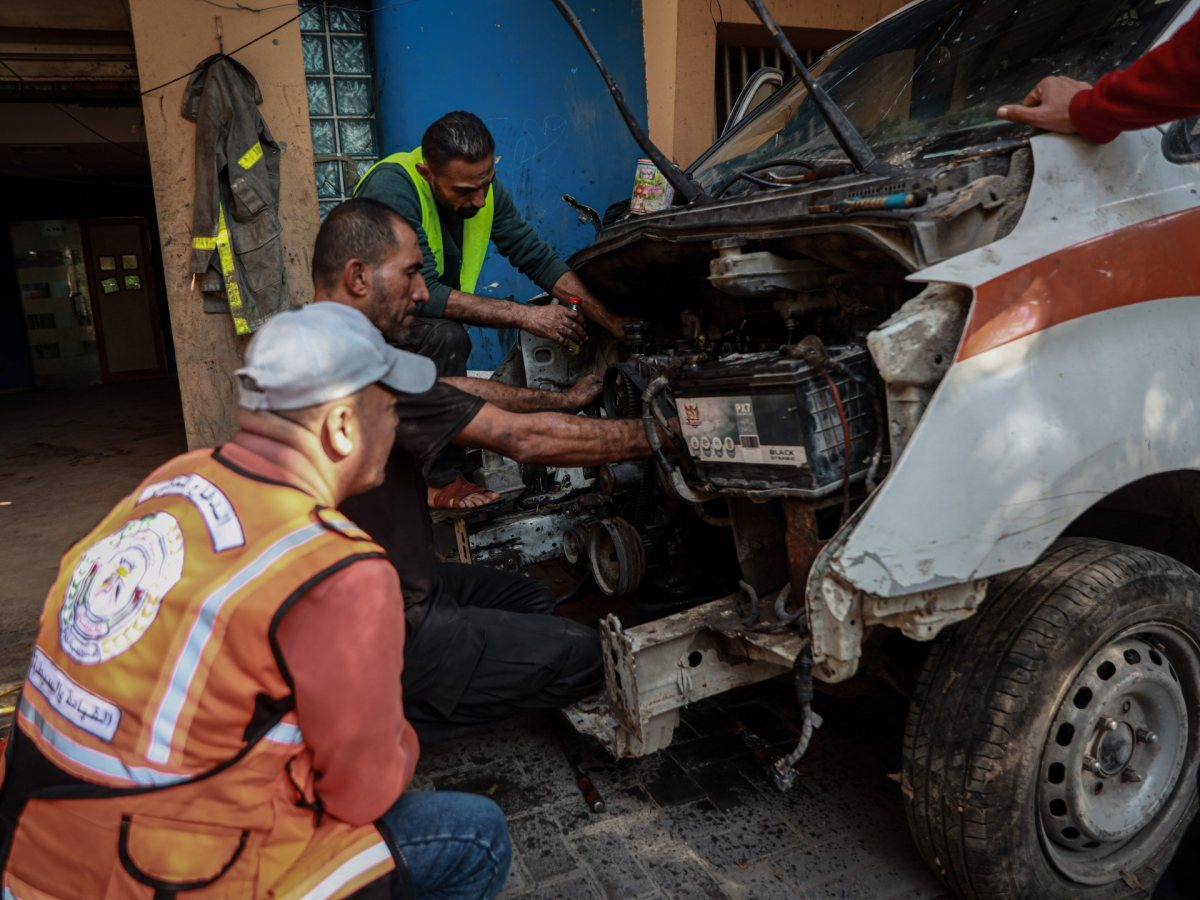
More than 85 percent of the vehicles used by Gaza's Civil Defence are no longer working. Rescue crews are now reaching bombed sites on foot, and in one case by donkey cart, as shortages of spare parts and engine oil cripple the territory's emergency services, according to Al Jazeera.
Raed al-Dahshan, director of Gaza City's Civil Defence, said only about 15 percent of the department's fleet remains operational across the Gaza Strip. He warned that without urgent support, the service could soon be unable to answer calls for help.
Running to the scene
Field officer Abdullah al-Majdalawi described how his team responded to an Israeli strike near the al-Qattan Centre on November 3. Their only available fire engine would not start, so the crew grabbed their equipment and ran.
It took them about 10 minutes to reach the site. They then carried the injured back on foot and recovered the body of a person killed in the attack.
Last month, in the Sabra neighbourhood of southern Gaza City, the team's vehicle broke down on the way to an air strike. By the time crews arrived, several people were dead and others were critically injured. Al-Majdalawi believes a faster response might have improved some survivors' chances.
During a mission in 2024, the crew had to hire a man with a donkey-drawn cart to carry them and their gear. "People were astonished to see Civil Defence personnel travelling that way," al-Majdalawi told Al Jazeera.
A fleet held together by improvisation
The only dedicated rescue vehicle in Gaza governorate, a Toyota Hilux pick-up that al-Majdalawi says is more than 20 years old, has been off the road for weeks. Crews have tried every fix available, including patching its tyres with flour dough.
The pick-up needs a power steering pump, new tyres, a turbo component and warning lights. Faulty headlights have also made night missions more dangerous. Without it, crews must use bulky fire engines that struggle to move through streets packed with tents, shelters and market stalls.
Many of the department's vehicles have been in service since 1994, when the Palestinian Authority was established. International fire-service guidelines generally recommend replacing front-line fire engines after 15 to 20 years.
Abd al-Fattah al-Nimra, a maintenance officer at the department's workshop, said mechanics rely on refurbished or substitute parts that cannot match the originals. He blamed Israeli restrictions for the shortages. Even tyres and engine oil, he said, have become too costly for the department's limited budget.
UN warning on supplies
In a report dated May 1, the UN Office for the Coordination of Humanitarian Affairs (OCHA) warned that restrictions on the entry of engine oil and vehicle spare parts were having an increasingly severe effect on humanitarian work in Gaza. It said prolonged shortages were causing vehicles and generators to break down, some beyond repair, affecting ambulances, aid teams and rubble-clearing machinery.
Winter adds pressure
Officials fear rain and strong winds will bring down more damaged buildings this winter. Heavy rains in early November have already caused collapses and flooded displacement sites. Civil Defence teams were able to respond in person to only a minority of distress calls, and most callers received guidance by phone instead.
Al-Dahshan said more than 140 Civil Defence personnel have been killed during the war. The department has fewer than 1,000 staff across Gaza's five governorates, and many work without regular salaries. Civil defence workers and their equipment are protected under international humanitarian law, including Article 62 of Additional Protocol I to the Geneva Conventions.
Al-Majdalawi said the crews' needs are basic: working vehicles, spare parts, tyres, engine oil and fuel. Al-Dahshan urged the international community to at least allow humanitarian services to reach the injured before they die.
This story was prepared by the Hamasta Newsdesk with AI assistance, based on reporting by Al Jazeera. Read the original report. Photo: Al Jazeera.


Grow an audience that listens.
Social media management, digital campaigns and online storytelling that converts.



More in International
See all
Uganda Tightens Ebola Travel Rules, Warns Airlines of Sanctions

UK and EU set to agree youth mobility scheme for 100,000 young people a year

Lula visits ailing Chief Raoni as Brazil recognises Kayapo and Yudja ancestral land
Thousands march across Colombia against tax plans as US military row grows

US Democrats say Kirkland & Ellis gave Trump administration $11.8m in free legal work
.jpeg)
Global Community Remarks
0