
Whole-grain flour drive eyes Kenya's Sh20bn school feeding market
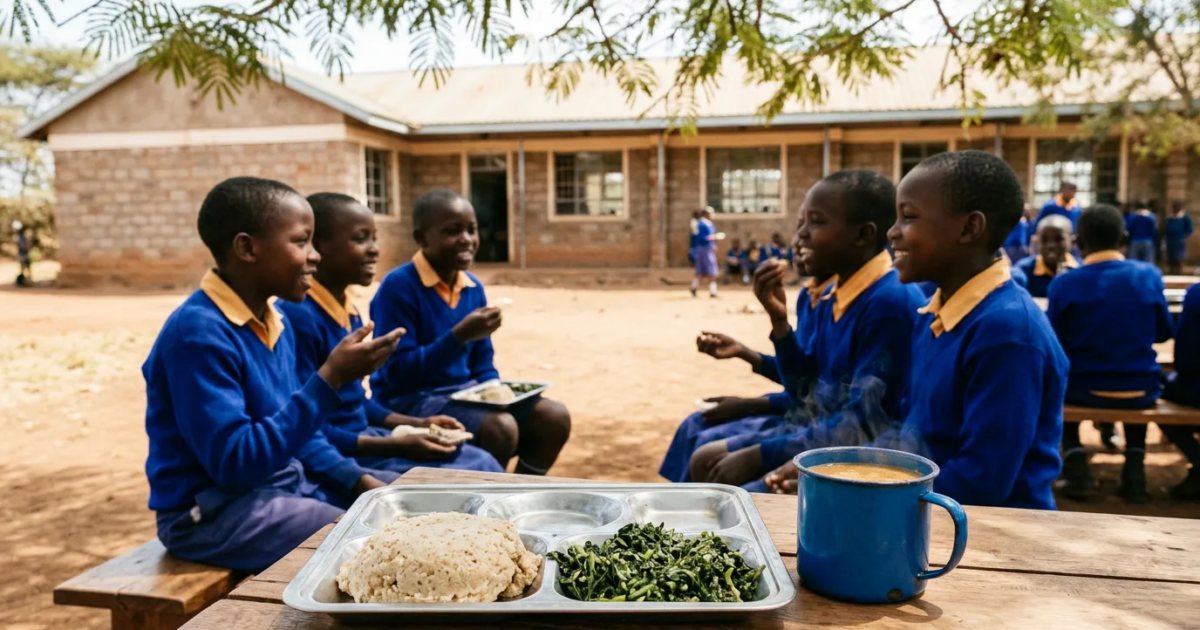
Kenya's school feeding programmes, estimated to be worth Sh20 billion, could become a significant new outlet for local grain farmers, millers and food processors as momentum builds to serve schoolchildren meals made from fortified whole-grain flour, according to Capital FM Business.
The proposed shift would increase demand for locally processed maize, sorghum and other grains, turning school meals into a possible catalyst for investment across farming, milling and food processing.
Report links nutrition to value chains
The case is set out in a report titled Integrating Food and Health Systems in Africa: A High-Return Investment in Health. It was written by Boston Consulting Group (BCG), with input from The Rockefeller Foundation, Solid'Africa and the Fortified Whole Grain Alliance (FWGA).
The report singles out institutional food buying as a key lever for tying nutrition goals to local agricultural supply chains. School feeding programmes across Africa reach more than 85 million children, creating a large, organised market for farm produce and processed foods.
In Kenya, maize-based staples such as ugali and uji make up a large share of what pupils eat at school. Greater procurement of fortified whole-grain flour could give millers and processors more predictable demand while widening markets for farmers.
Why whole grain matters
Whole-grain flour keeps the bran and germ that are removed during refining. These parts of the grain carry dietary fibre, vitamins and minerals.
According to the report, whole grains can deliver between two and five times the micronutrient density of refined flour, depending on the grain and the nutrients being compared.
David Kamau, Managing Director of FWGA and one of the report's authors, said better access to nutritious food depends on solutions that are affordable and fit into what people already eat.
"We are working to make fortified whole grains a practical and affordable solution," Kamau said.
He noted that millions of children in low- and middle-income countries continue to suffer the effects of malnutrition and poor access to nutritious food.
600,000 Kenyan pupils already on board
Some 600,000 students in several Kenyan counties already eat fortified whole-grain maize meal at school, served as porridge or ugali, through partnerships involving a range of stakeholders.
Scaling the programme nationally, however, would depend on adequate supplies of quality grain, enough processing capacity and competitive prices, so that the nutritional gains do not drive up the cost of school meals significantly.
Lessons from Rwanda
Rwanda offers an example of how public procurement can speed up uptake. A 2021 pilot involving 13,500 students found that 97 per cent preferred fortified whole-grain maize porridge to the refined version.
The scheme later grew to more than 74,000 children in 81 schools, with parental approval reaching 99 per cent. The Rwandan government has since begun extending fortified whole-grain maize meal across public schools, and close to 400,000 students now eat Kaunga made from the flour.
The BCG report estimates that a wider move to whole-grain maize, unpolished rice and sorghum in Rwanda's school feeding system could yield combined health, fiscal, economic and environmental benefits of between US$120 million (Sh15.5 billion) and US$155 million (Sh20 billion) a year.
For Kenya, the findings suggest that the school feeding budget could serve a dual purpose: improving children's diets while giving the country's grain sector a dependable, large-scale buyer.
This story was prepared by the Hamasta Newsdesk with AI assistance, based on reporting by Capital FM Business. Read the original report. Photo: Capital FM Business.

Tell your story on screen.
Commercials, documentaries, interviews and social video, from script to final cut.





More in Business
See all
Treasury Plans Start-up Funding for University and College Graduates Under NYOTA

Safaricom breaks down call rates after customer queries KSh 9.51 charge for 2-minute call

MPs Conditionally Back Rules Letting Big Power Users Buy Outside Kenya Power

Kenya's dairy farmers short of 30 million tonnes of feed a year, study finds

Asian stocks tumble as Anthropic's record debut fails to calm AI bubble fears

Global Community Remarks
0