
Ogamba: Jobless Graduates Will Not Repay Student Loans Under New Funding Model
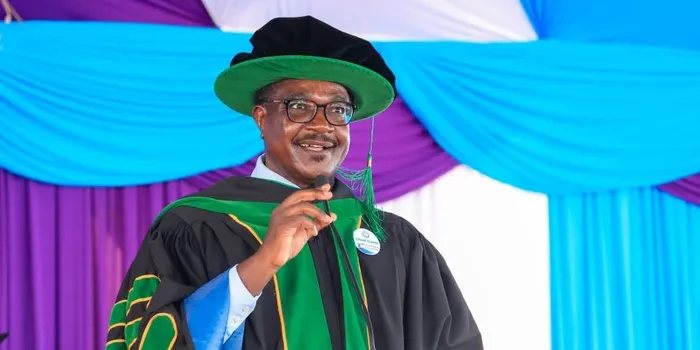
Graduates who fail to find work will not be required to repay government education loans under a proposed new higher education funding model, Education Cabinet Secretary Julius Ogamba has said.
Speaking at a graduation ceremony in Kericho on Friday, November 20, the CS said loan beneficiaries who secure jobs will also enjoy a one-year grace period before repayment begins, according to Kenyans.co.ke.
Once that year is over, Ogamba explained, repayment would be spread across a decade. "If you do not get a job, you don't pay," he said.
Responding to public concerns
The CS's remarks follow questions from some Kenyans over whether the proposed model is workable, especially how graduates would be expected to clear their loans at a time when job opportunities in the country remain limited.
The changes are contained in the Tertiary Placement and Funding Bill, which Ogamba said will change how the government decides who gets support for tertiary education.
From parents to students
According to the CS, the current system determines funding for tuition and upkeep based largely on what a student's parents can afford. The Bill, he said, seeks to direct support to students themselves, with a focus on their chosen career paths.
Ogamba argued that the existing arrangement puts learners from poorer families at a disadvantage, even when they have been admitted to demanding and competitive programmes such as medicine, engineering and law.
He described the proposed shift as moving away from funding parents and towards funding students directly.
How much students can borrow
Under the new framework, college students will be able to borrow up to Ksh100,000 per semester, the CS said. He put the tuition component at Ksh67,000, with upkeep estimated at about Ksh38,000.
The government also expects the new repayment structure to improve loan recovery. Ogamba said recovery rates are projected to rise from the current 75 per cent to 85 per cent, a change he said would make the programme financially sustainable.
Rollout expected next year
The funding model is expected to take effect next year, according to the CS. Candidates who have just completed their Kenya Certificate of Secondary Education (KCSE) examinations are set to be among the first to benefit.
The Bill recently went through public participation forums in various parts of the country. The sessions brought together students, parents, education stakeholders and members of the public, who were invited to raise concerns and suggest amendments.
Parliament is expected to proceed with consideration of the Bill following the public participation exercise.
The proposal comes amid continuing national debate over how to finance university and college education in a way that is fair to students from low-income households while remaining affordable for the government.
This story was prepared by the Hamasta Newsdesk with AI assistance, based on reporting by Kenyans.co.ke. Read the original report. Photo: Kenyans.co.ke.


Take your event live to thousands.
Multi-camera live streams, panel discussions and digital broadcasts with professional crews.




More in Education
See all
2026 KCSE exams end as government targets January 2027 for results
KJSEA 2026 results due in December ahead of Grade 10 placement, says CS Ogamba
2026 KCSE exams end as over one million candidates sit final physics paper
Ex-Lenana School Chief Principal William Kemei Now Leads Ruto's SIBOH Academy
Teach children safe tech use instead of banning devices, Kenyan educators urge
Global Community Remarks
0