
KENYAN POLITICS: RUTO’S 2027 RE-ELECTION BATTLE, OPPOSITION DIVISIONS AND THE FIGHT FOR POLITICAL POWER
With the Independent Electoral and Boundaries Commission (IEBC) already setting the election timetable in motion, the contest is increasingly shaped by questions of leadership, economic pressure, accountability, electoral credibility and whether the opposition can unite behind a single presidential candidate.
The developments suggest that the 2027 election will be about more than individual candidates. It will test the government's record, the opposition's ability to organise itself and the confidence Kenyans have in the institutions responsible for delivering a credible election.
Ruto’s Re-Election Bid Faces a Changing Political Landscape

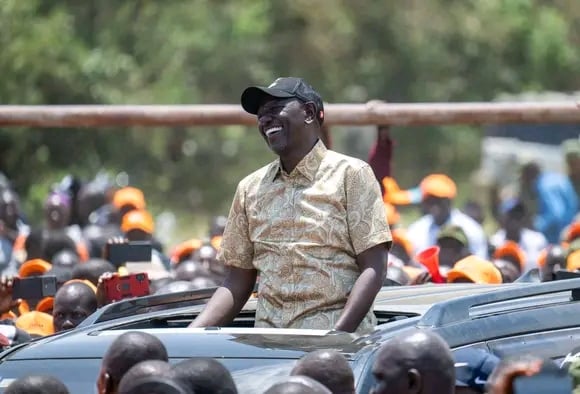
President William Ruto is seeking another term after winning the 2022 presidential election. His administration is promoting its development agenda, including infrastructure, affordable housing, healthcare reforms and investment in economic transformation.
However, his re-election campaign faces the challenge of maintaining support among communities and political leaders who helped secure his victory in 2022.
Recent reports indicate that prominent politicians have begun leaving UDA or exploring alternative political platforms. Nakuru Senator Tabitha Karanja announced her departure from UDA for the Democracy for the Citizens Party (DCP) on October 9, while Githunguri MP Gathoni Wamuchomba had also signalled her exit from the ruling party.
These developments have increased scrutiny of UDA's grassroots organisation, particularly in the politically influential Mount Kenya region.
Ruto's allies, however, have played down the significance of the defections, arguing that movement between political parties is common as elections approach. Mathira MP Eric Wamumbi has disputed suggestions that the ruling party is experiencing an inevitable mass exodus.
The central question is whether the departing politicians can convert their personal influence into meaningful electoral support for rival candidates.
For Ruto, the challenge will be to retain his established support base while building new alliances capable of delivering a second presidential term.
The Opposition Struggles to Agree on One Presidential Candidate

While the president's camp works to consolidate its support, opposition leaders face a different challenge: agreeing on a common strategy and presidential candidate.
Former Interior Cabinet Secretary Fred Matiang'i has acknowledged that discussions among opposition parties and presidential hopefuls are continuing, with negotiations focusing on how to settle on a single candidate and running mate.
The opposition landscape includes established political figures such as Kalonzo Musyoka, Fred Matiang'i, Martha Karua and Rigathi Gachagua, alongside younger politicians seeking a greater role in national leadership.
The disagreement is not simply about who should be the presidential candidate. Opposition parties must also determine which coalition to use, how to share political responsibilities and how to prevent competing ambitions from weakening their chances.
There are also divisions over whether to revive the Azimio la Umoja coalition or establish a new political vehicle. Some opposition leaders favour rebuilding the existing coalition, while others prefer a fresh arrangement.
The longer these negotiations continue without a clear agreement, the more difficult it may become to build a unified campaign.
Rigathi Gachagua and the Mount Kenya Political Question

Former Deputy President Rigathi Gachagua has emerged as a significant figure in the opposition's efforts to challenge Ruto, particularly in the Mount Kenya region.
Following his removal from office in 2024, Gachagua developed a political platform through the Democracy for the Citizens Party. His influence in the region has become an important consideration in calculations surrounding the 2027 election.
The movement of politicians such as Tabitha Karanja towards DCP may strengthen the party's regional organisation, although defections alone do not establish how voters will behave at the ballot.
Mount Kenya remains strategically important because of its large electorate and its role in the coalition that propelled Ruto to power in 2022.
Gachagua's political challenge will be to translate regional discontent into a broader national campaign. To win the presidency, any opposition candidate will need support beyond a single region.
Meanwhile, Ruto's allies are working to reassure supporters that the ruling party remains competitive despite the departures.
The struggle for Mount Kenya could therefore influence both coalition negotiations and the final balance of power in the presidential contest.
Edwin Sifuna and the Rise of a New Political Generation

A generational debate is also emerging within Kenyan politics.
Nairobi Senator Edwin Sifuna has become one of the prominent figures associated with calls for a new generation of political leadership. Other politicians mentioned in discussions about the next generation include Embakasi East MP Babu Owino, Kiharu MP Ndindi Nyoro, Trans Nzoia Governor George Natembeya and Vihiga Senator Godfrey Osotsi.
The debate reflects a wider question about whether the 2027 contest will be dominated by established political leaders or create space for younger politicians and technocrats.
Younger political figures may appeal to voters who want a different approach to governance, public accountability and economic opportunity. However, visibility and public support do not automatically translate into the nationwide networks required to win a presidential election.
For the opposition, balancing experienced leaders with emerging political figures could be a decisive part of its coalition-building strategy.
President Ruto has criticised opposition leaders, including Sifuna, accusing them of lacking a clear development agenda. The opposition, in turn, faces pressure to demonstrate that it can present a credible alternative rather than relying exclusively on opposition to the government.
The ODM Question and Its Relationship With Ruto
The Orange Democratic Movement (ODM) remains an important factor in the changing political equation.
Following Raila Odinga's death in 2025, the party's future direction and its relationship with the government have become central questions in national politics. Reports describe divisions between the Linda Ground faction, associated with party leader Oburu Odinga and cooperation with the government, and Linda Mwananchi, which is more critical of the administration.
Ruto and Oburu Odinga's political understanding has also faced questions over how their parties would manage competition in the 2027 elections.
Although cooperation between UDA and ODM has opened opportunities for broader political engagement, the parties still have their own leaders, supporters and electoral ambitions.
Negotiations over which party should field candidates in particular regions could become a major source of tension. A partnership that appears strong at the national level may still face competition between local candidates seeking the same seats.
For Ruto, cooperation with ODM could potentially expand his reach into areas where he has historically faced stronger opposition. For ODM, the challenge is to preserve its political identity and bargaining power while participating in cooperation with the government.
The ultimate impact of the arrangement will depend on whether political agreements translate into voter support at the ballot.
IEBC Under Pressure Ahead of the August 2027 Election

The Independent Electoral and Boundaries Commission has formally activated the timetable leading to the August 10, 2027 General Election, placing political parties and public institutions under statutory deadlines.
However, the commission faces mounting scrutiny over its preparedness, voter registration, election technology, procurement and public confidence.
Political leaders have raised questions about the voter register and the risk of electoral manipulation. Such allegations remain claims unless supported by verifiable evidence, and they should not be treated as established findings.
The commission also faces a reported funding gap. The Star reported that IEBC had projected a requirement of approximately KSh 64 billion for the election but had received an allocation of around KSh 41 billion, leaving a shortfall of approximately KSh 23 billion.
A funding shortfall could affect essential preparations, including voter education, staff training, logistics, election security and procurement.
The IEBC has called for closer cooperation among security, justice and other institutions to protect voters and candidates and prevent electoral violence.
The commission's independence and preparedness will be critical to the credibility of the election. Political parties also have a responsibility to present evidence when raising concerns and to use lawful mechanisms to challenge any proven irregularities.
Ultimately, public confidence will depend on transparent processes, timely preparations and an election whose results can be independently verified.
The Economy and Cost of Living Remain Central Political Issues
Kenyan politics cannot be separated from household finances, employment, taxation and the cost of essential goods and services.
Economic policy is likely to remain a major issue in the run-up to the election, as voters assess the government's record against their everyday experiences.
The National Treasury has projected that Kenya's budget deficit will rise to 5.9 per cent of GDP in the 2027/28 financial year, compared with 5.5 per cent in 2026/27. The figures were reported by Reuters on October 9, 2026.
The government is also adjusting its budget timetable ahead of the election. The National Treasury has moved the preparation process forward to allow Parliament to review and appropriate the 2027/28 budget estimates by March 31, 2027. Officials say the adjustment is intended to support continuity in public service delivery during the election period.
These decisions place fiscal management, public spending and accountability under increased scrutiny.
For the government, the task is to demonstrate that its development programmes and revenue policies can deliver tangible benefits without undermining household welfare or public confidence.
For the opposition, criticism of economic policy will need to be accompanied by credible proposals on jobs, public debt, taxation, healthcare, education and the management of public resources.
The economy may therefore become one of the most important battlegrounds of the 2027 campaign.
The ‘Wantam’ Versus ‘Tutam’ Political Contest
Kenya's emerging political debate is increasingly being expressed through the competing slogans “Wantam” and “Tutam.”
“Wantam” represents the call for Ruto to serve only one term, reflecting dissatisfaction among some voters and opposition supporters. “Tutam,” by contrast, expresses support for a second term and continuity under his administration.
These slogans capture competing political narratives.
Supporters of the opposition point to concerns over the government's performance, accountability, taxation and human rights. Supporters of Ruto highlight infrastructure projects, development programmes, healthcare reforms and efforts to expand political cooperation.
Neither slogan is, by itself, evidence of how the election will turn out. The final result will depend on candidates, party organisation, campaign issues, voter participation and the credibility of the electoral process.
The contest also illustrates how political messaging can simplify complex policy questions into memorable expressions of support or rejection.
The real test will be whether both camps can turn their slogans into credible plans that respond to the needs of Kenyan citizens.
What Lies Ahead for Kenyan Politics?
Several issues are likely to shape the months leading to the August 2027 General Election:
- * Coalition negotiations: Whether opposition parties can settle on a presidential candidate and a common political platform.
- * UDA's grassroots strength: Whether Ruto can retain support in Mount Kenya and other regions amid defections.
- * ODM's political direction: Whether cooperation with the government deepens or internal divisions alter its electoral strategy.
- * Electoral credibility: Whether IEBC receives sufficient funding and completes preparations on time.
- * Economic accountability: Whether the government can demonstrate progress on employment, public services, taxation and living costs.
- * Generational change: Whether younger political leaders gain a significant role in the presidential and parliamentary contests.
These issues are interconnected. A strong opposition candidate may still struggle without party unity, while a ruling party may find it difficult to retain power if political defections reflect deeper voter dissatisfaction.
Similarly, even the strongest campaign will depend on an electoral process that voters regard as transparent and credible.
Conclusion: A Defining Test for Kenya's Democracy
Kenya's political landscape is moving into a consequential period. President William Ruto is seeking to consolidate his re-election campaign, opposition leaders are negotiating alliances, and political realignments are creating uncertainty about which coalitions will emerge strongest in 2027.
At the same time, economic policy, the performance of public institutions and the credibility of the IEBC remain central to the national debate.
The opposition's biggest challenge is to transform its different political interests into a coherent alternative. The government's challenge is to defend its record, maintain its support base and persuade voters that its agenda deserves another term.
For Kenyan voters, the most important questions go beyond political slogans and personalities: which leaders offer credible solutions, who can be held accountable, and whether the election will allow citizens to choose their representatives freely.
As Kenya moves towards August 10, 2027, the country's political future will be shaped not only by the ambitions of its leaders, but also by the decisions of voters and the strength of its democratic institutions.


Grow an audience that listens.
Social media management, digital campaigns and online storytelling that converts.



More in Politics
See all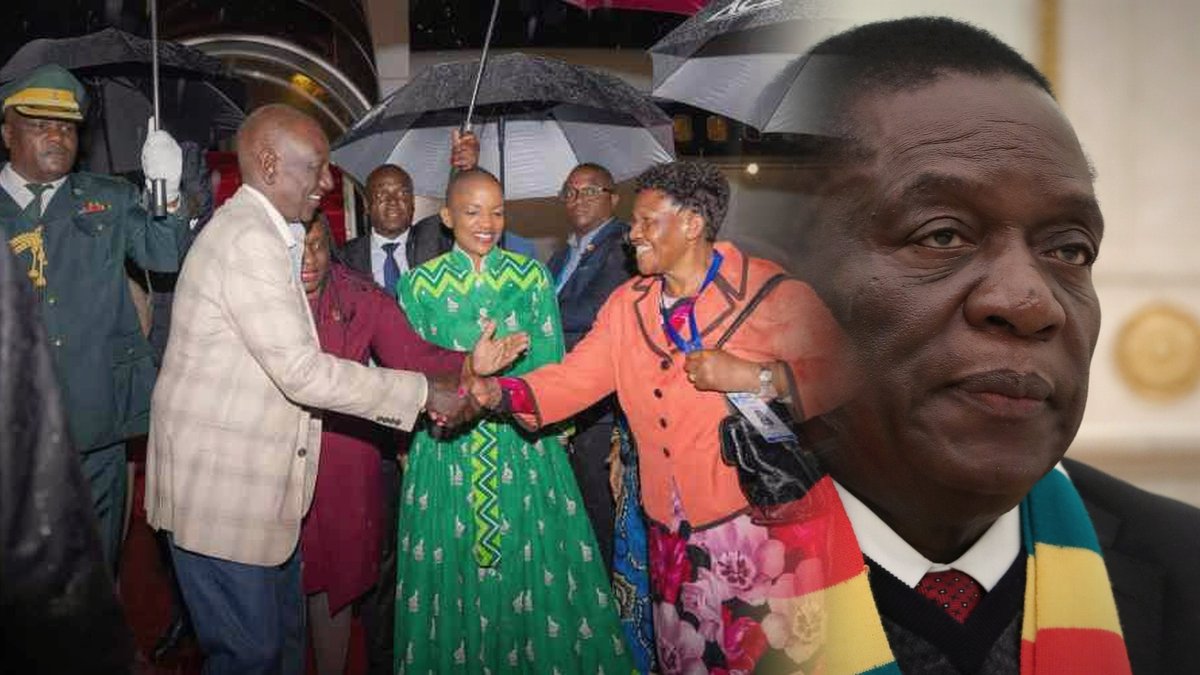
Ruto lands in Harare to hand over COMESA chairmanship to Mnangagwa at 25th summit
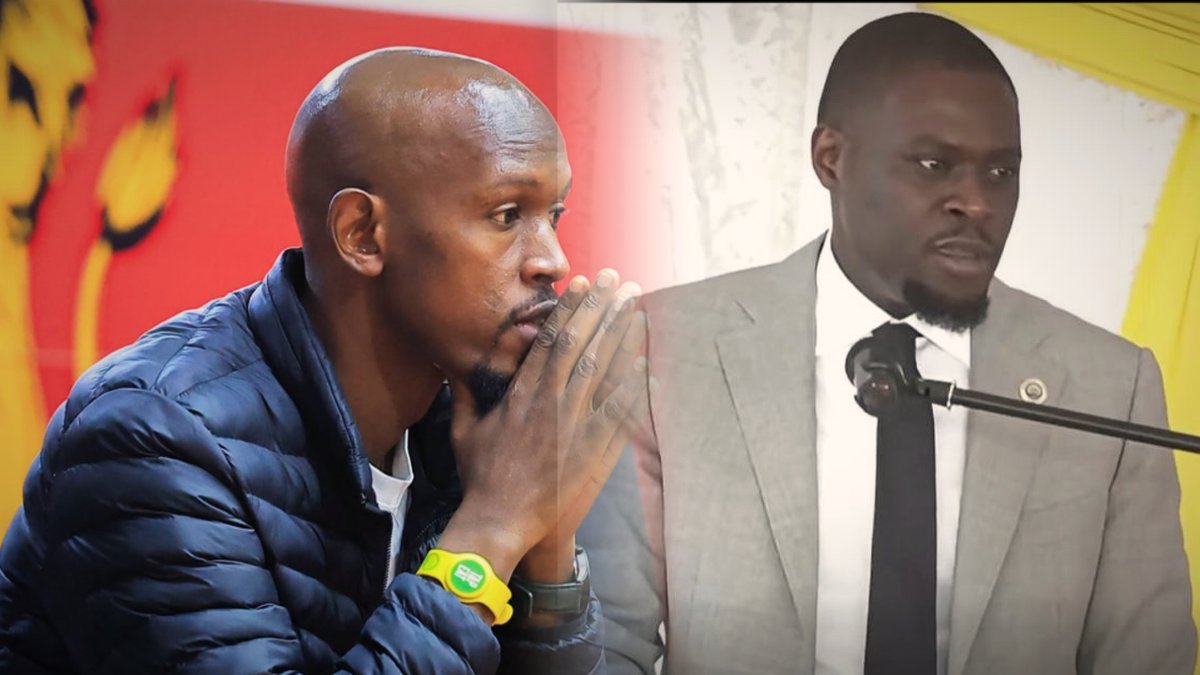
"My only mistake was to outshine my master": Mosiria fires back at Sakaja after sacking
Moi and Komen dynasties line up to take back Rongai seat from UDA's Chebor
Karua, Nyoro and Matiang'i dismiss Ruto's PAYE relief pledge as 2027 campaign bait
Gachagua and Sifuna to take alliance to the ground with first joint rally in Nyahururu
Babu Owino dismisses claims Gachagua told him to quit Nairobi governor race for Senate
Global Community Remarks
0