
Nanyuki hospital says suspected Ebola patient tested negative as Kenya stays on alert

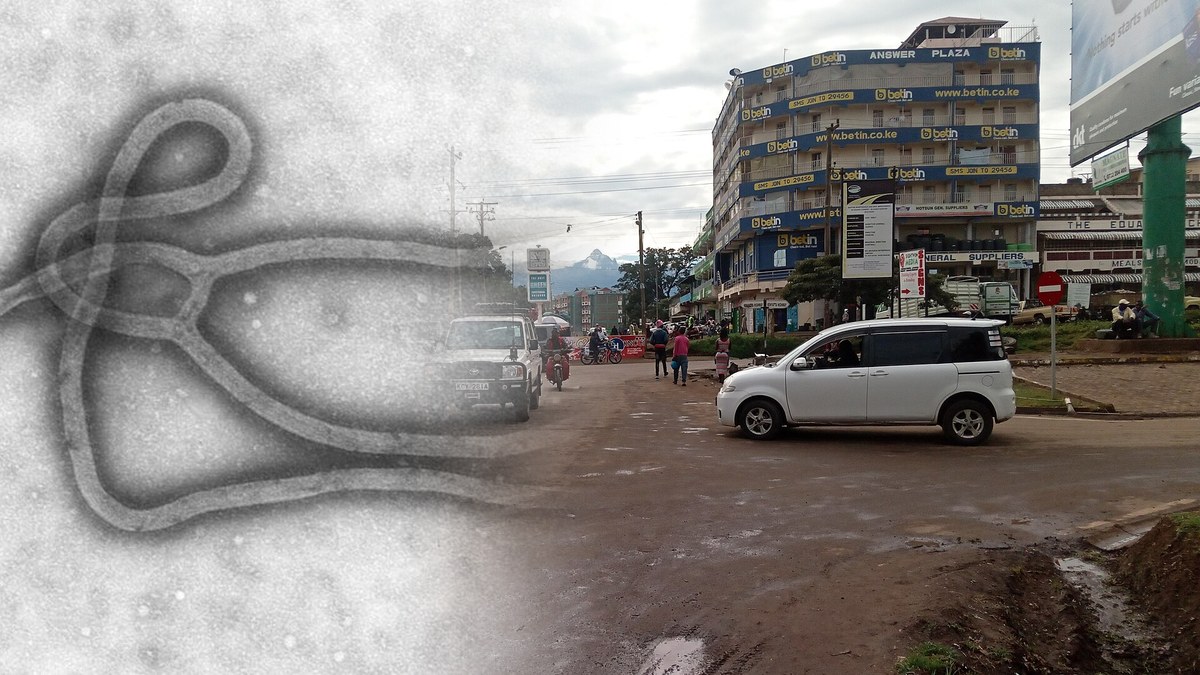
Nanyuki Teaching and Referral Hospital in Laikipia County says a patient admitted with suspected Ebola does not have the disease. The National Virology Reference Laboratory tested her samples, and the results came back negative. The hospital announced the result in a statement on Tuesday, 13 October.
Kenya confirmed its first-ever Ebola case a week ago, and the country remains on alert as the outbreak in the Democratic Republic of Congo continues. The latest result is the second suspected case to test negative since then.
What the hospital said
According to the hospital's statement, reported by Citizen Digital, the woman was admitted to the Emergency Department at 5am on Monday, 12 October. For three weeks she had general body weakness, fever and an intermittent dry cough. In the 24 hours before admission her condition got worse, with difficulty breathing and bleeding from body openings and puncture sites.
She told staff she had not travelled recently to the Democratic Republic of Congo or Uganda. She also said she had not been in contact with anyone showing similar symptoms. The hospital said infection prevention and control protocols were activated and samples were sent for testing.
The hospital said the patient "was promptly assessed and management initiated for the presenting condition with EVD as a differential". EVD is Ebola Virus Disease, and listing it as a differential means it was one of the possible diagnoses being considered. The statement thanked hospital staff, the Laikipia County Department of Health and other partners. Acting Chief Executive Officer Dr Sammy Kilonzo reassured staff, and the hospital asked them to rely on official communication about public health concerns. The statement did not give the patient's final diagnosis or current condition.
Kenya's first confirmed case
The Ministry of Health confirmed Kenya's first Ebola case on Tuesday, 6 October. The patient was a Kenyan who had fallen ill in the Democratic Republic of Congo. He died in a Nairobi hospital on 5 October. The BBC reported that, according to Africa CDC chief Jean Kaseya, he travelled from Buta in northern DRC to Kisangani, flew to Beni, crossed into Uganda by road and then flew to Nairobi.
Ten of his contacts were quarantined and officials were tracing 57 more, the BBC reported. Patrick Amoth of the health ministry said the man may have got through screening after taking medication that masked his symptoms. Dr Dennis Miskellah of Kenya's main doctors' union reported "lapses" at border points and at the country's main airport.
President William Ruto has said that surveillance and rapid response teams have been deployed. More than 650,000 travellers have been screened and 267 samples tested, he said, and four main hospitals have been designated to handle Ebola patients.
On Thursday, 8 October, a second suspected case also tested negative. A 20-year-old man was being treated in Wajir County, and the county governor said preliminary results were "NEGATIVE for Ebola Virus Disease", Al Jazeera reported.
The regional picture
The current outbreak began in the eastern Democratic Republic of Congo, which declared it in May. It is caused by the Bundibugyo species of the virus, for which there is no approved vaccine. Al Jazeera reported that it has killed at least 4,205 people from more than 8,700 reported cases, making it the second-largest Ebola outbreak on record. Kenya is the fourth country to record a case linked to it.
Uganda recorded cases earlier this year but has since been declared free of Ebola. Its health ministry said last week that it remained free of the disease, and that the Kenyan patient had spent less than 24 hours in the country.
The United States has nonetheless extended its restrictions on travellers from Uganda, the Democratic Republic of Congo and South Sudan. A notice from the US Centers for Disease Control and Prevention (CDC) dated 11 October keeps the restrictions in force for another 30 days. The entry ban covers foreign nationals who have been in any of the three countries in the previous 21 days. US citizens arriving from Uganda or South Sudan must enter through designated airports for enhanced screening.
The CDC acknowledged that Uganda had contained its outbreak but said the risk of spread from the neighbouring DRC remained a concern, Ugandan outlet Matooke Republic reported. The notice cited the Kenyan case, but Kenya is not among the countries covered by the suspension.
The Nanyuki question
The scare at Nanyuki comes during a wider debate over the town. A planned US-backed Ebola treatment centre there was halted by the courts after public opposition. Health Cabinet Secretary Aden Duale has said the government is considering turning the facility into a regional infectious disease hospital, the BBC reported.
Photos: Martin Kithinji Mwirigi / Wikimedia Commons, CC BY-SA 4.0; CDC / Cynthia Goldsmith / Wikimedia Commons, public domain

Tell your story on screen.
Commercials, documentaries, interviews and social video, from script to final cut.





More in Health
See all
Mama Lucy Kibaki Hospital to commission advanced 160-slice CT scanner

First Ebola contacts to leave quarantine on Sunday after 21 days, Amoth says

Public health officers' strike passes 90 days as students warn of nationwide protests

PS Oluga rallies government agencies behind coordinated Ebola response as cases reach nine

Kenya confirms ninth Ebola case as 134 of 135 contacts are traced and quarantined

Tanzania orders 21-day health monitoring for high-risk travellers as Kenya's Ebola cases rise to seven
Global Community Remarks
0