
Ruto dismisses livestreaming ban claims as 'fake news' as Matiang'i, Nyoro urge Kenyans to reject Elections Bill

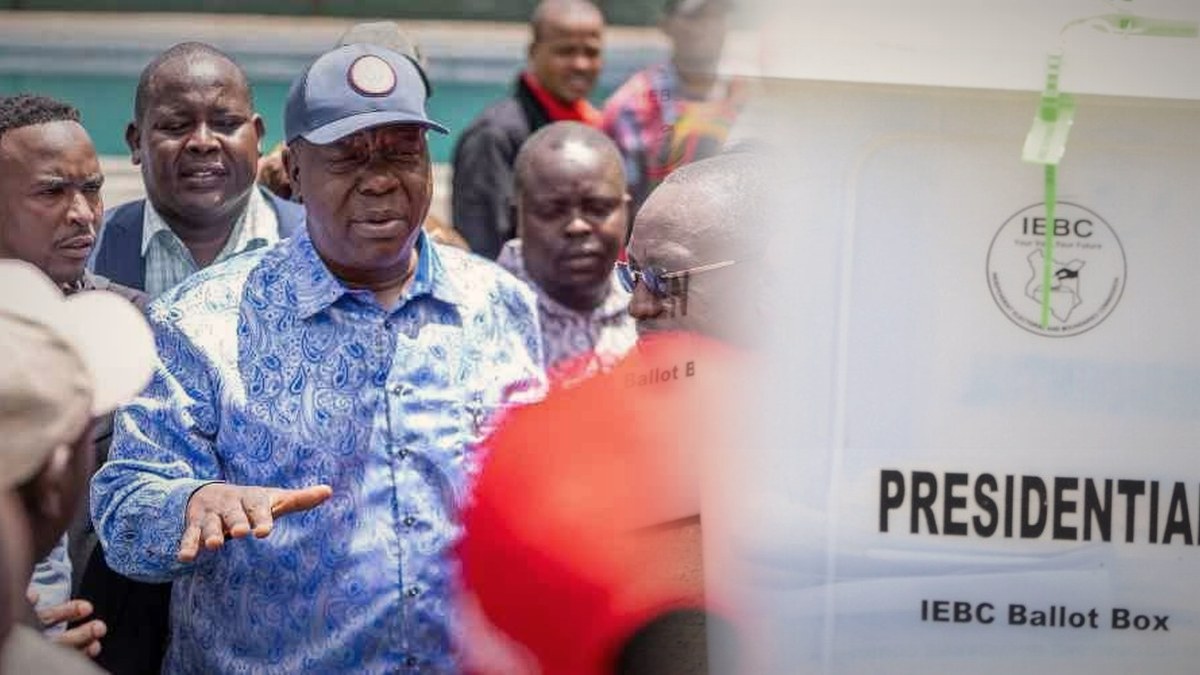
President William Ruto on Sunday dismissed claims that Parliament has banned the livestreaming of election results, even as opposition leaders Fred Matiang'i and Ndindi Nyoro urged Kenyans to reject the Elections (Amendment) (No. 2) Bill, 2024, which is now headed back to the Senate.
Speaking at a church service at AIC Kasina in Mwingi, Kitui County, during his tour of Ukambani, the President accused his rivals of using the debate to mislead young people. "I have seen propagandists try to create propaganda around election laws that livestreaming has been banned. Nonsense," Ruto said, according to Kenyans.co.ke.
The Star quoted him adding: "Why would anyone want to stop livestreaming of results?" and "The sooner Kenyans get to know the results of an election, the better for our nation." He also described access to results as "a right of Kenyans."
Ruto linked the uproar to the 2024 Finance Bill protests, saying that law had been undermined by opposition propaganda, and urged leaders to stop mobilising young people against legislation they had not studied.
Matiang'i and Nyoro sound alarm
At a Sunday service at Ongata Rongai Catholic Church, Jubilee leader Fred Matiang'i warned that any restriction on how results are displayed would erode public confidence ahead of the 2027 polls. "This could lead to concerns about the possibility of election rigging in the 2027 General Election," Matiang'i said, according to The Standard. "We are shocked to see such a Bill being passed in Parliament."
Kiharu MP Ndindi Nyoro went further: "We urge Kenyans to reject this Bill. The government could use it to rig the election."
What MPs actually changed
The National Assembly passed the Senate-originated Bill with amendments on 22 October. At the centre of the confusion is Clause 22, which as passed by the Senate would have repealed and replaced Section 39 of the Elections Act, the provision governing how results are determined, transmitted and declared. Critics noted that the proposed replacement did not expressly retain the IEBC's duty to livestream results announced at polling stations.
In an explainer issued on 23 October, Parliament said MPs deleted Clause 22 altogether, meaning Section 39 remains in its current form, including the requirement that the commission set up a livestreaming mechanism. Majority Leader Kimani Ichung'wah told critics that "no changes have been made to election livestreaming by either the Senate or the National Assembly." Citing Section 39(1G), he added: "That is the law as it is, and it has not changed."
Not everyone is reassured. The Daily Nation reported that by rejecting the livestreaming amendments proposed by the Senate and Suba South MP Caroli Omondi, the House may have reverted to a clause that the High Court had found unconstitutional, the part of Section 39(1G) stating that streamed results are for public information only. Parliament disputes that reading.
Former Law Society of Kenya president Faith Odhiambo has asked Parliament to publish the final version of the Bill. "The ballot is secret but the count must be open," she wrote, according to Citizen Digital. Former Chief Justice David Maraga claimed that "Parliament wants to switch off the cameras on our elections," drawing a rebuke from lawyer Ahmednasir Abdullahi, The Star reported.
Other changes in the Bill
Under the version passed by MPs, the IEBC would be required to transmit presidential results electronically within two hours of their declaration at a polling station, give reasons in a prescribed format where it fails to do so, and publish polling station result forms on a public portal. The Bill also removes the commission's role in party primaries, moving those disputes to the Elections Disputes Tribunal, and requires the IEBC to publish audited voter registers.
Minority Leader Junet Mohamed cited the Kriegler report's advice against changing electoral laws within a year of an election, the Nation reported.
What happens next
Because it is a Senate Bill, the legislation now returns to the Senate under Article 110(4) of the Constitution for senators to consider the National Assembly's amendments. Both Houses must agree on a common text before it goes to the President for assent. No date for the Senate's consideration had been announced by Monday.
Photos: The Standard, The Star

Tell your story on screen.
Commercials, documentaries, interviews and social video, from script to final cut.





More in Politics
See all
Otieno Mak'Onyango, ex-Alego Usonga MP and journalist detained after 1982 coup attempt, dies in Nairobi

Livestreaming row heads to court as opposition vows polling-station tallies and Kindiki says State won't make 2027 vote 'opaque'

Justina Wamae launches Imarisha Uchumi Party, declares 2027 presidential bid and vows to scrap housing levy
Gideon Moi says Ruto broke Baringo pact, asks voters' forgiveness and signals break from President
Senators demand answers from IEBC, NCIC and security chiefs on rising political violence ahead of 2027
Ruto takes Ukambani tour to Kalonzo's Tseikuru home, launches Sh5bn road and announces Sh70bn cement plant
Global Community Remarks
0