
Escaping the Orange Squeeze: Why Nyanza’s Youth Aspirants See MDG as the Safer Ticket for 2027

The short answer
For a young aspirant in Homa Bay, the Movement for Democracy and Growth (MDG) offers one thing ODM cannot promise in 2027: a near-certain place on the ballot. ODM’s ticket still wins elections here, but getting it means surviving primaries that the party’s own audit found open to manipulation in 2022, a zoning fight with UDA, and a bitter split after Raila Odinga’s death.
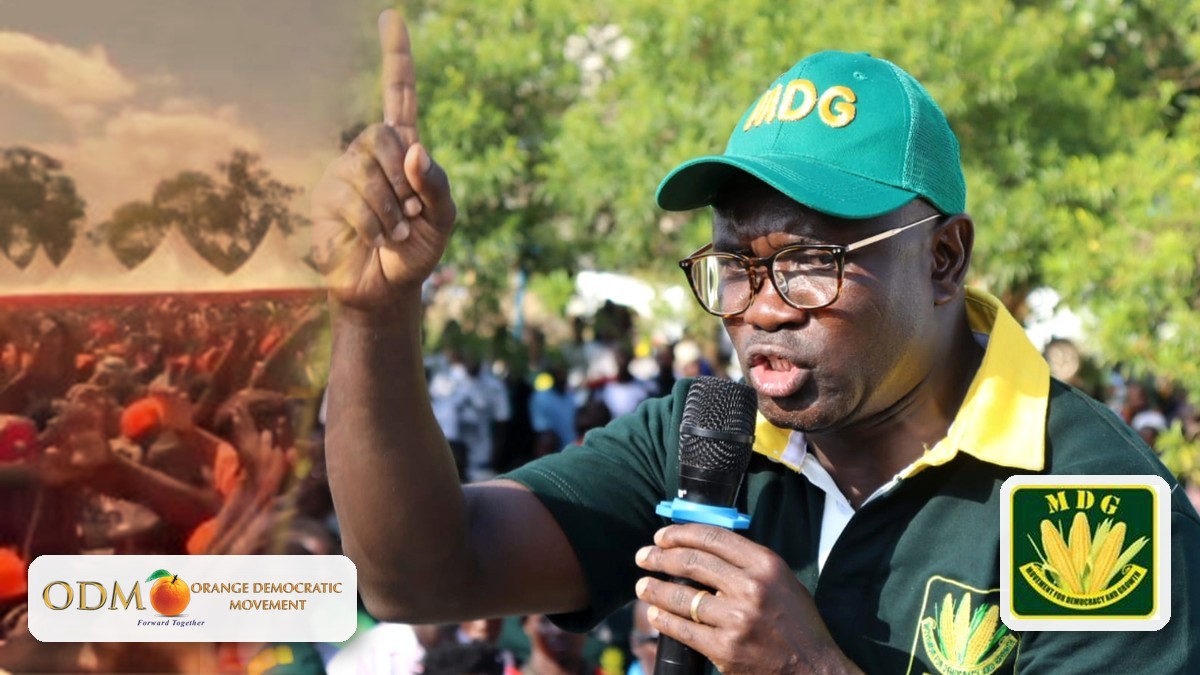
MDG party leader and Ugenya MP David Ochieng has made the pitch openly. “Those who fear going for primaries and those who feel they will be cheated in other parties are welcome to MDG,” he told the Star in February 2026.
That is the whole bargain in one sentence. MDG trades the strongest brand in Luo Nyanza for a fairer shot at simply being a candidate. With the general election set for August 10, 2027, this article looks at why that trade appeals to young aspirants, and why it may be less safe than it looks.
One caution up front: no published survey or party register counts how many Homa Bay youth have moved to MDG. The trend is reported locally and in conversation; what follows explains the documented forces behind it.
Background: an orange fortress and a small challenger
Homa Bay is one of ODM’s safest counties. Governor Gladys Wanga is ODM’s national chairperson, and the party showed its grip in the November 27, 2025 Kasipul by-election, where ODM’s Boyd Were won 16,819 votes to independent Philip Aroko’s 8,476 (Kenyans.co.ke).
MDG is a much smaller outfit built around David Ochieng, who has beaten ODM in Ugenya repeatedly since 2013. The party joined Kenya Kwanza in August 2022, and Ochieng remains friendly to President Ruto while staying outside ODM and UDA.
In February 2026 Ochieng said MDG had structures in Homa Bay, Kisumu, Siaya and Migori and had received governor aspirants for Homa Bay among other counties. He vowed to field candidates in all 27 Nyanza constituencies, plus governors, senators, woman reps and MCAs, calling it “not negotiable” (The Star).
Reason 1: the ghost of bungled primaries
The biggest driver is fear of being cheated at nominations. In a county where the orange ticket is close to a guarantee of victory, the primary is the real election, and young aspirants without money or godfathers expect to lose it unfairly.
That fear has evidence behind it. An internal ODM audit in 2023 found that some 2022 voting gadgets lacked safeguards against rigging, that rogue officials colluded with candidates, and that some candidates walked away with gadgets to cast multiple votes (People Daily). A 2017 review had already concluded that ODM primaries failed the test of free and credible elections.
Direct tickets deepen the worry. In October 2026, Kisumu Woman Rep Ruth Odinga publicly warned the party against promising certificates to preferred aspirants before primaries (People Daily). When a member of the Odinga family raises the alarm, a 28-year-old ward aspirant takes note.
Across Luo Nyanza, the pattern of establishment favourites is visible. In Siaya, Nicholas Gumbo, who quit ODM over the disputed 2022 nominations, has returned and is widely seen as the leadership’s preferred governor candidate (People Daily).
MDG’s answer is simple: join early and you will be on the ballot. Ochieng urges aspirants to register now rather than “returning only after they have been cheated,” since a loser in another party’s primary can only run as an independent.
Reason 2: zoning and the broad-based deal shrink the door
ODM’s cooperation with President Ruto has a direct effect on aspirants. Led by Wanga, ODM has demanded that UDA field no candidates in ODM strongholds as the price of backing Ruto in 2027 (People Daily). If zoning holds, a youth who loses the ODM primary cannot easily cross to UDA either.
MDG sits outside that pact. Ochieng says any ODM–UDA agreement “will not affect MDG’s plans,” which makes it one of the few established doors left open in a zoned Nyanza. Former Rangwe MP Martin Ogindo, now in UDA, argues zoning would force voters to accept “non-performing ODM leaders” and fuel apathy.
The mood among voters points the same way. In TIFA polling, Nyanza support for the broad-based government fell from 59% in November 2025 to 35% in June 2026, and 52% of Kenyans nationally oppose it (Citizen Digital). Young aspirants reading that shift want a label that is not tied to the deal.
There is an irony here. MDG is itself friendly to Ruto, and Ochieng has criticised leaders who block pro-government campaigners in Nyanza (People Daily). Its appeal is less about opposing the government than about escaping ODM’s gatekeeping.
Reason 3: a party split in two after Raila
Raila Odinga’s death in October 2025 removed the one figure who could settle ODM’s disputes. The party has since split between Oburu Oginga’s “Linda Ground” wing, which backs the broad-based government, and Edwin Sifuna’s “Linda Mwananchi” wing, now trying to register its own party.
Among ODM supporters, TIFA found Linda Mwananchi ahead nationally by 74% to 20%, and still ahead in Nyanza by 58% to 40% (Citizen Digital). Yet Homa Bay is Wanga’s home turf, and Wanga has accused Sifuna’s camp of betraying Raila (Daily Nation).
That leaves a young Homa Bay aspirant caught between two risks. Staying in ODM means competing inside the governor’s machine. Joining Linda Mwananchi means confronting it, and on August 16, 2026, a Linda Mwananchi rally in Homa Bay town ended with 2 dead and 46 injured as armed youths barricaded roads (The Star).
Linda Mwananchi’s own vehicle is also unsettled. The registrar approved its name change from The Equitable Party on October 15, 2026, but an aspirant lodged an objection on October 21 (Kenyans.co.ke).
Against that backdrop, MDG looks like a third lane. It is registered, it is not part of either ODM faction, and it carries no fight with the county government. For an aspirant who wants to avoid both the primaries and the street battles, that is what “safer” really means.
Reason 4: from foot soldiers to flag-bearers
Many Homa Bay youths are tired of being the muscle in other people’s campaigns. Before the August 16 violence, youths were reportedly paid Sh2,000 to Sh4,000 each to block the Linda Mwananchi convoy, and recruiters allegedly wanted more than 1,000 people (Daily Nation). Ambitious young people want to be on the ballot, not on the barricade.
MDG speaks that language of generational change. Ochieng often notes he entered Parliament very young, and in August 2026 he told Governor Orengo to quit politics and make way for younger leaders (People Daily). He has also cited the Gen Z protests as proof that youth “can be a force to reckon with” (The Star).
A small party also means a shorter queue. In ODM, a newcomer stands behind sitting MPs, MCAs and long-serving loyalists; ODM’s acting secretary general Catherine Omanyo said in October 2026 it would be “unfair” to nominate someone who joined three months ago over 10- or 20-year members (People Daily). In MDG, an early, energetic recruit can become the face of the party in a ward or constituency.
One gap remains: MDG’s own nomination rules and fees have not been published. Aspirants should ask for them in writing before treating MDG as a cheaper or fairer route.
The risks: why MDG may not be as safe as it looks
A guaranteed ticket is not a guaranteed seat. In the 2025 Kasipul by-election, MDG fielded Collins Okeyo (The Kenya Times), yet the race was ODM against an independent; Okeyo did not finish in the top three (Kenyans.co.ke). That is the clearest recent test of MDG in Homa Bay, and it was a poor one.
MDG’s record of beating ODM rests largely on one man in one constituency. Ochieng himself credits Ugenya’s trust in him personally, and describes life outside ODM in Nyanza as “extremely lonely” (The Star). A Homa Bay newcomer does not inherit that local loyalty.
The party’s own future is in play. In June 2026 ODM leader Oburu Oginga invited Ochieng back, promising, “you will be governor of Siaya” (The Star). Ochieng replied that he needs neither ODM nor Oburu, but a deal at the top could still leave MDG’s local candidates stranded.
Its political lane is also narrow. MDG is friendly to Ruto at a time when Nyanza support for the broad-based government has dropped to 35% in TIFA polling. Young voters looking for an anti-establishment option may prefer Linda Mwananchi once its registration settles.
Finally, ODM is responding. It has ruled out direct tickets and ordered its elections committee to build “fail-proof” nominations (People Daily). If those reforms are credible, the main reason to leave ODM weakens.
What to watch before August 2027
Whether MDG becomes a real force in Homa Bay or just a parking bay for aspirants will turn on a handful of decisions over the next few months:
- ODM’s nomination rules. If the National Elections Coordinating Committee delivers transparent primaries with no direct tickets, many aspirants may stay or return.
- The zoning deal. A firm ODM–UDA zoning pact makes MDG one of the few open doors; a collapsed deal gives aspirants more options.
- Linda Mwananchi’s registration. A settled, registered Sifuna party would compete directly with MDG for disillusioned youth.
- Ochieng’s own path. If he stays outside ODM and runs for Siaya governor on MDG, the party gains a regional flagship; if he cuts a deal, its candidates lose their anchor.
- MDG’s Homa Bay line-up. A credible governor or MP candidate would show the party is building in Homa Bay, not just collecting names.
Conclusion
Young aspirants see MDG as safer because it removes the most dangerous step in Homa Bay politics: an ODM primary that many expect to be decided before a single vote is cast. In a county shaken by a party split, a zoning fight and deadly rally violence, a quiet, registered party with an open door is attractive.
But MDG only solves the nomination problem. It does not solve the voting problem, and Kasipul showed how strong the orange brand remains. The aspirants who succeed on MDG in 2027 will be those who build personal followings the way Ochieng did in Ugenya, not those who simply flee ODM.
Photos: Lookup TV; The Star. Thumbnail design: HAMASTA MEDIA.




Show the impact of your work.
Impact stories, campaign videos and community engagement for NGOs and programmes.

More in Politics
See all
Road to August 2027: who will face Ruto, and how the numbers stack up
UDA says joint manifesto with ODM taking shape on Ruto's 'Usawa ni Sawa' agenda as 50-50 demand hangs over pact
No deal yet on opposition flagbearer as Kalonzo, Wamalwa troop to Gachagua's Wamunyoro home
KHRC logs 284 election-related violence cases in seven months, Nairobi tops list as police dispute findings
Nyoro and Methu trade claims over Ol Kalou campaign cash as Kioni warns feud could cost the opposition
Wiper says viral Kalonzo-Ruto photo is from 2018 condolence visit, insists the two will 'only meet at the ballot'
Global Community Remarks
0