
Alphabet shares tumble 10% as AI spending burns cash, while Microsoft rises on 48% Azure growth

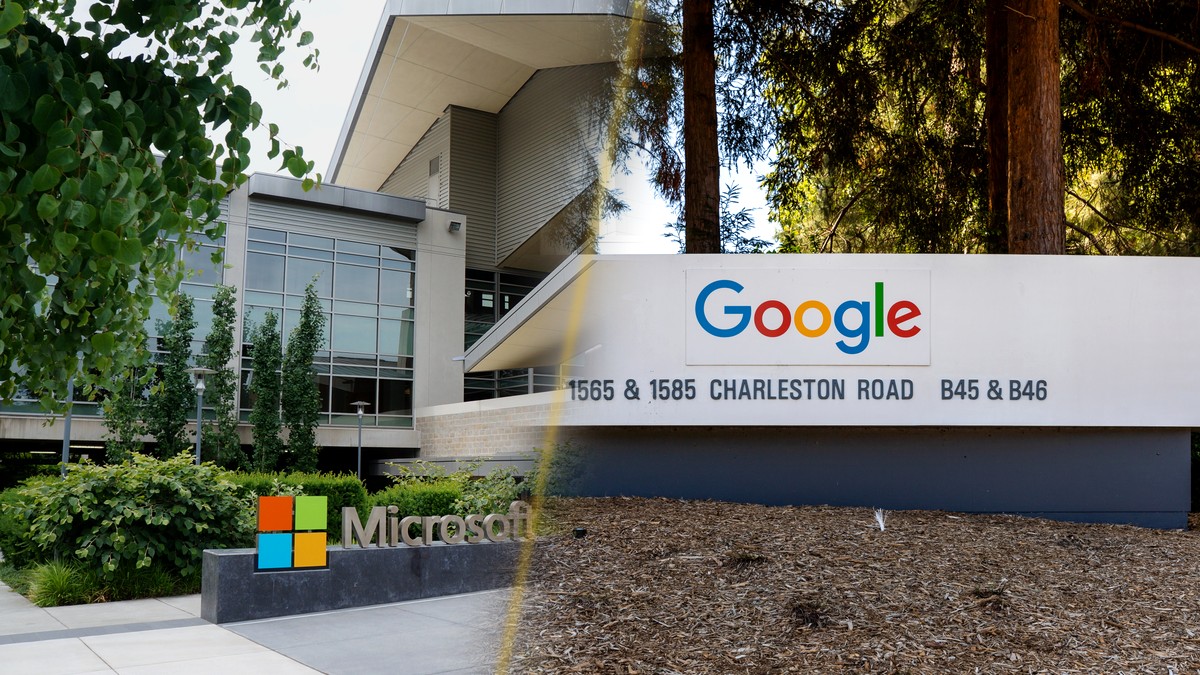
Two of the world's biggest technology companies delivered sharply different verdicts on the cost of the artificial intelligence boom on Wednesday evening, with Google's parent Alphabet losing about 10% of its value in extended trading while Microsoft climbed about 4%.
Both companies reported quarterly results after the US market close on October 28, and both showed booming demand for AI and cloud services. What split investors was how much cash each is burning to meet it.
Alphabet misses as cash flow turns negative
Alphabet posted third-quarter revenue of $127.58 billion, up 25% from a year earlier but slightly short of the $128.22 billion analysts expected, according to figures compiled by Gulf News. Adjusted earnings per share of $2.67 fell well below the $3.02 forecast, largely because of an $8.66 billion loss on equity investments.
Search revenue rose 12% to $63.35 billion, below expectations, and total advertising came in roughly $1.4 billion short. Google Cloud was the standout, more than doubling with 103% growth to $30.71 billion.
"Our AI infrastructure and solutions are the major drivers for Cloud growth," chief executive Sundar Pichai said.
The concern was spending. Capital expenditure jumped 114% to $51.36 billion in the quarter, and free cash flow swung to a negative $9.07 billion, against a positive $24.46 billion a year earlier. Alphabet kept its 2026 capital spending guidance at $195 billion to $205 billion and said outlays would rise significantly in 2027. Chief financial officer Anat Ashkenazi warned that cloud margins could come under near-term pressure because the company is relying on third-party computing capacity.
Microsoft's cloud keeps paying
Microsoft reported fiscal first-quarter revenue of $92.28 billion, up 19% and ahead of forecasts. Its Azure cloud platform grew 48% to $33.17 billion, the first time the company has disclosed Azure revenue in dollar terms, while the wider Microsoft Cloud business rose 30% to $63.9 billion.
Its commercial order backlog, known as remaining performance obligation, jumped 73% to $677 billion, a sign of long-term contracts already signed. Capital spending, including finance leases, rose 30% to $45.2 billion, below analysts' projections, and free cash flow stayed positive at $18.63 billion.
Chief financial officer Amy Hood guided for Azure growth of 49% to 50% in the current quarter at constant currency.
What investors are watching
The contrasting reactions show Wall Street's patience with open-ended AI spending is wearing thin. Investors are increasingly rewarding companies that can show AI investment turning into revenue and cash, and punishing those whose bills are rising faster than returns.
The results land in a heavy week for tech earnings, with Amazon and Apple still to report, and will shape sentiment across global technology stocks.
Photos: Jiaqian AirplaneFan via Wikimedia Commons (CC BY 3.0); Dietmar Rabich via Wikimedia Commons (CC BY-SA 4.0). Thumbnail design: HAMASTA MEDIA.


Grow an audience that listens.
Social media management, digital campaigns and online storytelling that converts.



More in Technology
See all
Samsung posts record $80bn quarterly profit as AI boom drives memory chip shortage, but phone unit slips into loss

Kenyan-built Cyzora Pay aims to make accepting M-Pesa a one-call job for developers
High Court lets Safaricom join Jamii Telecom's fight against new spectrum fees

Cassava becomes authorised reseller of Anthropic's Claude AI models across Africa

Airtel Money revenue jumps 34% to $830 million in first results since London listing

Hospitals to generate SHA claims straight from patient records under new Digital Health Agency system
Global Community Remarks
0