
48 hours, 14 days and a written notice: What MPs' decision on impounded vehicles means for every motorist, matatu owner and boda boda rider

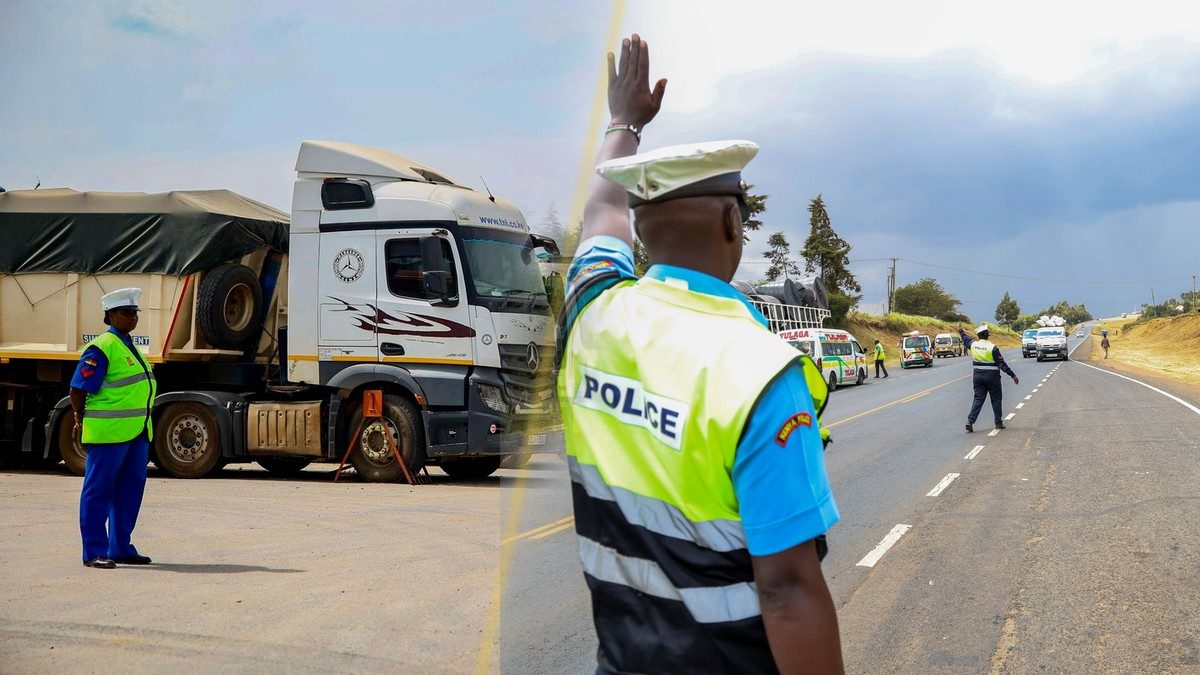
Ask any matatu owner what an impounded vehicle costs and the answer is rarely the fine: it is the days of lost fares while the van gathers dust in a police yard. For the first time, Parliament is close to putting a clock on that wait, although not the clock that public transport operators asked for.
The National Assembly's Departmental Committee on Transport and Infrastructure has recommended that the House pass the Traffic (Amendment) Bill, 2026, which caps how long police may keep a seized vehicle or motorcycle. In the same report, the committee declined a request by the Matatu Owners Association (MOA) to shorten the limit to 24 hours. The Bill has not yet become law.
What the law says today
Section 107 of the Traffic Act, Cap 403, lets a police officer detain a vehicle removed from the road "until such inquiries have been made by the police as they may think necessary in the circumstances of the case". There is no deadline in that sentence, and that silence is what the Bill targets.
Business Daily, which reviewed the Bill, reports that the open-ended wording has left motorists exposed to delays, lost income and demands for bribes even over minor offences, while station yards fill up with vehicles left to deteriorate. The newspaper names the sponsor as Yatta MP Robert Ngui Basil. The memorandum to the Bill says its aim is "to ensure that owners of vehicles and motorcycles are not unreasonably deprived of their property".
The stakes have grown with the number of vehicles on the road. Official data cited by Business Daily show registered vehicles more than doubled from 2.45 million in 2013 to 4.97 million in 2024.
The two new clocks
The Bill allows police to detain a vehicle for only two reasons: to use it as evidence in court, or to help investigate an offence. Each reason comes with its own limit.
- 48 hours: where a photograph or an assessment report is enough evidence for the court, the vehicle must be released within 48 hours of being impounded.
- 14 days: where the vehicle is needed for further investigations, police may hold it for a maximum of 14 days from the date of detention.
- Duty of care: the officer in charge of the station must take reasonable care to preserve the vehicle or motorcycle while it is in custody.
- Paper trail: under the committee's amendments, police would have to issue a written notice when a vehicle is detained and another when it is released.
The limits do not tie the hands of the courts. The Bill keeps the power of a court to make orders on property under Section 121 of the Criminal Procedure Code, so a magistrate could still direct that a vehicle be kept, or released, in a particular case.
What MPs turned down
MOA argued for safeguards against prolonged detention of vehicles that earn their owners a living every day, and asked for a 24-hour ceiling. The committee did not adopt it.
According to Kenyans.co.ke, which saw the committee's report, the lawmakers also rejected the association's wider wish list: electronic ticketing and digital traffic records run jointly by the National Police Service and the National Transport and Safety Authority, cashless payment of traffic charges, and rules to stop the same vehicle being flagged down repeatedly on one route. The committee's reasoning was that those ideas fall outside a Bill that deals only with how long police may detain vehicles, or are already covered by existing laws.
What it means for you
If the Bill passes as recommended, a motorist whose car is towed after a crash should expect it back within two days once police have photographed it and an assessment report is done. A boda boda rider whose motorcycle is held in an investigation would have a firm outer date, 14 days, to cite at the station or before a court, and a written notice to prove when the clock started.
Some gaps remain. The reports on the Bill do not spell out a specific penalty for an officer who holds a vehicle beyond the deadline, so enforcement may still depend on complaints and court applications. Towing charges are another open question: when the committee adopted its report on August 4, Bureti MP Kibet Komingoi proposed a legal cap on towing fees, arguing that the decision "should not be left entirely to the police officers on the ground", and members also wanted officers held responsible for valuables locked inside detained vehicles. The committee is chaired by Naivasha MP George Kariuki.
What happens next
The committee's report now goes before the whole National Assembly, where MPs will debate the Bill and vote on the proposed amendments. Members can still move changes on the floor, including a fresh attempt at a shorter limit. Until the Bill is passed and assented to, the present law, with no fixed deadline, continues to apply.
Photos: Nation Media Group via Business Daily (impounded trucks at Athi River weighbridge); Kenyans.co.ke (traffic police officer). Thumbnail design: HAMASTA MEDIA.
Every moment, captured beautifully.
Events, corporate portraits, products and editorial shoots by our newsroom photographers.





More in Crime & Justice
See all
Luo elders' trustees set to re-enter disputed Ofafa Hall after Kisumu court ruling
Natembeya Aide in ICU After Machete Attack at Kitale Home, Car Torched
AP officer charged over Ksh1.5m Kenya Prisons jobs scam, denies charges
Man jailed for life over 2023 Dublin school stabbing that sparked riots
Two suspected gang members shot dead after chase in Bamburi, Mombasa
High Court orders IG Kanja to restore Governor Natembeya's security detail
Global Community Remarks
0