
No hanging since 1987, yet courts still pass death sentences: What Kenya's UN vote to pause executions actually changes

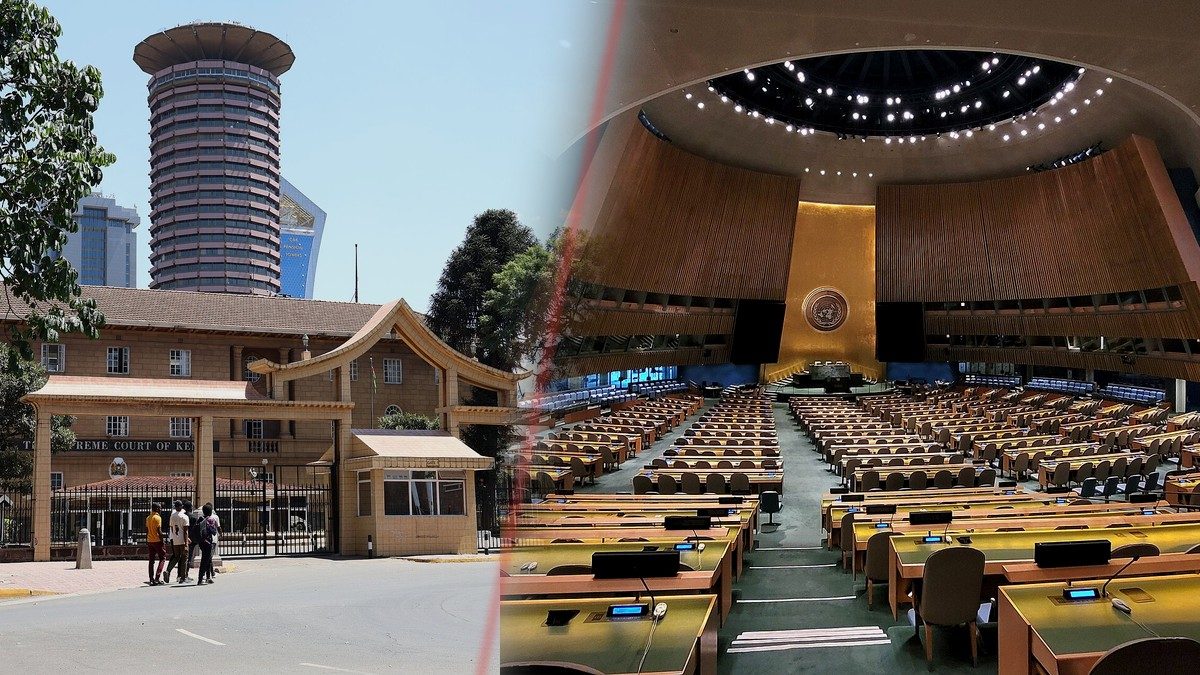
Kenya has not sent anyone to the gallows in 39 years, yet its judges still pronounce the sentence of death, more than a hundred times in some years. That contradiction is back in focus after Nairobi voted at the United Nations for the whole world to stop executing people.
On Friday, November 13, the UN General Assembly's Third Committee approved a draft resolution titled "Moratorium on the use of the death penalty" by 133 votes to 33, with 16 abstentions, according to the published summary of the meeting. Kenyans.co.ke and diaspora outlet Mwakilishi report that Kenya was among the 133 countries in favour.
What the UN voted on
The text, introduced by Mexico on behalf of a cross-regional group of states and sponsored with Switzerland, calls on countries to establish a moratorium on the death penalty with a view to abolishing it. It is a call, not a command: General Assembly resolutions of this kind are recommendations and do not bind member states. The draft still has to be adopted by the full Assembly, a step expected in December.
Countries voting against included the United States, China, India, Iran, Japan, Saudi Arabia, Egypt and Singapore. Before the final vote, the committee adopted an amendment from Singapore, by 97 votes to 63, reaffirming each country's sovereign right to decide its own legal penalties.
Supporters pointed to a rising toll. Mexico's delegate told the committee that reported executions had risen by almost 80 per cent compared with 2024. Amnesty International's tally, as cited in the Kenyan reports, is at least 2,707 executions in 17 countries in 2025, excluding the thousands believed to have been carried out in China. Iran accounted for at least 2,159, Saudi Arabia at least 356 and the United States 47.
Kenya's own record
- Last executions: 1987, when Hezekiah Ochuka and Pancras Oteyo Okumu were put to death over the failed 1982 coup attempt.
- Still on the books: the Constitution protects the right to life but allows the death penalty where a written law authorises it. The Penal Code prescribes it for murder, treason, robbery with violence and attempted robbery with violence.
- Still being imposed: 131 people were sentenced to death in 2023, up from 79 in 2022, according to figures from the organisation Crime Si Poa published by The Standard's Nairobian in 2025. The same report counted 158 prisoners on death row, 155 men and three women.
- No longer automatic: in the 2017 Muruatetu case, the Supreme Court declared the mandatory death sentence unconstitutional, giving judges discretion to impose a lesser penalty.
- Commutations: in July 2023, President William Ruto commuted to life imprisonment the sentences of all those who had been sentenced to death as at November 2022, The Standard reported.
Kenya's position at the UN is also recent. The World Coalition Against the Death Penalty notes that Nairobi abstained on the moratorium resolution from 2007 and voted in favour for the first time in December 2024. Friday's vote keeps Kenya in that camp.
So what changes at home?
In law, nothing yet. A vote in New York does not amend the Penal Code. Courts can keep handing down death sentences, and those convicted remain condemned prisoners until a sentence is commuted or overturned on appeal.
What the vote does is turn a long-standing practice into a public position. Kenya keeps the penalty but does not carry it out. Having asked other states to observe a moratorium, any Kenyan government that resumed executions would be acting against its own recorded vote.
Removing the sentence altogether would require Parliament to amend the Penal Code and the other laws that provide for it. Campaigners quoted by The Standard also note that Kenya has not ratified the Second Optional Protocol to the International Covenant on Civil and Political Rights, the treaty under which states commit to abolition.
The arguments on both sides
Those who want the sentence scrapped say that keeping people on death row for years with no execution date is itself a punishment, and that no justice system is immune to error. A senior prisons officer quoted by The Standard said condemned inmates are hard to place in rehabilitation programmes and are costly to manage.
States that voted No made the opposite case in the committee. Egypt's representative argued that capital punishment deters serious crimes that "threaten the lives and security of societies", while Singapore's delegate said all countries have the sovereign right to develop their own legal systems and warned against "imposing a consensus where there is none".
What to watch
The General Assembly's plenary vote in December will confirm the final tally. At home, the questions to follow are whether any Bill to replace the death sentence with life imprisonment reaches Parliament, and how many new death sentences courts record this year.
Photos: Francis Akuka/Wikimedia Foundation via Wikimedia Commons (CC0, Supreme Court of Kenya); Mojnsen via Wikimedia Commons (CC BY-SA 4.0, UN General Assembly Hall). Thumbnail design: HAMASTA MEDIA.


Grow an audience that listens.
Social media management, digital campaigns and online storytelling that converts.



More in Crime & Justice
See all
Luo elders' trustees set to re-enter disputed Ofafa Hall after Kisumu court ruling

Natembeya Aide in ICU After Machete Attack at Kitale Home, Car Torched

AP officer charged over Ksh1.5m Kenya Prisons jobs scam, denies charges

Man jailed for life over 2023 Dublin school stabbing that sparked riots

Two suspected gang members shot dead after chase in Bamburi, Mombasa

High Court orders IG Kanja to restore Governor Natembeya's security detail
Global Community Remarks
0