
10,000 jobs a month, but the price cap is still undisclosed: How Kenya's new Saudi recruitment deal is meant to work

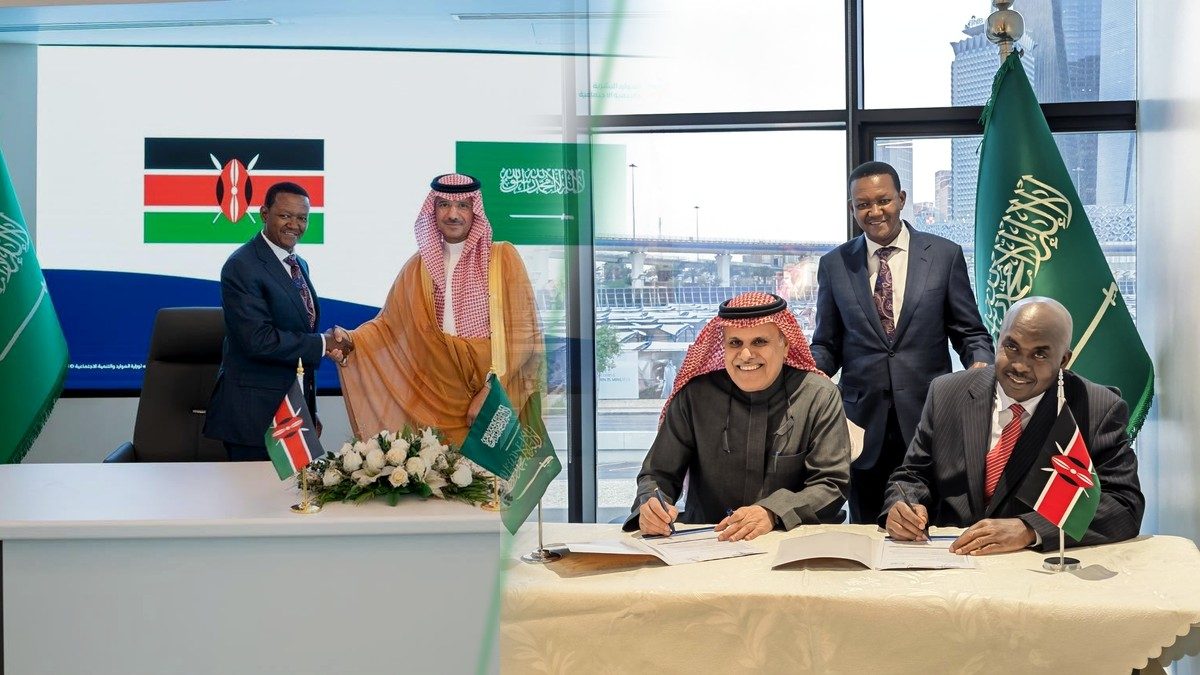
Two weeks ago, more than 350 Kenyans holding valid Saudi work visas were flown home after being refused entry to the Kingdom. This week, the government says it wants to send 10,000 workers there every month. Both facts describe the same labour corridor, and both matter to anyone weighing a job offer in the Gulf.
Labour and Social Protection Cabinet Secretary Alfred Mutua announced on Saturday, November 14, that Kenya and Saudi Arabia had signed a Letter of Intent in Riyadh setting up a recruitment framework. The signing followed his meeting with Saudi Arabia's Vice Minister for Human Resources and Social Development, Dr Abdullah bin Nasser Abuthnain.
What was agreed
- A three-month pilot programme, to be reviewed jointly by the two governments before any decision to extend or adjust it.
- An agreed, all-inclusive ceiling on the cost of recruiting a Kenyan worker. The figure has not been made public.
- Voluntary participation: agencies in both countries that are willing and able to work within the ceiling may join, and those that cannot will not be compelled to.
- A target of at least 10,000 Kenyan recruits a month in transport, hospitality, education, healthcare, construction, retail, and oil and gas.
Mutua said the cost of recruitment "places an unnecessary financial burden on Kenyans seeking employment abroad", and that lowering it would let workers keep more of their earnings.
A Letter of Intent sets out what two parties plan to do; it is not a guarantee of jobs. Capital FM, reporting on the Riyadh talks on November 11, described the pilot as covering recruitment fees for domestic workers, while Mutua's later statement lists a wider range of occupations, so the exact scope will become clearer only when the terms are published.
The numbers, and how they fit together
- 10,000 a month is 30,000 placements over the three-month pilot, or 120,000 in a year if it were sustained.
- 293,600 is a different number. On November 12, Mutua said employment agencies operating in Saudi Arabia had signed commitments for that many job opportunities. These are pledges by companies, not job offers to named workers. At 10,000 a month, filling them would take about two and a half years.
- 2.5 million is the number of new workers Saudi Arabia recruits each year, according to Mutua.
- More than 350,000 Kenyans were living and working in Saudi Arabia as at July 2026, by government estimates reported by Kenyans.co.ke.
Why the push is happening now
Money sent home from Saudi Arabia has fallen sharply. Central Bank of Kenya data reported by Capital FM show remittances from the Kingdom dropped to about $121.5 million in the first nine months of 2026, from $251.3 million in the same period of 2025. Governor Kamau Thugge told MPs in October that Saudi labour changes favouring skilled workers over semi-skilled ones had reduced the number of Kenyans there. Total diaspora remittances in October were $430.5 million, 1.9 per cent lower than a year earlier.
That helps explain why the government is asking for jobs beyond domestic work. Mutua said the two countries agreed to finalise a separate agreement on skilled workers within a month, and that Kenya is seeking better pay packages.
The catches
First, the door is not fully open. Saudi Arabia halted visas for travellers from Kenya on October 30 over the Ebola outbreak. Mutua told his hosts Kenya had recorded no community transmission and said he looked forward to "the full restoration of access for Kenyan workers". The reports on the Riyadh talks do not say that the restrictions have been lifted.
Second, the pilot is voluntary, so its reach depends on how many agencies sign up at a price that has not been disclosed.
Third, welfare. Mutua himself warned of rogue agents who "exploit job seekers, engage in fraudulent practices or expose our citizens to human trafficking and other forms of abuse", and said the government "will not relent" in acting against them. Cases involving Kenyans in the Kingdom continue to make headlines, among them that of a Kenyan mother of five sentenced by a Saudi court this month to 100 lashes. Mutua said the Riyadh talks also covered pay, pre-departure training and working conditions, and that a technical annex was signed to a domestic-worker agreement the two countries concluded on July 5, 2026.
If you are thinking of applying
- Deal only with agencies licensed by the National Employment Authority (NEA), which Mutua has directed to write to agencies interested in the pilot.
- Do not hand money or personal documents to an individual broker, and verify the agent's credentials and the job offer before paying anything.
- Ask the agency whether it is in the pilot and what the capped cost is, and get any fee breakdown in writing.
- Confirm whether Saudi entry restrictions for travellers from Kenya have been lifted before resigning from a job or selling property to fund the trip.
The first real test will come at the three-month review, when the two governments are due to assess recruitment numbers, implementation and outcomes.
Photos: People Daily (CS Alfred Mutua with Saudi Vice Minister Abdullah bin Nasser Abuthnain, and the Riyadh signing, via @DrAlfredMutua/X). Thumbnail design: HAMASTA MEDIA.

Tell your story on screen.
Commercials, documentaries, interviews and social video, from script to final cut.





More in Business
See all
KUSCCO Mutual Assurance Statutory Management Extended to December 31

Equity Group nine-month profit rises 32pc to Sh71.5bn on income growth

Treasury Proposes Car Loan and Mortgage Fund for TSC Secretariat Staff

Nigerian fintech Payaza enters Kenya after securing CBK payment licence

Family Bank nine-month profit jumps 69pc to Sh6.07bn on stronger lending

Kenya Industrial Estates opens 38 permanent jobs, applications close December 9
Global Community Remarks
0