
Where does your Sh226.96 go? Inside a litre of petrol, from the import bill to the taxman's share

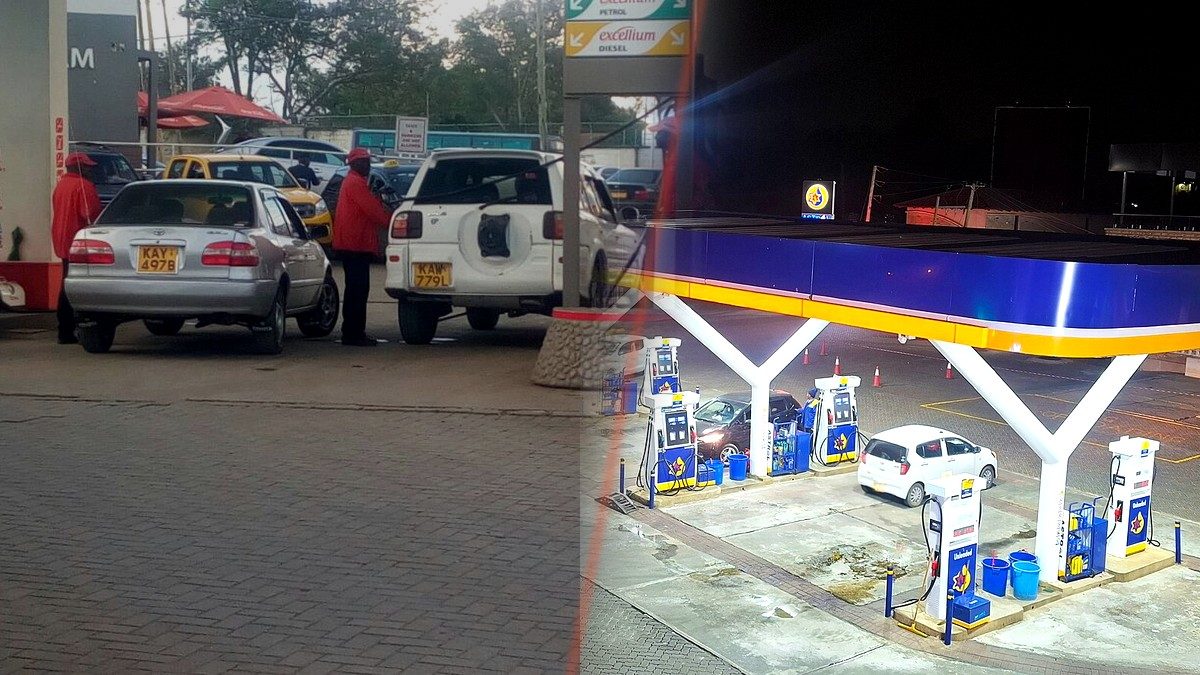
Fill a 50-litre tank with petrol in Nairobi today and you will part with about Sh11,348. A year ago, the same tank cost Sh9,226. The difference, more than Sh2,100, was not decided at the petrol station, and most of it was not decided in Kenya at all.
The Energy and Petroleum Regulatory Authority (EPRA) announced on Saturday, November 14, that maximum pump prices will stay unchanged until December 14: Sh226.96 for a litre of super petrol in Nairobi, Sh227.76 for diesel and Sh219.87 for kerosene. Behind the freeze is a calculation that is redone every month, and a Sh4.6 billion intervention that kept its result off the price boards.
Step one: the landed cost
Kenya imports all its petroleum in refined form, EPRA notes, so local prices depend on international markets and the exchange rate. The largest single part of the pump price is the landed cost: what it takes to buy the product and bring it into the country, priced in US dollars.
For this review, EPRA reported that the average landed cost of super petrol rose 6.11 per cent, from $977.55 per cubic metre in September to $1,037.30 in October, or Sh135,025 at the October exchange rate of Sh130.17 to the dollar. A cubic metre is 1,000 litres, so that works out to about Sh135 a litre before any Kenyan tax or margin is added, roughly 59 per cent of the Nairobi pump price. Diesel's landed cost rose 6.73 per cent to $1,137.09 and kerosene's by 0.71 per cent to $1,106.11.
There is a lag built in: the prices that apply from mid-November are computed from the previous month's import costs.
Step two: getting it to the pump
On top of the landed cost come the cost of storing and distributing the fuel, and margins for oil marketers. Transport is why prices differ by town. Under the current schedule, petrol's ceiling is Sh223.81 in Mombasa, the country's main import point, Sh225.73 in Nakuru and Sh226.51 in Eldoret and Kisumu.
A breakdown of the September-October cycle published by HapaKenya shows the proportions. Petrol then cost Sh214.03 a litre in Nairobi, made up as follows:
- Landed cost: Sh114.42 (about 53 per cent)
- Taxes and levies: Sh73.86 (about 35 per cent)
- Oil marketers' margins: Sh19.55 (about 9 per cent)
- Storage and distribution: Sh4.92 (about 2 per cent)
- Stabilisation adjustment: Sh1.28
Step three: the State's share
Roughly a third of that price was taxes and levies. They include excise duty, the Road Maintenance Levy, which stood at Sh25 a litre in the breakdowns published this year, the Petroleum Development Levy, a regulatory levy and value added tax.
The VAT line is unusual at the moment. EPRA says current prices include VAT at 8 per cent, half the standard 16 per cent rate, "in line with Government policy to cushion consumers from the negative effects of high international prices".
Levies set as a fixed amount per litre do not rise when world prices rise, which is one reason the landed cost now takes a bigger share of the total than it did two months ago.
Why the price did not move this month
On the calculation alone, prices should have gone up on November 15. EPRA said the government applied Sh4.6 billion from the Petroleum Development Levy Fund "to stabilise the computed petroleum pump prices", averting increases of Sh8.58 a litre for petrol, Sh10.54 for diesel and Sh1.16 for kerosene. Adding those amounts back gives about Sh235.54 for petrol and Sh238.30 for diesel in Nairobi.
The fund is built from a levy that motorists pay on every litre. In effect, money collected at the pump is being used to hold the price down now. In October, when the regulator indicated that stabilisation would not be applied, according to CarNews Kenya's review, petrol rose by Sh12.93, diesel by Sh9.90 and kerosene by Sh28.49 in a single cycle.
The year in numbers
Maximum Nairobi prices, November 2025 against November 2026, as compiled by CarNews Kenya:
- Super petrol: Sh184.52 to Sh226.96, up Sh42.44 or 23 per cent
- Diesel: Sh171.47 to Sh227.76, up Sh56.29 or about 33 per cent
- Kerosene: Sh154.78 to Sh219.87, up Sh65.09 or about 42 per cent
Diesel, which moves most goods and public transport, and kerosene, which many households use for cooking and lighting, have risen fastest.
What will decide December's price
Three things to watch before the next review on December 14:
- International prices of refined fuel, which set the landed cost.
- The shilling. It was almost flat between September and October, at Sh129.91 and Sh130.17 to the dollar; a weaker shilling makes every imported litre dearer.
- Policy. Whether the government keeps VAT at 8 per cent, and whether it draws on the levy fund again, will matter as much as the oil market.
EPRA's figures are ceilings, not fixed prices. Stations may charge less but not more, so it still pays to compare.
Photos: Cikumaria via Wikimedia Commons (CC BY-SA 4.0, motorists at a Kenyan petrol station); Queen Asali via Wikimedia Commons (CC BY-SA 4.0, petrol station in Kenya). Thumbnail design: HAMASTA MEDIA.


Grow an audience that listens.
Social media management, digital campaigns and online storytelling that converts.



More in Business
See all
KUSCCO Mutual Assurance Statutory Management Extended to December 31
Equity Group nine-month profit rises 32pc to Sh71.5bn on income growth

Treasury Proposes Car Loan and Mortgage Fund for TSC Secretariat Staff

Nigerian fintech Payaza enters Kenya after securing CBK payment licence

Family Bank nine-month profit jumps 69pc to Sh6.07bn on stronger lending

Kenya Industrial Estates opens 38 permanent jobs, applications close December 9
Global Community Remarks
0