
'A bill pending before Parliament has no force of law': Judge sides with petitioner on the principle, but still throws out bid to outlaw Ruto's foreign traders directive
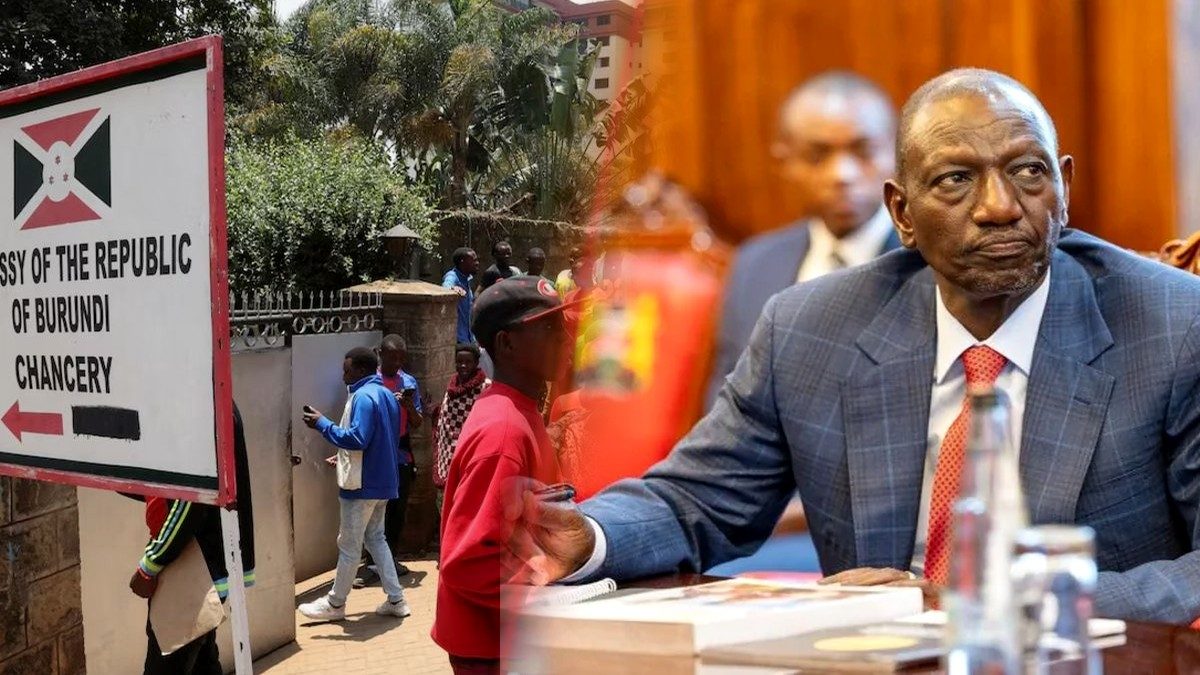
In early September, hundreds of Burundians queued outside their embassy in Nairobi for emergency travel documents, frightened by a presidential warning about foreigners running small businesses. Two months later, the High Court has ruled on whether that warning broke the law, and both sides can claim a partial win.
Justice David Mburu dismissed a petition by Benedict Wandeto that wanted President William Ruto's September 2 directive declared unconstitutional, null and void, Eastleigh Voice and Nairobi Wire reported. In the judgment delivered on Thursday, the judge found there was no evidence that the government had enforced the proposed restrictions against any specific person or business.
The petitioner wins the argument
Wandeto argued that the President had told state agencies to begin enforcing restrictions on foreign traders within five days, even though the Local Content Bill, 2025, which contains such restrictions, was still before Parliament.
On the legal principle, the judge agreed with him. "I agree with the petitioner that a bill pending before Parliament has no force of law and cannot, without an independent existing legal basis, be enforced through executive or administrative actions," he ruled.
He added that the Executive cannot act as if Parliament has already passed a proposed law, or impose restrictions whose only legal basis is that law.
But loses the case
The petition failed on evidence. "The petitioner has not identified a prohibition of the pending local content bill 2025 that was actually enforced against an identifiable person or business pursuant to the impugned pronouncement," Justice Mburu said.
He also rejected claims that the directive violated the rights to equality, freedom of movement, property and fair administrative action under Articles 27, 39, 40 and 47 of the Constitution. He found no proof of a blanket ban or mass deportations that would breach the East African Community Treaty, its Common Market Protocol or the African Charter.
The Attorney-General had argued that the President was only stating government policy, and that any action against foreign traders would rely on existing immigration, licensing and business registration laws, not the pending bill.
What it means for foreign traders
- The ruling does not approve any crackdown. It says a bill that has not been passed cannot be enforced.
- Foreign nationals still have to comply with existing immigration, work permit and licensing laws.
- The State told the court it had given foreign traders a 90-day window, announced on September 8, to regularise their papers.
The President's remarks in September caused panic in migrant communities. Reuters photographed Burundians seeking documents at their embassy on September 7, and reports of harassment of foreign traders led the government to warn Kenyans against intimidating them.
The Local Content Bill remains before Parliament. If it becomes law, its restrictions could be enforced, and that could open a new round of court challenges.
Photos: Reuters via The Citizen (Tanzania); William Ruto/X via Eastleigh Voice. Thumbnail design: HAMASTA MEDIA.
Every moment, captured beautifully.
Events, corporate portraits, products and editorial shoots by our newsroom photographers.





More in Crime & Justice
See all
Luo elders' trustees set to re-enter disputed Ofafa Hall after Kisumu court ruling

Natembeya Aide in ICU After Machete Attack at Kitale Home, Car Torched

AP officer charged over Ksh1.5m Kenya Prisons jobs scam, denies charges

Man jailed for life over 2023 Dublin school stabbing that sparked riots

Two suspected gang members shot dead after chase in Bamburi, Mombasa

Global Community Remarks
0