
Kenya extends raw macadamia export window by six months to clear 30,000-tonne stockpile
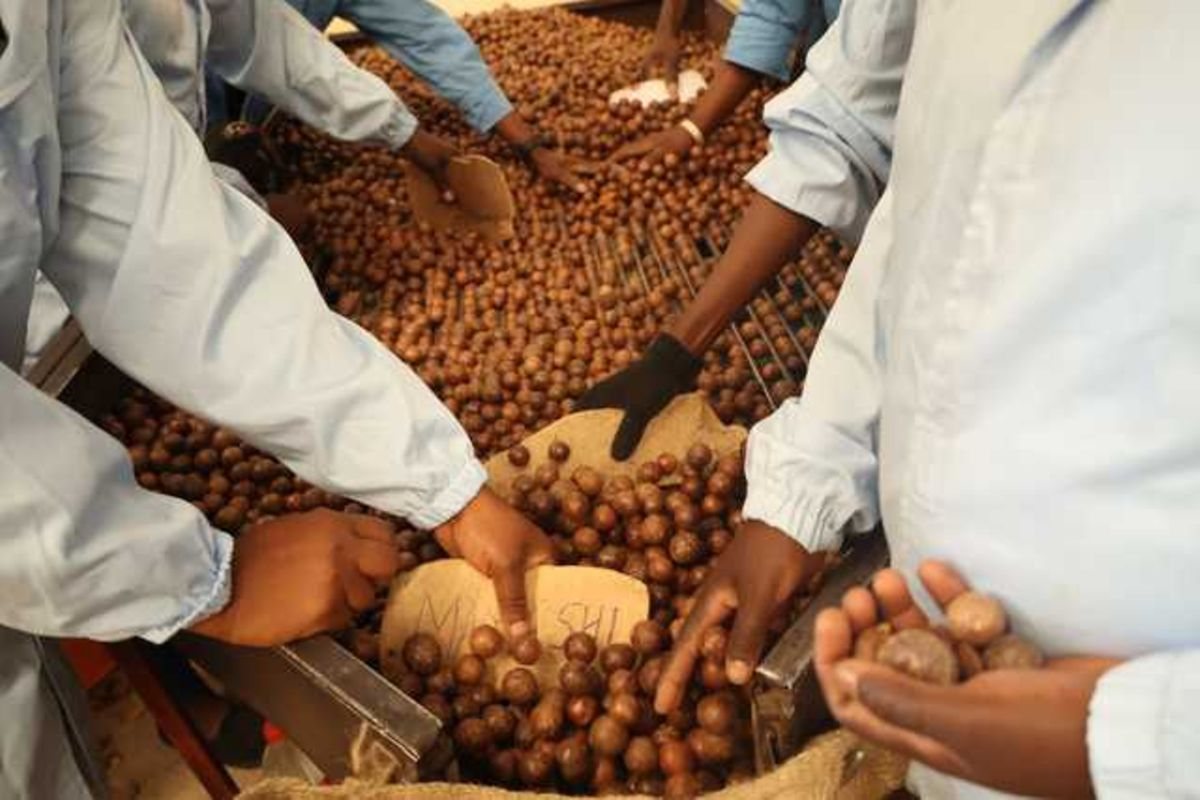
Macadamia farmers and traders have been granted an additional six months to export raw, in-shell nuts, after the Agriculture and Food Authority (AFA) extended a controlled export window that had closed in October, according to Business Daily.
The move delays the return of the ban on raw nut shipments to May next year and is aimed at clearing stocks that have piled up across the sector. More than 30,000 tonnes of macadamia nuts are reportedly waiting to reach wider markets.
In a statement, the Authority said the decision was made in consultation with the office of the Agriculture Cabinet Secretary, and that the extension was meant to help market the remaining stocks and open up additional opportunities for sellers.
Price gap drives push for exports
For growers, the extension offers a chance to sell more of their harvest abroad rather than depend solely on local processors, who have long dominated buying in the domestic chain.
Farmers say the difference in prices is stark. Growers report that local processors offer between Sh50 and Sh80 per kilogramme of raw nuts, while export buyers have offered as much as Sh200, Business Daily reported.
The new window follows a farmers' forum held in Gatanga on November 5, where growers and other players in the industry raised concerns about the difficulties they face in selling their crop.
Previous window poorly utilised
However, the last export window exposed questions over whether the industry can convert such concessions into actual sales. When it closed on October 10, only 700 tonnes had been shipped out of an allocation of 14,000 tonnes.
Restrictions on raw nut exports are designed to discourage early harvesting. Farmers eager to sell raw nuts risk picking immature produce, which yields poor kernel recovery and low oil content, damaging the country's standing in international markets.
A long-running dispute
The policy has divided the industry for years. Processors argue that exporting raw nuts starves local factories of the supply they need to sustain value addition, jobs and investment.
Growers, on the other hand, say limited competition for their produce weakens their bargaining power when negotiating with local buyers. Allowing more traders into export markets could increase competition for raw nuts and give farmers alternative buyers.
Processors have also repeatedly warned that immature nuts have a short shelf life in addition to low kernel and oil yields, undermining competitiveness in markets with strict quality requirements.
Smallholders at the centre
Kenya's macadamia sector relies heavily on smallholder farmers, particularly in the Central and Eastern regions, where the crop is an important source of income. For these households, the farm-gate price determines what is left after paying for labour, harvesting, transport and farm upkeep.
Kenya is one of the world's leading macadamia exporters, but in recent years the sector has struggled with inconsistent quality and volatile prices, problems blamed on early picking and unregulated trading by middlemen.
The crop remains a key source of foreign exchange, with exports going to the United States, Europe and Asia, where buyers pay a premium for consistency and traceability.
This story was prepared by the Hamasta Newsdesk with AI assistance, based on reporting by Business Daily. Read the original report. Photo: Business Daily.


Take your event live to thousands.
Multi-camera live streams, panel discussions and digital broadcasts with professional crews.




More in Business
See all
KUSCCO Mutual Assurance Statutory Management Extended to December 31

Equity Group nine-month profit rises 32pc to Sh71.5bn on income growth

Treasury Proposes Car Loan and Mortgage Fund for TSC Secretariat Staff

Nigerian fintech Payaza enters Kenya after securing CBK payment licence

Family Bank nine-month profit jumps 69pc to Sh6.07bn on stronger lending

Global Community Remarks
0