
Nandi Workers Turn Timboroa-Meteitei-Kopere Road Jobs into Cows, School Fees
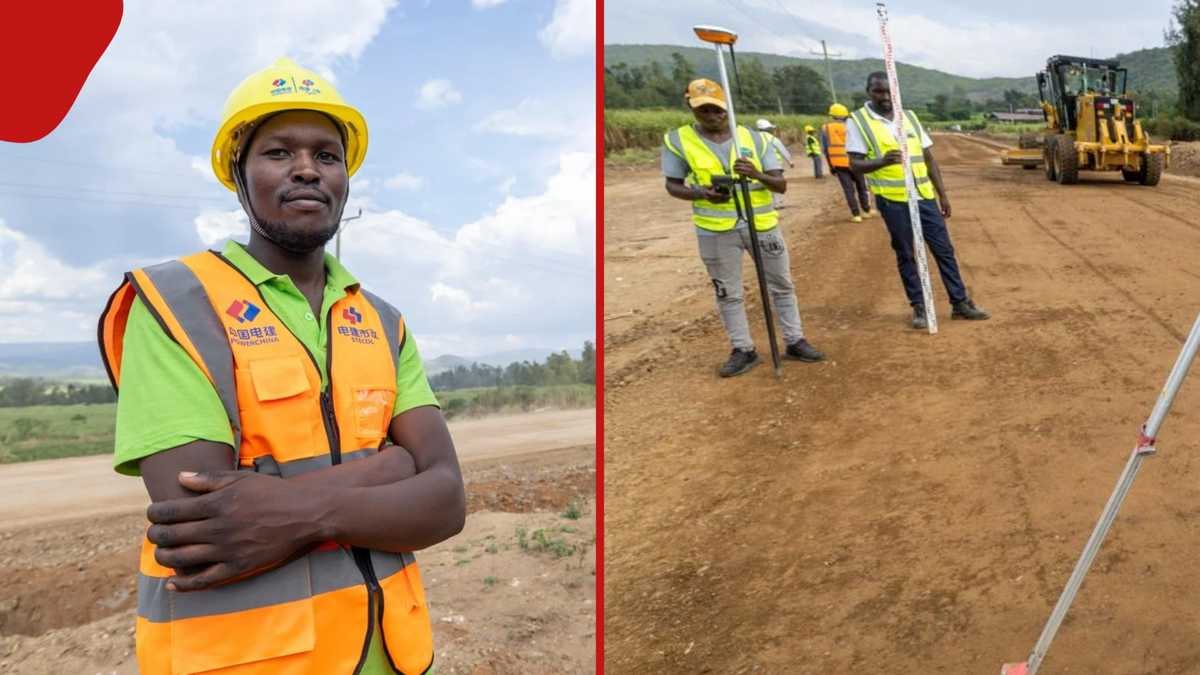
A resident of Taptengelei in Nandi County has used wages earned on the Timboroa-Meteitei-Kopere Road construction project to buy nearly two cows, one of several workers whose lives have been reshaped by the ongoing upgrade, according to Tuko.
Victor Kipkosgei owned no livestock when he joined the construction site. Months later, his earnings have gone towards acquiring cattle, an asset widely regarded in rural households as a marker of economic security.
Project at 80% completion
The 63.2-kilometre road is being upgraded from gravel to bitumen standard. According to Tuko, the works have reached 80% physical progress, with about 46 kilometres already finished.
Roughly 200 technical and casual workers have been hired since construction started, most of them drawn from the communities living along the route. Their wages are flowing back into local homes in an area where formal employment opportunities are scarce.
The project engineer said recruitment had deliberately targeted residents of the corridor so that the economic benefits of the works stay within those communities as construction continues, Tuko reported.
Skills beyond the pay cheque
For some workers, the project has offered more than a monthly income. Mercy Chepkemoi, a laboratory attendant, has spent nearly two years on the site collecting construction materials, carrying out laboratory tests and reporting results to confirm that the materials meet engineering specifications.
Over that time, her responsibilities have grown. She has learnt to operate heavy machinery such as rollers and has gained experience working as part of a team.
Chepkemoi said the project had created openings for young people who did not proceed to college, giving them a chance to discover practical talents and get a feel for the demands of a real workplace.
Fees and household needs
Samuel Karanja, who comes from the Timboroa area, said the income from the project has enabled him to pay school fees and meet his children's daily household needs.
Other workers interviewed shared similar views, describing the project as a cushion against unemployment in a region with limited formal jobs, according to Tuko.
Lasting gains from temporary work
For Kipkosgei, the cattle mean more than their market price. They represent a durable return from what is ultimately a temporary construction contract, showing how wages spent prudently can leave a household better off long after the work ends.
The workers' accounts illustrate how public infrastructure spending can reach beyond roads and bridges to improve the welfare of individual families along a project's path.
Wider Rift Valley road investment
The Nandi project comes alongside a separate government initiative highlighted by Tuko: a KSh 77.7 billion, World Bank-funded programme to upgrade 536 kilometres of roads across seven Rift Valley counties.
That plan also covers community facilities and improvements to three cross-border trade stations, with the aim of linking rural communities to wider markets.
This story was prepared by the Hamasta Newsdesk with AI assistance, based on reporting by Tuko. Read the original report. Photo: Tuko.
Every moment, captured beautifully.
Events, corporate portraits, products and editorial shoots by our newsroom photographers.





More in Business
See all
KUSCCO Mutual Assurance Statutory Management Extended to December 31

Equity Group nine-month profit rises 32pc to Sh71.5bn on income growth

Treasury Proposes Car Loan and Mortgage Fund for TSC Secretariat Staff

Nigerian fintech Payaza enters Kenya after securing CBK payment licence

Family Bank nine-month profit jumps 69pc to Sh6.07bn on stronger lending
Global Community Remarks
0