
Kindiki receives charter for nationwide war on illicit alcohol and drugs
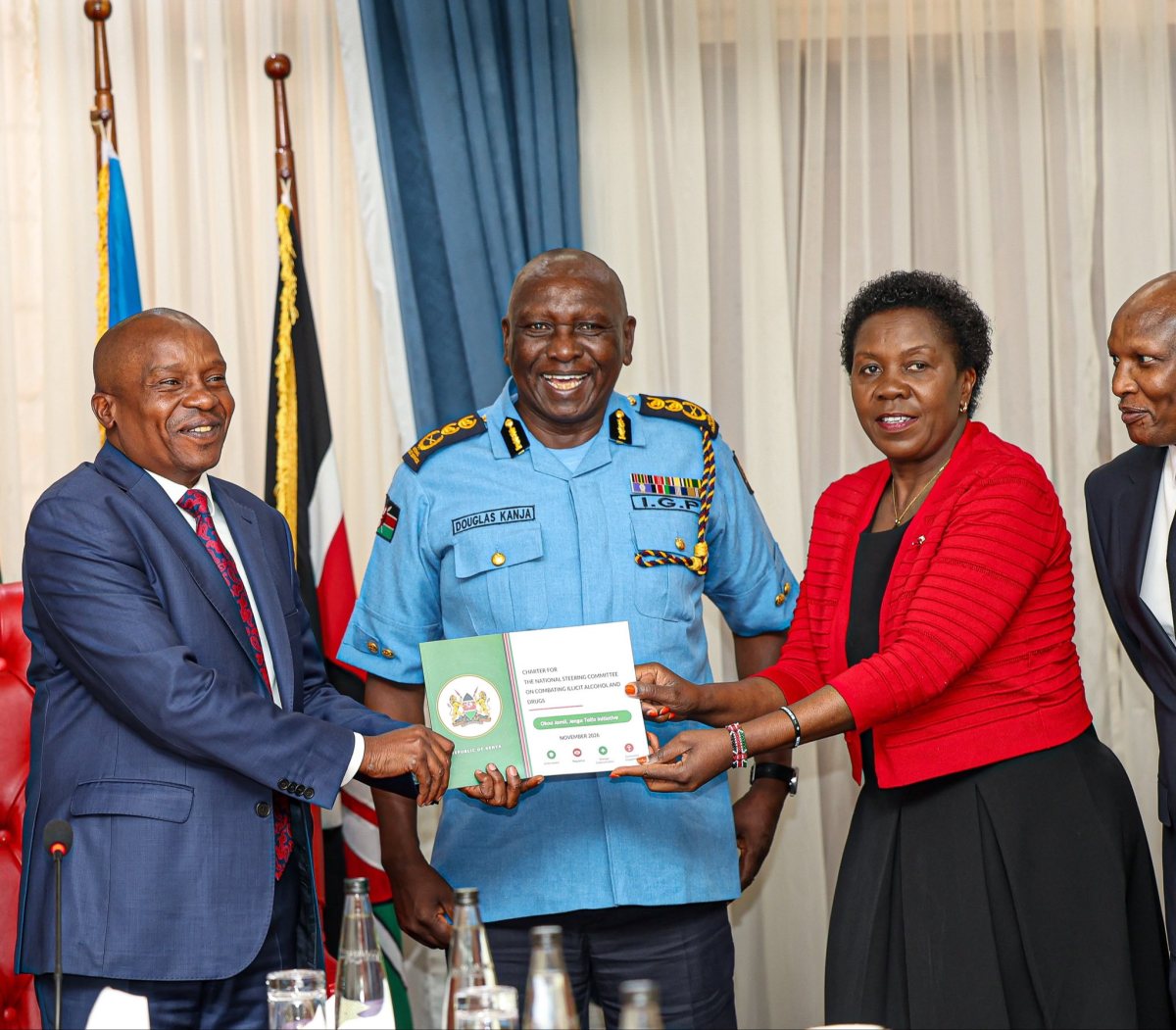
Deputy President Kithure Kindiki has received a national charter that will steer an intelligence-led operation against the manufacture, distribution and sale of illicit alcohol and narcotic drugs across Kenya, according to KBC.
Kindiki has instructed the National Steering Committee on Combating Illicit Alcohol and Drugs to begin rolling out activities in all parts of the country, with community-led initiatives forming a central part of the campaign.
He also approved "Okoa Jamii, Jenga Taifa" as the official theme of the drive.
Charter to coordinate the campaign
In a statement posted on X, the Deputy President said the committee had briefed him on operations already under way, as well as on proposed amendments to the law aimed at tightening enforcement, curbing the illegal trade and supporting the rehabilitation of those affected.
According to Kindiki, the charter will shape how the campaign is coordinated, how communities are brought on board and how information is communicated to the public.
He said he had instructed the committee to launch community-led initiatives nationwide for what he described as an "all-out war on illicit alcohol and drugs".
Proposed changes to fines and penalties
Among the legislative proposals presented is a review of the fines imposed on those who manufacture, distribute or sell illicit alcohol and drugs. Under the plan, money collected from such fines would be directed towards the rehabilitation of victims of substance abuse.
The proposals also target people who divert ethanol intended for industrial purposes into the production of illicit alcoholic drinks. Offenders would face heavier penalties than at present.
Under the suggested changes, fines for ethanol diversion would be set as multiples of the value of the ethanol diverted. The aim, according to the proposals, is to make the illegal practice so financially costly that it becomes unsustainable for those involved.
The key elements of the proposals include:
- A review of fines on manufacturers, distributors and sellers of illicit alcohol and drugs
- Channelling fine proceeds towards rehabilitating victims of substance abuse
- Heavier penalties for diverting industrial ethanol into illicit drinks
- Fines calculated as multiples of the value of the diverted ethanol
Senior officials in attendance
The meeting at which the charter was presented brought together senior figures from the justice and security sectors. Those present included the Attorney General, the Inspector General of Police and the Director of Public Prosecutions, KBC reported.
Relevant Principal Secretaries and heads of various government agencies also attended.
The involvement of law enforcement, prosecution and legal officials signals a whole-of-government approach to the campaign, combining policing, prosecution and legal reform with community participation.
What next
The proposed legislative changes would need to go through the formal law-making process before taking effect. In the meantime, the steering committee is expected to begin rolling out its community-led activities across the country under the new charter.
Illicit alcohol has long been a public health and security concern in many parts of Kenya, with successive administrations launching crackdowns on the trade.
This story was prepared by the Hamasta Newsdesk with AI assistance, based on reporting by KBC. Read the original report. Photo: KBC.



Know what people say about you.
Media monitoring, audience insights and strategic communication for your brand.


More in Politics
See all
Nairobi County Uses Bank Overdraft to Clear Staff Salaries, Controller of Budget Says
Senators raise devolution concerns over Treasury control of county bank accounts
Sifuna's Linda Mwananchi Movement unveils two-week US diaspora tour
Ruto to give State of the Nation Address to Parliament this afternoon

KDF opens nationwide recruitment, warns bribery will lead to arrest and prosecution
.jpeg)
Global Community Remarks
0