
Ruto warns against reducing communities to voting blocs in veiled jab at Gachagua
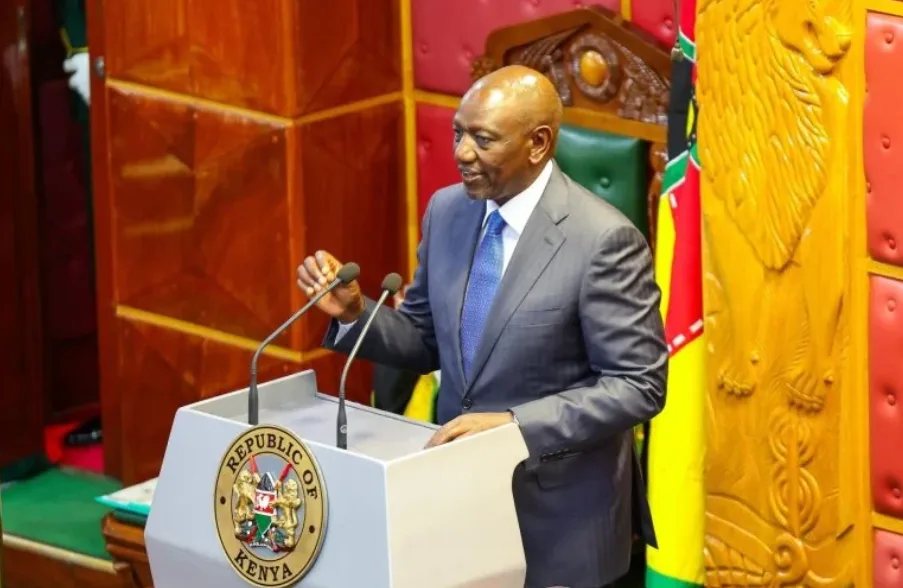
President William Ruto has cautioned political leaders against asking whole regions to hand their political choices to individual figures, in remarks seen as a thinly veiled attack on former Deputy President Rigathi Gachagua and his campaign to rally the Mt Kenya region.
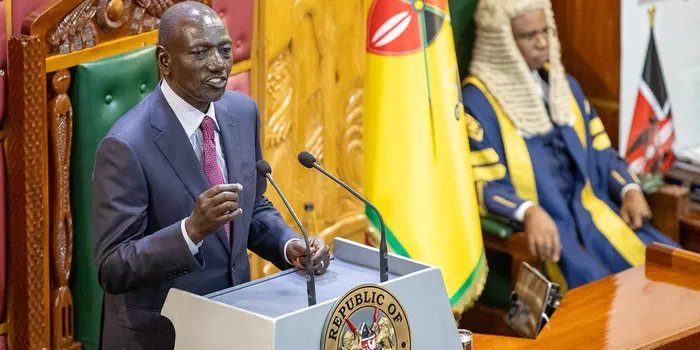
Speaking during his State of the Nation Address to Parliament on Wednesday, the President said voters should weigh those seeking office on the strength of their proposals and their performance, according to Capital FM Kenya.
"No community should be reduced to a voting bloc," Ruto told lawmakers.
He did not name Gachagua. However, the comments come as the former Deputy President works to bring Mt Kenya behind his Democracy for the Citizens Party (DCP), which he has been promoting as the region's new political home.
Gachagua's growing camp
Gachagua has repeatedly called Mt Kenya a DCP stronghold and has urged residents to turn away from the ruling United Democratic Alliance (UDA) and from sitting legislators aligned with it, whom he has labelled traitors.
His efforts gained momentum on Tuesday when three serving lawmakers crossed over from UDA to DCP. At his Wamunyoro home, Gachagua received Gatundu South MP Gabriel Kagombe, Nyeri Woman Representative Rahab Mukami and Laikipia West MP Wachira Karani. Capital FM Kenya reports that Kagombe's move had been held back by party hardliners since August.
Gachagua hailed DCP as the party of both the present and the future, and said the so-called transfer window for UDA members wishing to join would stay open until December 31, 2026.
He said the party's membership in Parliament had risen from 19 to 25 following the latest moves, and predicted that DCP would have 60 MPs by next year.
Other notable politicians who have already joined the party include Murang'a Governor Irungu Kang'ata, Nakuru Senator Tabitha Karanja and Nyandarua Governor Kiarie Badilisha.
Gachagua has been working to firm up his support base in the region since falling out with Ruto and being impeached in October 2024.
A call for issue-based politics
In his address, Ruto appeared to respond directly to the rhetoric coming from the DCP camp. He said citizens must be free to examine what candidates are offering, how they plan to deliver it, and how their success would be measured.
The President said this test should apply first to those in government, adding that the administration must answer for its promises and record. He also said those presenting themselves as alternatives must lay out their plans, and that every leader must respect the public's right to question and choose.
Ruto called for a serious national debate on production, jobs, education, healthcare, infrastructure and opportunity, urging leaders to move away from politics built around individuals.
He challenged political players to explain how they would bring down electricity costs, pay for infrastructure, create employment, improve healthcare and widen access to education.
According to the President, proposals should be tested against evidence, commitments against the resources available, and promises against the results delivered.
Looking beyond 2030
Ruto also referred to the national conversation launched in August 2026 on Kenya's development after 2030. He called for a development charter capturing shared national goals and commitments, one that could outlast individual election cycles.
The exchange signals an intensifying contest for the vote-rich Mt Kenya region, which played a central role in Ruto's election alongside Gachagua before the two fell out.
This story was prepared by the Hamasta Newsdesk with AI assistance, based on reporting by Capital FM Kenya. Read the original report. Photo: Capital FM Kenya.


Take your event live to thousands.
Multi-camera live streams, panel discussions and digital broadcasts with professional crews.




More in Politics
See all
Ruto says public board seats will no longer be handed out as political rewards
Sifuna brands Ruto's fourth State of the Nation Address a 'State of Imagination'
Ruto says 707,000 Kenyans have landed jobs abroad in State of the Nation speech
Ruto Names 14 Priority Roads, Says Nairobi-Mombasa Highway Dualling Near
Women's lobby accuses Gachagua of tribal politics in Nairobi, defends Sakaja
Global Community Remarks
0