
Ukraine takes its war with Russia underground in old Soviet gas pipeline
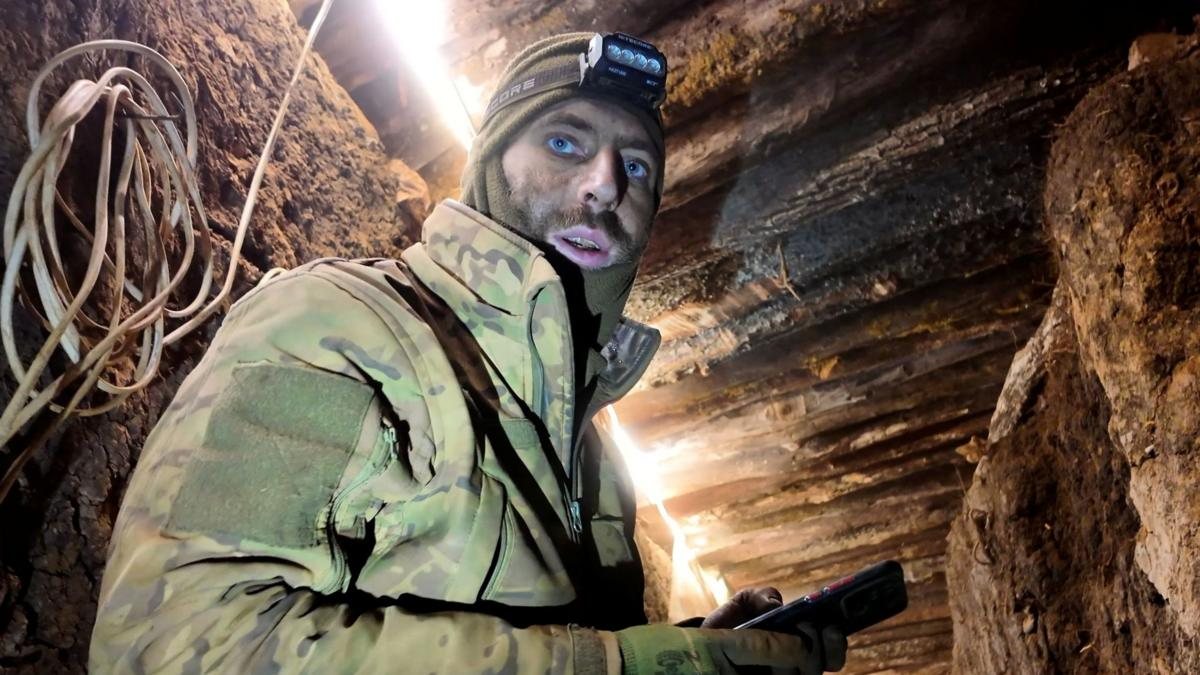
Ukrainian forces have opened an underground front in the war with Russia, fighting for the past seven months inside a disused Soviet gas pipeline in the north-eastern Kharkiv region, according to BBC News World.
The pipe is only slightly more than a metre wide, leaving troops room to crawl but little else. Soldiers say it offers relative protection from the drones that now fill the skies over the front line and have made advancing on the surface extremely difficult for both armies.
A Russian tactic turned back
Russia was the first to use the pipeline, sending troops through it to infiltrate the nearby city of Kupyansk in September 2025. Russian forces had previously used underground pipelines during the capture of Avdiivka in 2024 and in last year's push to retake parts of Russia's Kursk region, the BBC reported.
Ukraine's response, named Operation Veles after a mythical Slavic god of the underworld, began in April. Since then, Ukrainian troops say they have pushed 15km along the pipe. Kyiv says more than 100 Russian soldiers have been killed and 30 taken prisoner during the operation.
Both sides have cut openings in the steel with welding equipment so they can climb out to the surface, where most of the combat still takes place. Russian forces have also built fortified positions inside the pipe and continue trying to burrow in and out to outflank Ukrainian units.
The 'Kupyansk metro'
Troops and supplies move along the pipeline on a purpose-built electric cart that soldiers have nicknamed the Kupyansk metro. BBC journalists rode it for about 40 minutes, crouched with heads bowed, to reach a breach where Ukrainian forces have dug out storage space for ammunition and equipment.
A soldier known as Musician, who coordinates movements there, said he had spent three months underground with only brief trips to the surface. Despite the sound of artillery overhead, he told the BBC the position was safe.
Another soldier, Vovochka, who had just returned from three weeks of surface fighting, said the pipe was more comfortable because
"drones don't fly here, and neither do artillery shells or glide bombs."
Bodies, booby traps and panic attacks
Members of the 13th Khartiia Brigade of Ukraine's National Guard said their first job was clearing water, debris and Russian barricades from the tunnel. Some barriers were booby-trapped or stacked with the bodies of Russian soldiers, they said. Ricocheting bullets in the confined steel tube were another constant danger, and one soldier said he had been forced to sleep beside corpses.
The unit's commander, Biashym, a former miner, said some troops had suffered panic attacks in the cramped conditions, while others had difficulty breathing. Many sustain abrasions from spending long periods on their knees.
Hundreds of Colombian volunteers serving with the RUG 23rd Assault Regiment have also taken part. One, known as Gecko, said it took his group 30 days to clear just 500 metres, describing the heat and fear inside the pipe.
A model for future fighting?
Zanuda, head of planning for the Khartiia Brigade, believes ground operations have become almost impossible and that underground warfare is now the only viable option. He expects more such missions, noting that Soviet-era pipelines once carried oil, gas and ammonia across Ukraine to Europe.
President Volodymyr Zelensky has praised the operation as a success. It has helped Ukraine recover lost ground and lifted morale, but the BBC notes that, on its own, it has not changed the overall course of the war.
This story was prepared by the Hamasta Newsdesk with AI assistance, based on reporting by BBC News World. Read the original report. Photo: BBC News World.


Grow an audience that listens.
Social media management, digital campaigns and online storytelling that converts.



More in International
See all
At least one dead as migrant boat carrying about 100 capsizes off Senegal
Russian man charged with spying on Silicon Valley defence firm that helps Ukraine

US sanctions Lebanese charity it accuses of being a Hezbollah front
.jpeg)
EU gives Sh78 million to aid Ethiopians displaced into Moyale by clashes
Iraq jails six French nationals for life over ISIL membership
Global Community Remarks
0