
US lawmakers push for $25 federal minimum wage and end to tipped pay system
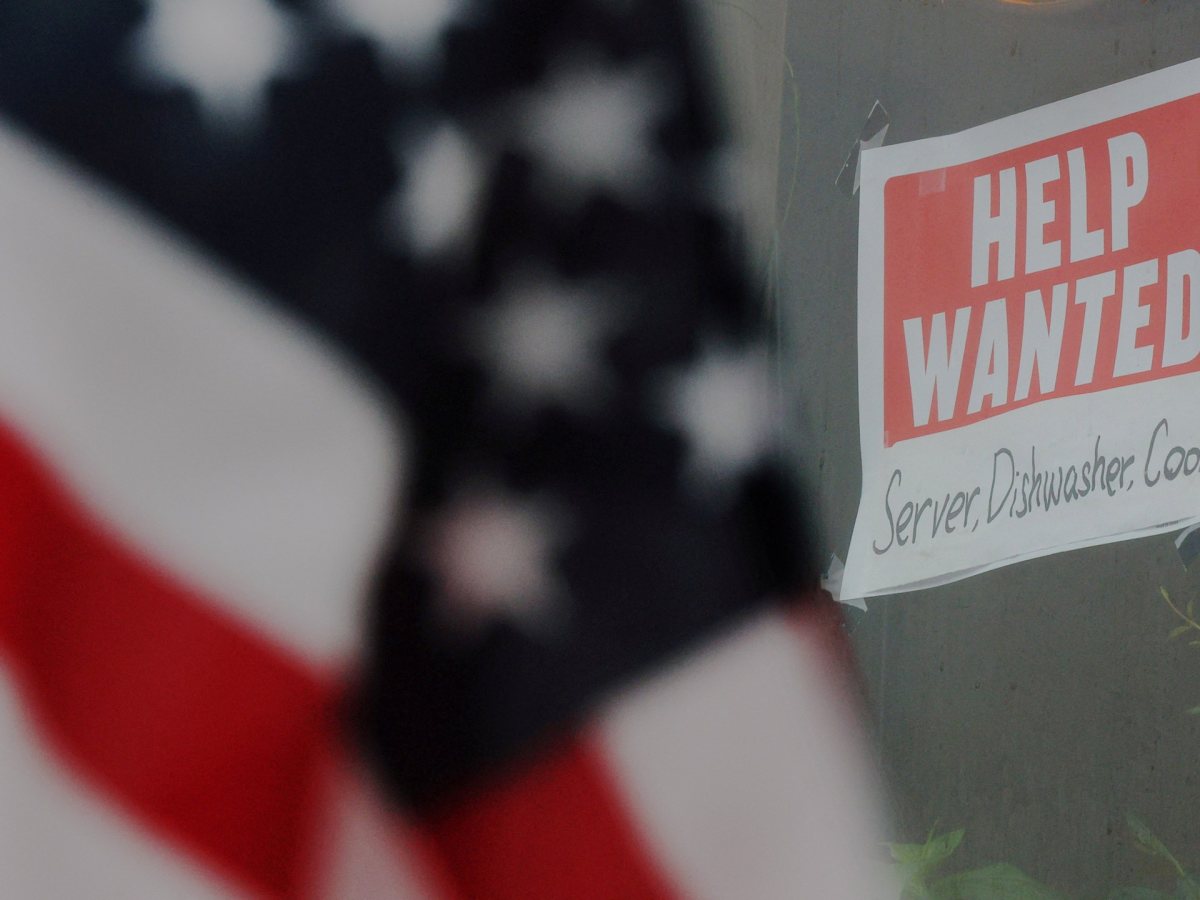
A group of 17 United States lawmakers is stepping up pressure on Congress to raise the federal minimum wage to $25 an hour and abolish the lower wage paid to tipped workers, according to Al Jazeera.
The group, made up of sitting and newly elected members of the House of Representatives, is backing the Living Wage For All Act. The bill has stalled since it was introduced in April.
Its original lead sponsors include Representatives Delia Ramirez and Jesus "Chuy" Garcia, both of Illinois, and Representative Analilia Mejia of New Jersey.
What the bill proposes
The legislation would raise the federal minimum wage to $25 in stages, with deadlines tied to the size of the employer.
- Larger employers, defined as those with more than 500 staff nationwide or at least $1bn in yearly revenue, would have to complete the increase by 2031.
- Smaller employers would be given until 2038.
- After that, the minimum wage would be pegged at two-thirds of the US median hourly wage and adjusted every year.
The bill would also end the separate subminimum wage for tipped workers, which currently stands at $2.13 an hour. Under present rules, employers may count customers' tips towards meeting their minimum-wage obligations.
Brad Lander, a congressman-elect from Brooklyn, New York, said he would sign on as a co-sponsor when the new congressional session opens in January. "Doing it federally is the right way to go," he told Al Jazeera.
A patchwork of state rates
The federal minimum wage has remained at $7.25 an hour since 2009. Several states have set higher rates, with Washington, DC, at the top at $18.40 an hour, followed by Washington state at $17.13. However, 20 states, among them Texas, Georgia and Iowa, have not gone beyond the federal level.
Rules on tipped pay also differ. Seven states, including Alaska, California and Nevada, require employers to pay tipped staff the full minimum wage before tips. Others, such as New York, set tipped cash wages above the federal level but still permit employers to make up the gap with tips.
Al Jazeera reported that, adjusted for inflation, the 2009 rate of $7.25 would be worth $11.32 today, meaning it has lost 36 percent of its purchasing power. The federal minimum wage's buying power peaked in 1968, and the current rate represents a loss of about 53 percent compared with that high point.
Roots in historic inequality
The subminimum wage has long been regarded as a legacy of racial and economic inequality. The 1938 Fair Labor Standards Act, which created the first federal minimum wage, left out domestic and agricultural workers, sectors that employed a disproportionate number of Black Americans.
When restaurant and other service workers were brought under federal protection in 1966, Congress created a separate tipped wage, initially half the standard rate. In 1996, lawmakers froze the tipped cash wage at $2.13, where it has remained.
Public support and political timing
A poll released on Wednesday by One Fair Wage, a group that campaigns against the subminimum wage, found that 78 percent of voters said raising the minimum wage to $25 was an important factor in how they voted in the recent midterm elections. Republicans suffered heavy losses in those polls, with the cost of living a central concern for voters.
The renewed push comes as Democrats prepare to take control of both the House and the Senate.
The last major attempt to lift the federal rate, a 2021 bid to raise it to $15 an hour under then-President Joe Biden, collapsed when the Senate voted 42-58 against waiving budget rules. All Republicans opposed the motion, joined by seven Democrats and independent Senator Angus King of Maine.
Biden later raised the minimum wage for federal contract workers to $15 through an executive order in 2022, but President Donald Trump revoked that order in 2025.
This story was prepared by the Hamasta Newsdesk with AI assistance, based on reporting by Al Jazeera. Read the original report. Photo: Al Jazeera.




Show the impact of your work.
Impact stories, campaign videos and community engagement for NGOs and programmes.

More in International
See all.jpeg)
EU gives Sh78 million to aid Ethiopians displaced into Moyale by clashes
Iraq jails six French nationals for life over ISIL membership

'Ghana Must Go' bag: from symbol of 1983 expulsion to global everyday staple
US Democrats probe Lutnick over Megaspeed decision amid Nvidia scandal
Hegseth signs military cooperation deal with Venezuela on Caracas visit

Global Community Remarks
0