
EU Commission confirms it was hit by cyberattack carried out with AI tools
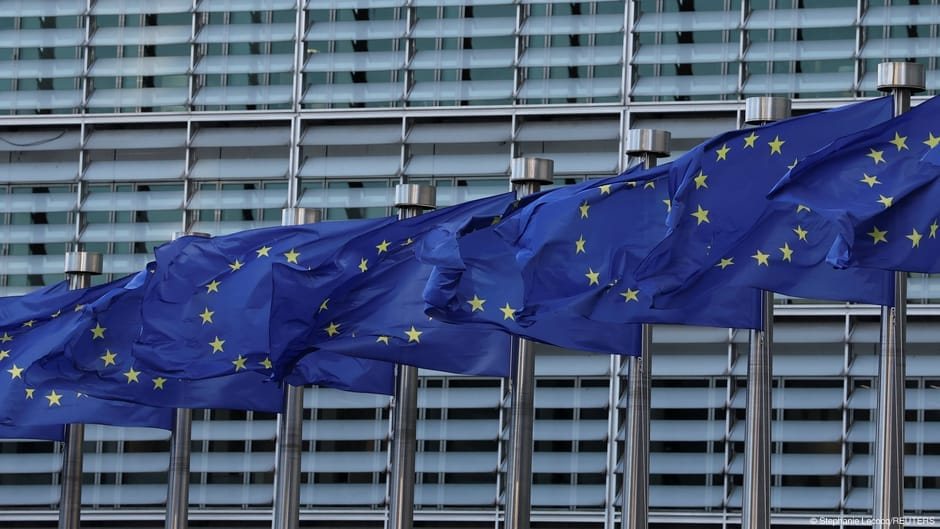
The European Commission has confirmed that it was the target of a cyberattack carried out with artificial intelligence tools. According to DW News, this is the first time the European Union has publicly reported an AI-assisted attack on its institutions.
Commission spokesperson Thomas Regnier told reporters on Thursday that the incident was detected on October 22. He said there was no evidence of a data breach affecting the Commission's staff as a whole.
Regnier described the incident as a cyber campaign generated using AI. He gave no further details about how the attack was carried out and did not say who was behind it. He said the Commission had taken the necessary steps in response.
Systems taken offline
The spokesperson acknowledged that some of the Commission's digital services were affected. "We temporarily took down several applications, and most of them have since then been restored," Regnier said, according to DW News.
He repeated that the Commission had not found evidence of a breach involving its staff data.
The confirmation followed a report by Politico earlier on Thursday that the Commission had been targeted. Politico reported that the attack disrupted several systems for 10 days and that large amounts of personal data might have been compromised.
The European Commission, the EU's executive arm, has roughly 33,000 employees.
According to Politico, the Commission convened its highest-level internal crisis management body for an urgent meeting to discuss the cyber incidents.
Concern over hybrid warfare
The disclosure comes amid wider unease across Europe about attacks on critical services. DW News reports that recent hybrid attacks have hit supermarkets, air traffic controllers, blood banks and broadcasters in several European countries.
These incidents have raised concern among European leaders that they could form part of a coordinated campaign of hybrid warfare, which combines cyber operations with other disruptive tactics.
Last week, France summoned the Iranian ambassador over cyberattacks that caused supermarket freezers to defrost. Tehran has denied any involvement, according to DW News.
There is no indication in the Commission's statement that the attack on its systems is linked to the incidents in France or elsewhere in Europe.
A new kind of threat
The Commission's statement marks a notable moment for the EU. It is the first time the bloc has publicly said that AI tools were used in a cyberattack against it.
Key points from the Commission's account include:
- The attack was detected on October 22.
- Several applications were temporarily taken offline, and most have since been restored.
- The Commission says it found no evidence of a data breach affecting staff as a whole.
- No perpetrator has been named.
Questions remain over the scale of the disruption and the extent of any data exposure. Politico's report of possible large-scale compromise of personal data contrasts with the Commission's assurance that it found no breach affecting staff as a whole.
The Commission has not said whether it will publish further details of its investigation.
This story was prepared by the Hamasta Newsdesk with AI assistance, based on reporting by DW News. Read the original report. Photo: DW News.




Show the impact of your work.
Impact stories, campaign videos and community engagement for NGOs and programmes.

More in Tech
See all
Itumbi says TikTok to review removal of 750,000 Kenyan videos within 10 days
South Africa orders Musk's Starlink to stop unauthorised operations

KeNIC opens auction for premium .ke web addresses priced up to Sh1 million

Ramaphosa courts Silicon Valley tech giants on week-long AI mission to California

Government Moves to Digitise Marriage, Divorce and Adoption Services Nationwide

Global Community Remarks
0