
Equity signals higher dividend as nine-month profit rises 32% to Sh68.7bn
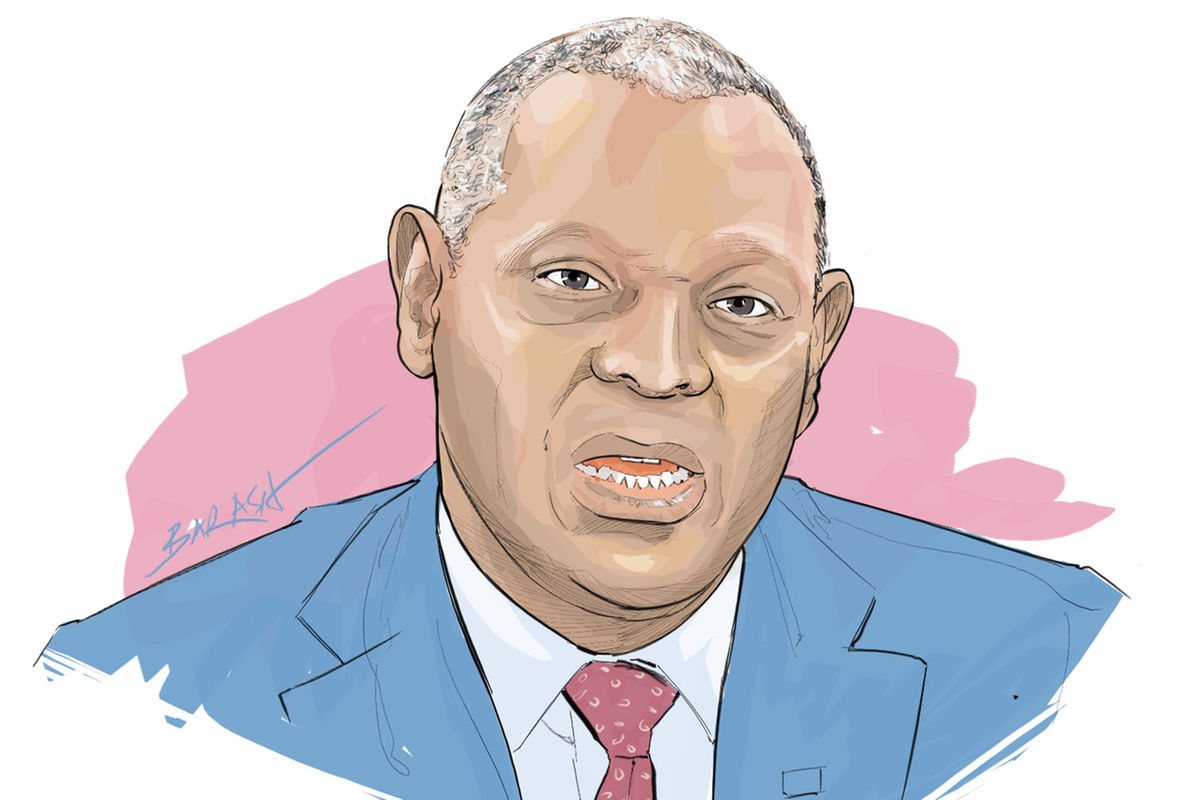
Equity Group Holdings shareholders can expect a larger dividend per share after the lender posted a 32 percent rise in profit after tax to Sh68.7 billion for the nine months to September, chief executive James Mwangi has said.
The growth was driven mainly by a jump in non-interest income, according to Business Daily, which interviewed Mr Mwangi on the group's dividend policy, expansion plans and exposure to cyber threats.
Dividend to track earnings
Mr Mwangi said the group is paying out at the bottom of its dividend policy range of 30 to 50 percent, currently at 30 percent. He explained that capital directed to new business lines and new markets is linked to the group's ability to pay dividends in future.
He nonetheless said the dividend per share would rise at least in step with growth in earnings per share. With earnings growing at 32 percent, he suggested dividends would increase by double digits.
Regional units catching up
The chief executive said Equity has proved it can replicate its Kenyan returns in new markets within a shorter period. He recalled that the Kenyan bank was generating a return on equity above 40 percent some 12 to 13 years ago.
In the Democratic Republic of Congo, the combined entity formed after the 2020 acquisition of BCDC was generating a return on equity of about seven percent. That figure now stands at 23 percent, and the unit is likely to deliver about $200 million in profit, according to Mr Mwangi.
"We have shown our ability to replicate returns made in Kenya in new markets in a shortened time," Mr Mwangi said.
Capital and margins
The group described itself as well capitalised, with core capital at 18 percent, about eight percentage points above the minimum, and total capital at 19 percent against a 14.5 percent requirement. It is also raising tier two capital at subsidiary level, which it expects will keep buffers significant.
Net interest margin closed the third quarter at 8.4 percent. While slightly lower than last year, the lender said the measure had been rising and was expected to end the year higher. The cost-to-income ratio stood at around 47.9 percent.
Bad loans
On non-performing loans, the group outlined a three-pronged approach: closer monitoring of overdue loans, aggressive recovery with amicable settlements where necessary, and growing the loan book. It has a lending pipeline of about Sh530 billion and aims to convert half of it by year end.
The lender said none of its corporate lending in the past seven years had gone bad, with current recoveries focused on loans between seven and 10 years old. Subsidiaries outside Kenya have bad loan ratios in the low single digits, and the group said that if Kenya's ratio falls below 10 percent, the group-wide figure would drop below five percent.
Health and technology
Equity said it is now the largest outpatient provider in the country and the region, with 159 medical centres covering every Kenyan county. Its next goal is presence in every sub-county, with inpatient and tertiary care to follow in stages. It also hopes to cut pharmaceutical prices by 40 percent in the short term, and eventually by up to 80 percent, including by financing local drug manufacturing.
On technology, the lender said system availability had improved from between 68 and 72 percent to 100 percent, and that 98.3 percent of transactions are now digital. It said customer complaints about social engineering fraud had been addressed and vulnerabilities removed.
Mr Mwangi said cyber risk was controlled but could not be eliminated, adding that he now sleeps soundly after years of worrying about technology challenges.
This story was prepared by the Hamasta Newsdesk with AI assistance, based on reporting by Business Daily. Read the original report. Photo: Business Daily.




Show the impact of your work.
Impact stories, campaign videos and community engagement for NGOs and programmes.

More in Business
See all
California subpoenas Nvidia over whether China obtained its chips or secrets

Smaller banks outpace big lenders on fixed deposit returns as rates ease

APA Life, Apollo Asset Management host SACCO leaders on reforms and governance
Kenyan women farmers up to 25% less likely to get digital climate advice – CGIAR

Anthropic shares jump 34% on Nasdaq debut after record $81bn IPO

Global Community Remarks
0