
Spain's Sánchez admits 'mistakes' in only TV debate before November 29 poll
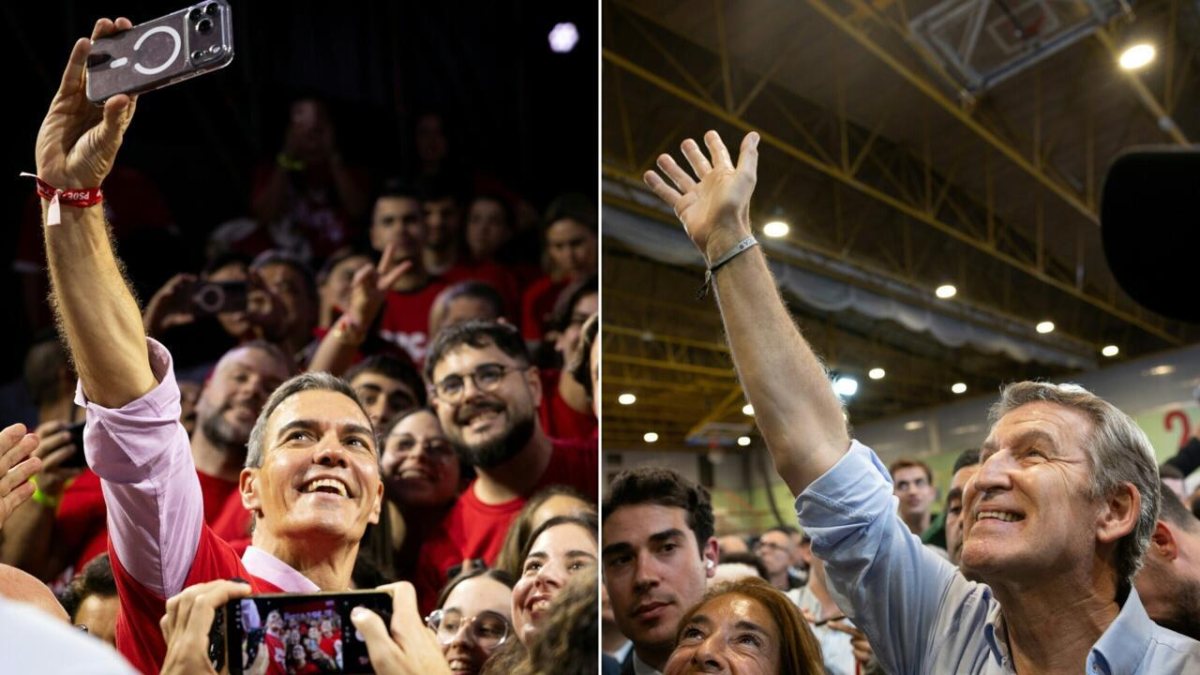
Spain's Prime Minister Pedro Sánchez conceded on Thursday that his government had made mistakes, as he went head to head with conservative rival Alberto Núñez Feijóo in the only televised debate of the campaign before the country votes on November 29, according to France 24.
The snap election could leave the far-right Vox party within reach of power, with opinion polls suggesting no party will secure an outright majority.
During the live broadcast, the two leaders traded blows on the economy, housing, immigration, corruption, foreign policy and policies affecting women, frequently talking over each other.
Sánchez defends his record
Opening the debate, the Socialist leader admitted his administration had not been flawless but insisted it had always steered the country in the right direction.
He cited economic growth and employment data to argue that Spain is in a stronger position than when he came to office in 2018.
Feijóo, who leads the mainstream right-wing Popular Party (PP), rejected that assessment. He argued that holding a job no longer guarantees Spaniards can cover their bills or afford a home, and accused Sánchez of having crushed the middle class.
The PP leader listed what he described as the government's failures, among them rising prices, heavy taxation and a housing crisis. He said that despite positive growth figures, many households still struggle to get by.
Corruption and rail disasters raised
Feijóo also pointed to corruption scandals that have touched members of Sánchez's family and senior Socialist figures. He further blamed the government for two high-speed train collisions this year which together claimed 115 lives.
"Spain deserves a respectable prime minister, and (Pedro Sanchez) is not one," Feijóo said, according to France 24.
Sánchez countered by warning that a coalition between the PP and Vox would reverse social rights and economic progress that had been hard to achieve, promising greater social justice and better public services if re-elected.
Migration divides the rivals
The prime minister also stood by his government's comparatively liberal stance on immigration, which runs against a wider European shift towards stricter border and asylum rules.
In April, Spain approved a scheme to grant legal status to hundreds of thousands of undocumented migrants already living in the country, subject to residency and other conditions.
Feijóo hit back, calling Sánchez a problem for Europe on immigration and referring to a rush of migrants into Ceuta, the Spanish enclave on Africa's northern coast, in July.
Polls favour the right
Sánchez, who has been in power for eight years, has won admirers on the international left for his clashes with US President Donald Trump and with Israel, but has become a divisive figure at home.
Most polls show his Socialists trailing the PP, which is forecast to win the most seats but fall short of a majority. That outcome could make Vox, currently the third-largest party in parliament and already a coalition partner of the PP in some regions, the kingmaker.
Sánchez's task is made harder by the weakness of smaller left-wing parties whose backing kept him in office after the 2023 general election. In that vote, the PP won more seats, but Sánchez stayed in power by assembling an alliance of left-wing and regional separatist parties.
The election, originally due in 2027, was brought forward after the right voted down the government's measures to support tenants. Sánchez has sought to tap into public frustration over housing, while Feijóo accused him of failing to prevent the crisis.
Vox leader Santiago Abascal, who could lead the far right into government for the first time since the end of General Francisco Franco's dictatorship in 1975, was not part of the debate and dismissed it, saying his absence meant there would be no real clash of opinions.
This story was prepared by the Hamasta Newsdesk with AI assistance, based on reporting by France 24. Read the original report. Photo: France 24.

Tell your story on screen.
Commercials, documentaries, interviews and social video, from script to final cut.





More in International
See all
El Salvador's Bukele set to register for third straight presidential term
Four bodies recovered after migrant boat capsizes off Senegal near Yenne

Six killed, child among them, in suspected gas blast at Tbilisi apartment block
Merz says Ukraine talks with Europe at the table will happen 'soon'
France to monitor top YouTubers for political balance ahead of 2027 presidential vote
Global Community Remarks
0