
Kindiki Calls for Unity Among Broad-Based Government Allies Ahead of 2027 Polls
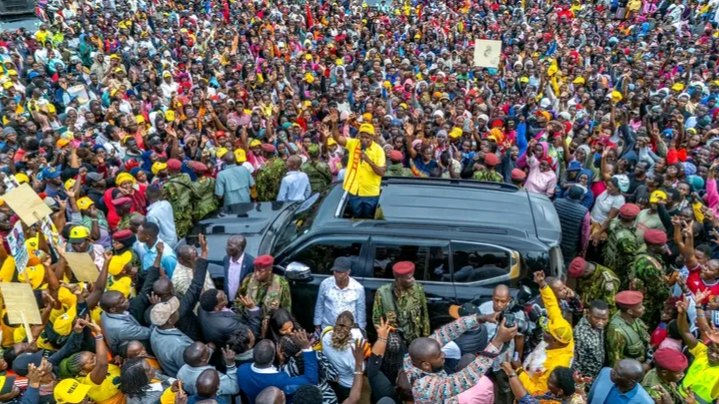
Deputy President Kithure Kindiki has urged political leaders and supporters within the broad-based government to put aside internal differences and strengthen cooperation as the country prepares for the 2027 General Election.
Speaking on Friday during a public engagement rally at Kiratina Grounds in Nakuru East Constituency, Kindiki called on members of the United Democratic Alliance (UDA), Orange Democratic Movement (ODM) and other parties supporting President William Ruto's administration to maintain unity and avoid political confrontations that could weaken their collective influence.
The Deputy President maintained that although political parties may compete against one another for elective positions in different constituencies, such contests should not destroy the working relationships established within the governing alliance.
He urged party supporters to exercise restraint and respect one another, emphasising that political cooperation should extend beyond individual electoral contests.
Kindiki said the broad-based political arrangement should focus on building a formidable voting bloc while allowing each constituent party to maintain its ideological identity.
He further called on opposition leaders to embrace issue-based politics, arguing that political competition should revolve around alternative policies, development plans and accountability rather than hostility.
According to the Deputy President, political disagreements should not be interpreted as personal enmity or become a source of conflict among Kenyans.
He challenged politicians seeking elective positions to present their development records and demonstrate what they intend to achieve if entrusted with leadership.
Kindiki noted that President Ruto, together with governors, senators, Members of Parliament and Members of County Assemblies, should be ready to account for their performance as the next election approaches.
He maintained that the government was prepared to defend its development record before voters, urging opposition politicians to present convincing alternatives that would enable Kenyans to make informed choices.
The Deputy President also warned against ethnic-based political mobilisation, pointing to Nakuru's diverse population as evidence that different communities can coexist and share opportunities without division.
He noted that communities including the Kikuyu, Kisii, Luo and Luhya, among others, call Nakuru home, insisting that no single ethnic group should claim exclusive ownership of the region.
Kindiki questioned why the competition for approximately 2,000 elective positions should create divisions among more than 55 million Kenyans.
He stressed that national cohesion, peace and security should remain more important than individual political ambitions.
The Deputy President concluded by urging residents and political leaders to reject divisive campaigns and safeguard peaceful coexistence, warning that electoral competition should never be allowed to turn neighbours and communities against one another.

Tell your story on screen.
Commercials, documentaries, interviews and social video, from script to final cut.





More in Politics
See all
Stephen Nyandiare leads Kisumu senatorial race in new Politrack Africa poll

Ruto tells opposition to leave IEBC alone and present alternative policies
Children's voices campaign launched to shape Kenya's 2027 election agenda
IEBC Flags UDA, ODM Among 94 Parties With Non-Compliant Nomination Rules

Former Deputy Speaker and Aldai MP Samuel Kipyebei Arap Ng'eny Dies

Global Community Remarks
0