
Russian bird scientist jailed 3.5 years over $30 donations to Navalny foundation
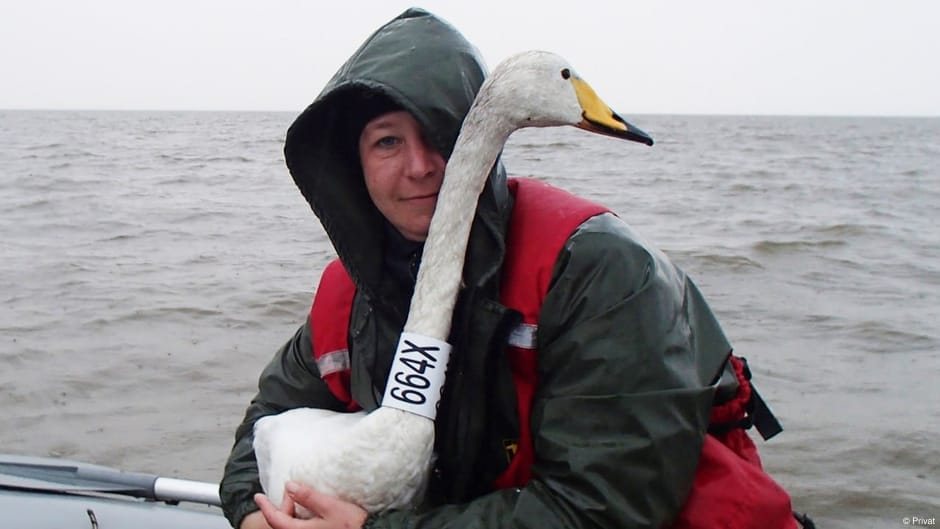
A Moscow court has sentenced Sofia Rosenfeld, a prominent Russian ornithologist, to three and a half years in a penal colony over two donations worth a combined 2,000 roubles, about $30, to the late opposition leader Alexei Navalny's Anti-Corruption Foundation, according to DW News.
The ruling, handed down on October 7, has stunned her family, friends and scientists abroad, who had expected a fine at most. Rosenfeld, who holds both Russian and Israeli citizenship, had been in custody for more than a month on charges of financing extremism.
Donations before and after the ban
Russian authorities designated the foundation, known as FBK, an extremist organisation in the summer of 2021. At the time, Rosenfeld was on a remote Arctic expedition with no phone or internet access, DW News reported. She therefore did not stop her regular donations straight away, and cancelled them only once she was back in Moscow.
Those close to her insist she had no political ambitions. Her father, Boris Rosenfeld, who lives in Israel, told DW News that she was never an activist and that her contributions were meant only to support anti-corruption work. A friend, identified by DW under the changed name Olga, said Rosenfeld had witnessed corruption first-hand while working in Russia's regions.
Harsher than most similar cases
Prosecutors had asked for a five-year term. The outcome was nonetheless far tougher than those in comparable cases. Independent outlet Mediazona has calculated that about 85% of convictions in the 225 cases involving donations to Navalny's foundation have ended in non-custodial sentences, DW News said.
Her home was searched a few months after she defended her doctoral dissertation, and she was placed under travel restrictions. She kept working but had to call off her annual summer trip to the Arctic.
A respected figure in Arctic research
Rosenfeld studied biology at Moscow State University and is regarded as one of the leading names in Russian ornithology. She was among the first Russian researchers to build a systematic way of monitoring migratory bird populations, and even developed a special aircraft that could fly close to the birds' speed and observe them from low altitude.
Her work has fed into international projects, where cross-border cooperation is vital for protecting migratory species. Helmut Kruckenberg, head of the German Institute for Wetlands and Waterbird Research, described her as highly respected in the global scientific community.
"What is happening to her is simply beyond comprehension for us," Kruckenberg told DW News.
Colleagues said Rosenfeld never considered fleeing Russia, even as a prison term became a real possibility. One colleague, whose name DW changed, said she could not imagine life without her geese. On the day of sentencing, Olga recalled, conversations still centred on how the research could continue in her absence.
Campaign for release
Family, friends and colleagues are now pushing for the sentence to be overturned. More than 1,000 people have signed an appeal to Russia's Presidential Council for Human Rights.
Boris Rosenfeld is also hoping for help from Israel, but Israeli consular officials have so far not been allowed to see his daughter in detention, according to DW News. The two exchange letters, and he said she writes that adjusting to prison life is hard.
"But she's a strong person," he told DW News.
This story was prepared by the Hamasta Newsdesk with AI assistance, based on reporting by DW News. Read the original report. Photo: DW News.

Tell your story on screen.
Commercials, documentaries, interviews and social video, from script to final cut.





More in International
See all
Spain's far-right Vox eyes kingmaker role ahead of November 29 snap election
Protests sweep 25 European countries over wages, services and living costs

ANC races to hold South Africa's big cities after worst-ever local election result
Mamdani unveils plan to close New York's Rikers Island jail by 2032
Boat carrying funeral mourners capsizes in Nigeria's Bayelsa, killing at least four
Global Community Remarks
0