
US judge approves Bayer's $7.25bn settlement over Roundup cancer claims
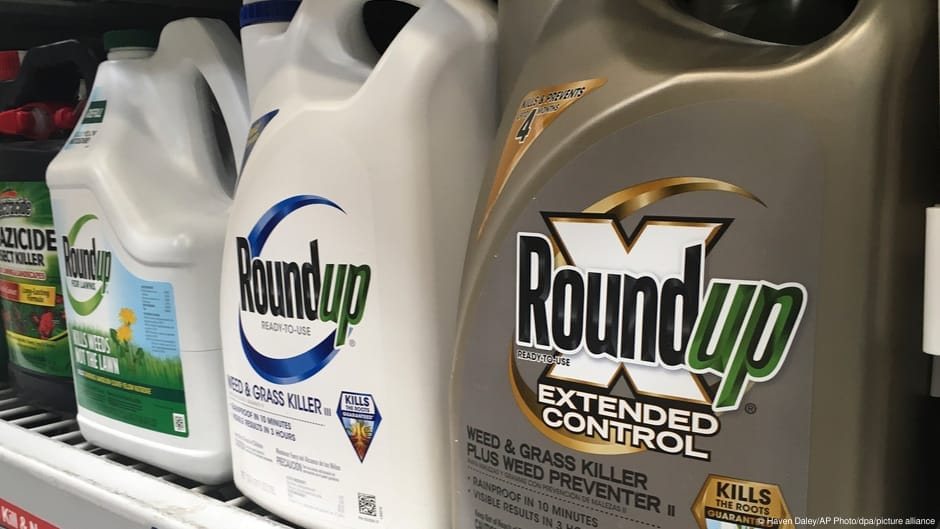
A judge in the US state of Missouri has given final approval to a $7.25 billion (about €6.6 billion) settlement between German chemical maker Bayer and people who say its Roundup weedkiller gave them cancer, according to DW News.
Judge Timothy Boyer ruled on Friday that the deal was "fair, reasonable, and adequate", clearing the way for compensation to tens of thousands of claimants and potentially bringing an end to years of expensive litigation for the company.
Who the deal covers
The settlement applies to people who say they developed non-Hodgkin lymphoma, a form of blood cancer, after using Roundup. It also extends to those who were exposed to the product in the past and may be diagnosed with the disease later.
Under the agreement, Bayer will pay up to $7.25 billion into a dedicated fund spread over 21 years. Individual awards are expected to average between $10,000 and $165,000, with the final sum depending on a claimant's age, how serious their illness is and how long they were exposed to the weedkiller.
Bayer chief executive Bill Anderson described the approval as a key step in the firm's plan to limit its exposure to both current and future Roundup lawsuits, DW News reported.
Objections over payout size
Some lawyers acting for cancer patients argued that the proposed payments were too low. The judge dismissed those objections, reasoning that further delay could force seriously ill people to wait years longer for any money.
Christopher Seeger, a lawyer for cancer patients, welcomed the ruling, saying it guaranteed compensation for victims who had been seeking justice for more than a decade.
A run of legal wins for Bayer
The approval comes after Bayer secured a significant victory at the US Supreme Court in June. The court held that the company could not be sued under state laws for failing to print cancer warnings on Roundup packaging, because federal rules did not demand such warnings and states could not add their own labelling requirements. That ruling made it considerably harder for patients to succeed in court.
In October, a Missouri jury also found in Bayer's favour in a separate Roundup case. Still, the company says about 200 cases outside the settlement remain before federal courts.
A costly acquisition
Bayer took on the Roundup liabilities when it bought US agrochemical firm Monsanto for $63 billion in 2018. Monsanto launched Roundup in 1974, and its active ingredient, glyphosate, went on to become one of the most widely used weedkillers in the world. Farmers apply it to kill weeds without harming crops genetically modified to tolerate it, and it has also been popular in home gardens and on lawns.
Since the takeover, roughly 200,000 claims have been lodged against Bayer. The company agreed a $10.9 billion settlement in 2020 but failed to win approval for a separate arrangement dealing with future claims. Some verdicts have been enormous, including a $2.1 billion award to plaintiffs in Georgia.
Bayer has set aside $16 billion to cover Roundup-related legal costs, and its share price has dropped 46% since the Monsanto purchase. It has also stripped glyphosate from newer Roundup products sold to private consumers in the United States.
Science still disputed
Experts and regulators remain divided on whether glyphosate causes cancer. In 2015, the World Health Organization's cancer research agency labelled it "probably carcinogenic" to humans, while the US Environmental Protection Agency maintains it is unlikely to cause cancer when used as directed.
Bayer has consistently denied that Roundup causes cancer, citing scientific studies and regulatory approvals.
The debate sharpened last year when a long-cited study backing Roundup's safety was withdrawn. The journal that published it pointed to serious flaws, including missing cancer research and previously undisclosed involvement by Monsanto staff, raising fresh questions about the influence of chemical companies on scientific research.
This story was prepared by the Hamasta Newsdesk with AI assistance, based on reporting by DW News. Read the original report. Photo: DW News.


Take your event live to thousands.
Multi-camera live streams, panel discussions and digital broadcasts with professional crews.




More in Business
See all
Anthropic shares slide a day after record IPO as US tech sell-off deepens
Kenya taps private sector to develop embassy properties and cut KSh3bn rent bill
TikTok and ICC launch digital commerce training for Kenyan creators and small firms

Safaricom Warns Customers Against Unsolicited M-Pesa PIN Prompts as Fraud Losses Soar
Kenya's new vehicle sales top all of 2025 in just 10 months, KMI data shows
Global Community Remarks
0