
Sudan war leaves elderly displaced, separated from families and short of care
Older people forced from their homes by Sudan's war are battling hunger, illness and the anguish of separation from their families, as the conflict tears apart the support networks that once cared for them, according to Al Jazeera.
At al-Moulih camp for displaced people in western Omdurman, near the capital Khartoum, roughly one in five of the estimated 10,000 residents is over the age of 65, the broadcaster reported.
Fleeing without family
Among them is Hamad Mohammed Adam, 70, who fled his village near Bara in North Kordofan when the paramilitary Rapid Support Forces (RSF) attacked last August. He escaped with friends and travelled about 300km over several days to reach Omdurman, leaving behind his home, his possessions and his relatives.
Adam told Al Jazeera the attackers were killing men, women and children alike. He considers himself fortunate to have survived, but he has no idea where his family is, and they do not know where he is.
Without relatives to lean on, his daily concern is securing enough food, medicine and healthcare to stay alive, while the uncertainty over his family's fate weighs on him constantly.
Aisha Alneel, also 70, lost her home in Khartoum two years ago. She cares for her 72-year-old sister, who needs medical attention. Alneel told Al Jazeera the pair had planned to travel on but ran into financial difficulties, and chose to remain in a displacement camp until they could afford to leave. Her greatest wish is to be reunited with her family.
A collapsing safety net
The war between the Sudanese Armed Forces and the RSF, former allies locked in a power struggle since April 2023, has spread across the country and triggered one of the world's worst humanitarian crises. About 8.6 million people are currently displaced.
Sudan's population aged above 65 stands at 1.8 million in 2026, or 3.5 percent of the total, according to the UN's Economic and Social Commission for Western Asia.
Traditionally, younger relatives and local communities looked after older family members, helping with food, medical visits and daily needs. The war has scattered families and eroded that social fabric. According to the UNDP, Sudan's economy has shrunk by more than 40 percent since fighting began, and extreme poverty is expected to exceed 60 percent, leaving many households unable to support even themselves.
Care homes under strain
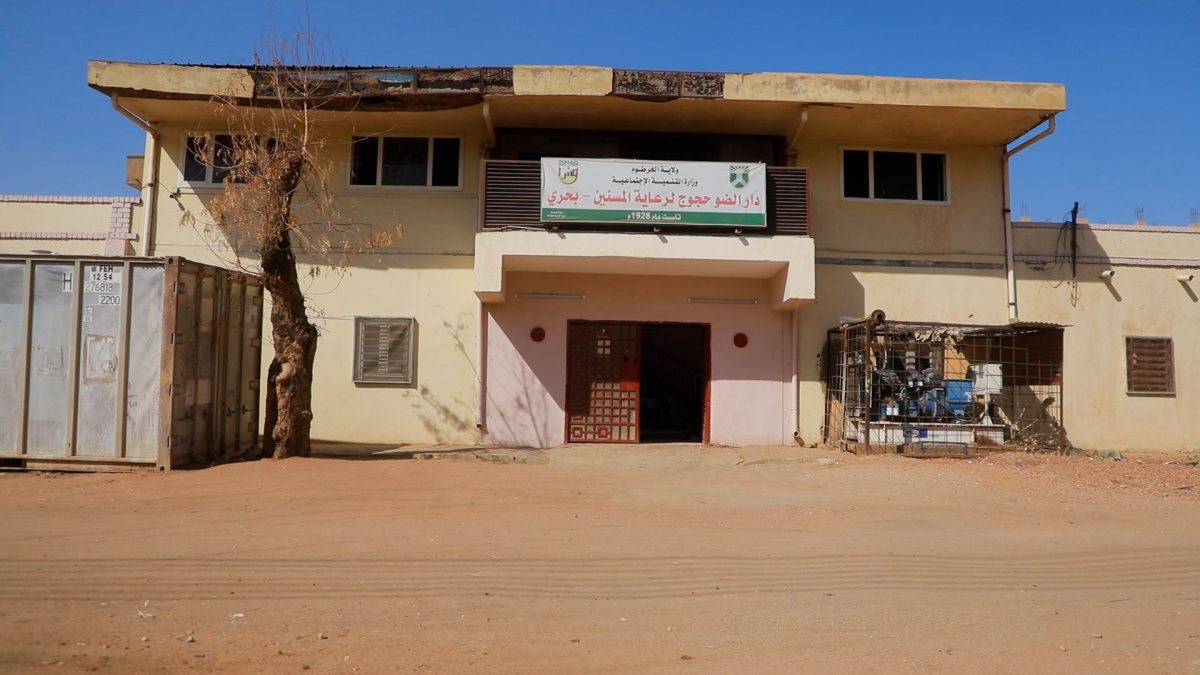
The pressure is also felt by institutions. Moubarak Satti, director of the Al-Daw Hajooj home for the elderly, which currently houses 11 residents, described the situation as difficult because of a lack of funding.
Satti said the home lost its only vehicle, used to take residents to medical facilities, and that many people had died during the conflict for lack of medical care. He appealed for support from the community, NGOs and international humanitarian agencies, arguing that older people need a coordinated response that recognises their specific needs, not just emergency food aid.
Officials have also warned of the toll on mental health, citing isolation, anxiety and helplessness caused by separation from children and grandchildren.
Government response
The Khartoum State Ministry of Social Development says it has been coordinating social protection services for vulnerable groups, including the elderly. However, Minister of Social Welfare Siddig Ferini told Al Jazeera that attacks on civilian areas have severely disrupted public services, complicating relief efforts.
"We have reunited dozens of elderly displaced people with their families in many Sudanese states," Ferini said.
He added that others are still searching for loved ones, and called on humanitarian organisations, donors and philanthropists to fund social care and essential services for older people amid the war and economic crisis.
This story was prepared by the Hamasta Newsdesk with AI assistance, based on reporting by Al Jazeera. Read the original report. Photo: Al Jazeera.

Tell your story on screen.
Commercials, documentaries, interviews and social video, from script to final cut.





More in International
See all
German report warns religious freedom is worsening worldwide, singles out China

Drone strike sets Russian cargo ship on fire in Gulf of Finland

Kuwait Sets 18 as Minimum Working Age for Citizens and Foreign Jobseekers

US Bars Visa-Free Entry for Travellers Who Visited 8 Countries, Including Somalia

Morocco puts €366m behind plan to build home-grown defence industry by 2035

Global Community Remarks
0