
US Army to detonate unstable explosives in Iowa despite court-ordered pause
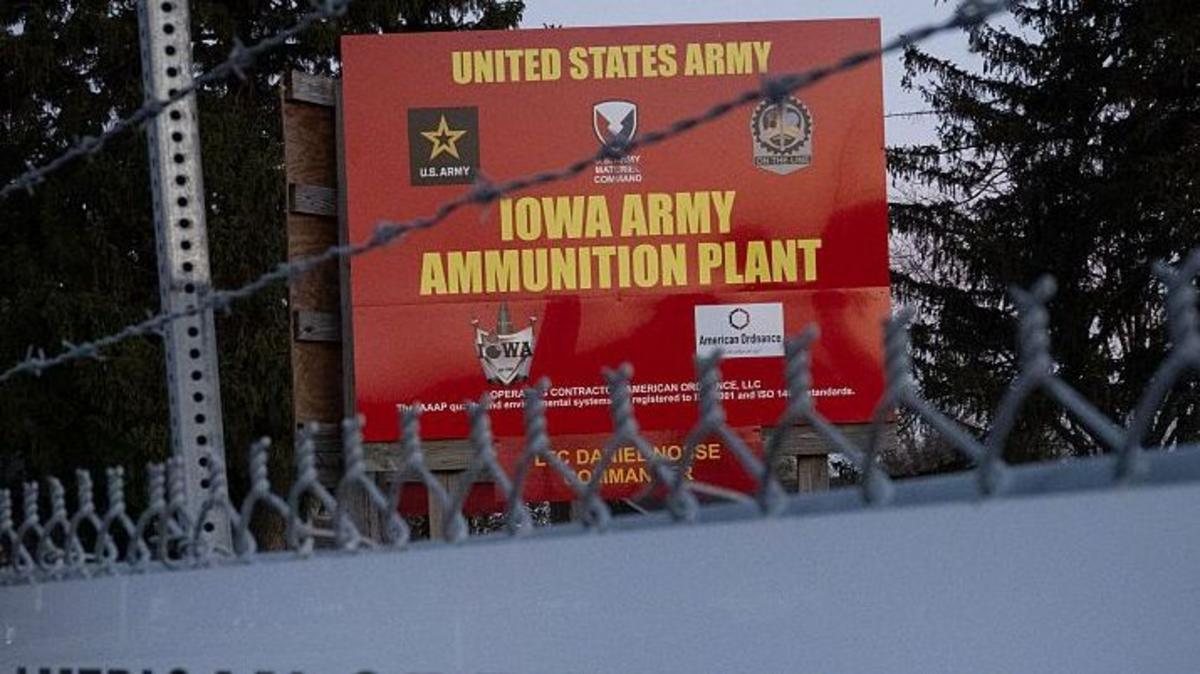
The US Army intends to go ahead with blowing up about five tonnes of deteriorated explosives at an ammunition plant in Iowa, even though a federal court ordered the operation halted indefinitely, according to BBC News World.
A court filing submitted late on Saturday shows the Department of the Army plans to rely on an emergency exclusion to get around the pause. It now aims to carry out the detonation at the Iowa Army Ammunition Plant (IAAAP) in Middletown by 24 November. No details of the new timing have been made public.
Army cites risk from falling temperatures
In its notice to the court, the US Justice Department argued that the material posed a growing danger and that waiting was not an option. It said protecting people and the environment required immediate action rather than delay.
The Army's central argument is that a controlled explosion is needed to prevent an accidental one. According to the filing, the risk of the material going off on its own will increase as temperatures are forecast to fall below 30 degrees Fahrenheit (about -1C) over the coming days.
The substance in question is lead azide, a highly volatile compound used in detonators. Earlier this year, the plant found that the material had degraded so much over time that moving it had become too dangerous, Iowa Public Radio reported.
Court halted original plan
The detonation had initially been set for Friday, 20 November, but a federal court suspended it that day. The order followed concerns from Middletown residents that toxic lead particles could spread across the surrounding area.
Environmental groups had filed lawsuits on Thursday seeking to block the operation, arguing that the Army had not properly considered safer alternatives.
One of the groups, the Iowa Environmental Council, said many people living inside the risk zone did not know the explosion was planned. In a statement, the organisation said:
"There is no safe level of lead exposure, and Iowans were given just days to prepare."
Residents told to stay indoors
Before the original date, the Army had advised residents to leave their homes for six hours, covering the explosion itself and the period until the dust had settled. An advisory also cautioned that no people should be outdoors in the affected areas while the demolition took place.
On Friday, the military said it was working alongside the Department of Health and Human Services and the Environmental Protection Agency (EPA) to make sure the operation was carried out as safely as possible.
Military and environmental officials concluded that destroying the material where it is stored was the safest way of removing the hazard.
Emergency permit granted
The EPA issued an emergency permit allowing the Army to detonate 68 drums of the material. The agency said it did so because the risk of an explosion represented an imminent and substantial threat to human health and the environment.
The latest filing sets up a fresh confrontation between the military, which says urgent action is required for public safety, and environmental campaigners and residents, who fear the health effects of lead released into the air.
It remains unclear how the court will respond to the Army's decision to invoke the emergency exclusion.
This story was prepared by the Hamasta Newsdesk with AI assistance, based on reporting by BBC News World. Read the original report. Photo: BBC News World.




Show the impact of your work.
Impact stories, campaign videos and community engagement for NGOs and programmes.

More in International
See all
Le Pen denies receiving leaked probe details from French interior ministry official

How Mexican special forces captured alleged cartel boss 'El Chapo Isidro' in Sinaloa

UAE's Lana Nusseibeh unveils 100-day plan in bid to lead the United Nations

Kenyans in Bahrain Urged to Stay Alert as US Warns of Heightened Security Threat
Russian ship hit by explosion at Libya's Benghazi port in suspected drone attack

Global Community Remarks
0