
IEBC: Polling station results to be final in 2027, national tally centre in Nairobi
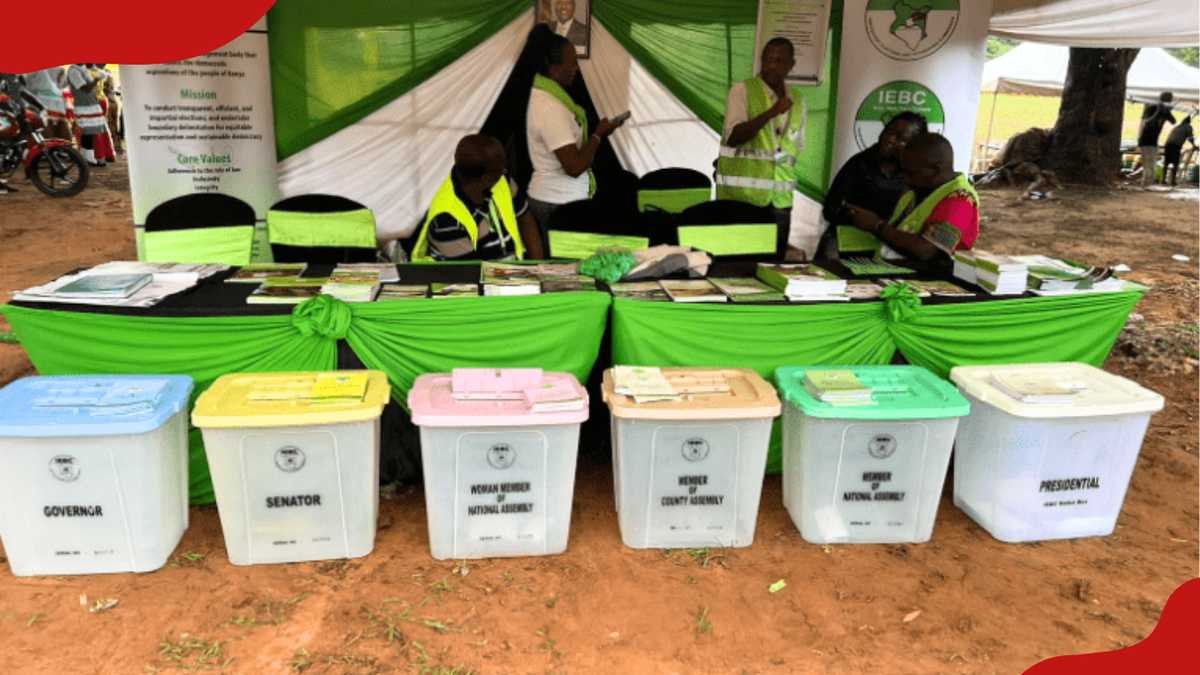
The Independent Electoral and Boundaries Commission (IEBC) says results declared at polling stations will be legally final in the 2027 General Election. The national tallying centre for the presidential vote will be set up in Nairobi.
The commission set out the plan in its Results Management Framework (RMF), which outlines how votes will be counted, sent and announced. According to Tuko, the framework relies on biometric identification of voters and electronic transmission of results.
Commissioner Anne Nderitu presented the framework. She chairs the commission's Elections Operations Technical Committee.
A results path for all six elective seats
Nderitu said the framework sets a results path laid down in law for all six elective positions. These are President, governor, senator, Member of Parliament, woman representative and Member of County Assembly.
She said the design deliberately starts at the lowest level of the process, which is the polling station. Hard copies of Form 34A, the result form filled in at each station, will be put up at polling stations for the public to inspect.
Results certified at the constituency level will also be treated as final, Tuko reported.
How the public will follow the count
Electronic results will then be shown at constituency, county and national tallying centres. Returning officers will be required to add up and announce the figures openly and without delay.
Members of the public will be able to view results through an IEBC portal. Media houses will get a dedicated application programming interface (API) and the use of dedicated media centres.
The commission will also allow live streaming from polling stations. However, the framework states clearly that streamed footage cannot be used to declare results, in line with Section 39(1G) of the Elections Act.
Presidential declaration and legal basis
The national tallying centre for presidential results will be at a Nairobi venue. That venue will be gazetted under Regulation 84.
The IEBC chairperson will certify and declare the President-elect. The commission will then write to the Chief Justice and the sitting President to inform them before the results are published in the Kenya Gazette.
Nderitu cited several legal grounds for the national tallying centre. These include Article 138(4) of the Constitution, Section 39(1C) of the Elections Act and Regulation 83(2). She also pointed to the Okoiti Omtatah case.
Technology and its limits
The plan runs on the Integrated Elections Management System (IEMS). The system covers three stages:
- biometric voter registration
- identification of voters on polling day
- electronic transmission of results
Nderitu said the system must be simple, verifiable, accurate, transparent, accountable and secure.
She was also frank about what technology can and cannot do. Under the framework, a failure to send results electronically does not cancel figures already announced at a polling station or tallying centre.
Political pressure
The framework comes as the opposition keeps up pressure on the commission over how the next election will be run, Tuko reported. A court challenge is also ongoing.
Results management has been one of the most disputed parts of Kenya's recent elections. The commission's emphasis on polling-station results and public display of forms is likely to draw close attention from political parties and observers in the months ahead.
This story was prepared by the Hamasta Newsdesk with AI assistance, based on reporting by Tuko. Read the original report. Photo: Tuko.



Grow an audience that listens.
Social media management, digital campaigns and online storytelling that converts.



More in Politics
See all
IEBC plans 9,164 new polling stations for 2027 as MPs resist raising voter cap

Murkomen accuses opposition of undermining IEBC ahead of General Election

Livestreaming row heads to court as opposition vows polling-station tallies and Kindiki says State won't make 2027 vote 'opaque'

Gachagua warns IEBC of mass protests over 2027 election, cites ID and registration gaps
Senate and National Assembly clash over livestreaming of election results
Global Community Remarks
0