
IEBC says it cannot punish early campaigners after AG misses court deadline on law
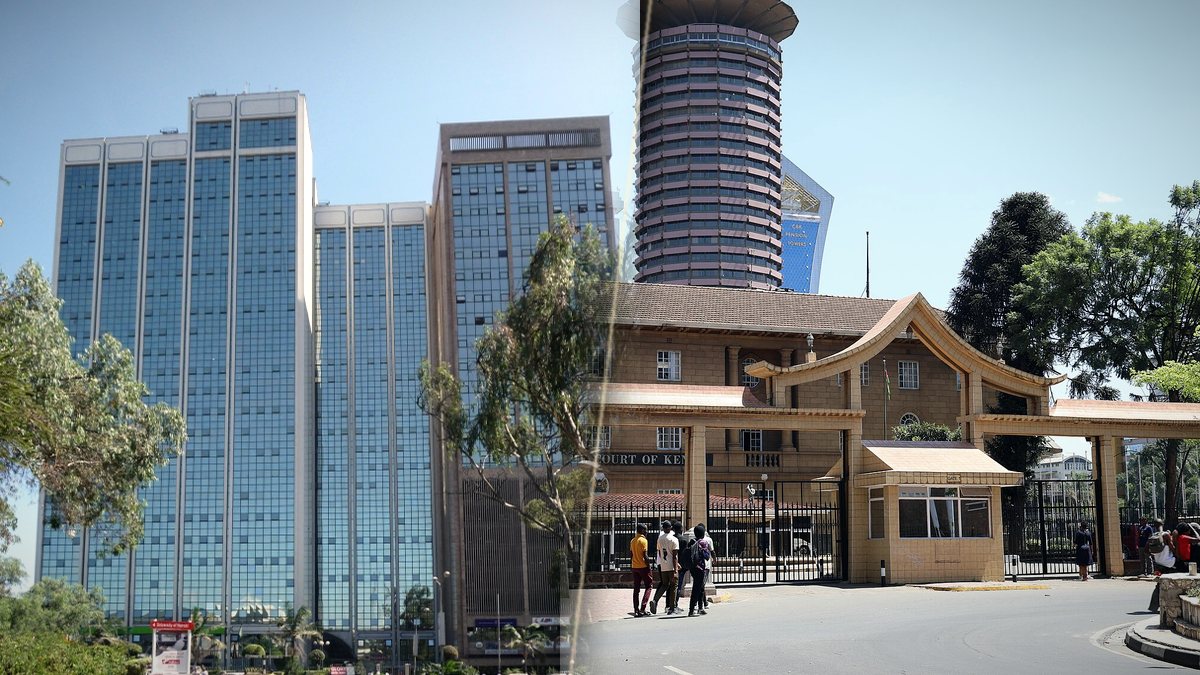
The Independent Electoral and Boundaries Commission (IEBC) says it has no legal authority to punish politicians who are already campaigning for the 2027 General Election, because legislation to regulate campaigns outside the official period has not been enacted, according to allAfrica Kenya.
The commission told journalists that, without a specific law, it cannot sanction aspirants who are holding rallies, mobilising supporters and seeking votes ahead of the August 10, 2027 polls.
Court deadline lapses
The gap remains despite a High Court judgment delivered on June 9, 2025, which gave the Attorney General 12 months to take steps towards enacting a law governing campaigns conducted outside the official election period. That deadline passed on June 9, 2026, IEBC officials said, with no such legislation in place.
The ruling arose from a petition in the case of Legal Advice Centre t/a Kituo Cha Sheria v IEBC and Others, which challenged campaigning before the designated election period.
A three-judge bench of Justices Hedwig Ong'udi, Patricia Gichohi and Heston Nyaga found that campaigning outside the election period violated constitutional principles, among them equality, equal protection of the law, freedom from violence, impartiality, the rule of law and the right to free and fair elections.
IEBC official Mukhwana said the court had recognised the dangers of premature campaigns while also acknowledging that the commission lacked the legal tools to act.
"The court noted that there was no law upon which the IEBC would act," Mukhwana said.
He said the commission would instead rely on the existing electoral framework, which sets out a formal campaign period. Under the IEBC's operational plan, that period is expected to begin after candidate registration, which is scheduled to end by May 29, 2027.
Campaign financing rules
The commission also said it was pressing ahead with enforcing the Election Campaign Financing Act, which requires parties and candidates to stay within set contribution and expenditure limits. The law is meant to stop wealthy individuals and organisations from wielding outsized influence over elections.
The IEBC has published regulations, contribution limits, spending ceilings and enforcement timelines, but two court cases, one at the Milimani High Court and another at the Kiambu High Court, have complicated the rollout.
The Kiambu court had issued conservatory orders blocking enforcement. The commission said it successfully challenged those orders, which were lifted last week, and the Kiambu case was moved to Milimani to be consolidated with the existing petition. The matters are due for mention in February 2027.
With no restraining orders in force, the commission said it could proceed with enforcement in line with its published timelines. Previous efforts to operationalise the financing framework ran into legal and procedural hurdles ahead of the 2017 and 2022 elections.
Procurement disputes
The commission further reported facing about eight cases over the past three months before the Public Procurement Administrative Review Board and the High Court, relating to the procurement of election technology and ballot papers.
According to the official, a High Court judgment delivered on Tuesday dismissed the latest challenge to the election technology tender, allowing its evaluation to continue. A fresh constitutional petition was filed immediately afterwards, but the court declined to issue conservatory orders, and the matter will be mentioned on November 30.
On ballot papers, the remaining case is set for judgment on November 26. The official said the commission hoped the decision would allow it to proceed with procurement.
This story was prepared by the Hamasta Newsdesk with AI assistance, based on reporting by allAfrica Kenya. Read the original report.
Photos: Rotsee2 / Wikimedia Commons (CC BY-SA 3.0); Francis Akuka / Wikimedia Commons (CC0)




Know what people say about you.
Media monitoring, audience insights and strategic communication for your brand.


More in Politics
See all
Sh1.5 million fine, a 72-hour deadline and a 'loose translation': Why the High Court threw out IEBC's punishment of MP Wanjiku Muhia

Opposition sets five non-negotiable IEBC reform demands ahead of 2027 General Election
US attorney general sidesteps questions on whether Nvidia's Jensen Huang was probed
Gachagua gives IEBC January deadline, threatens to mobilise Kenyans to its offices

Murkomen accuses opposition of undermining IEBC ahead of General Election

Global Community Remarks
0