
South African court strikes down Phala Phala panel report, easing Ramaphosa impeachment risk
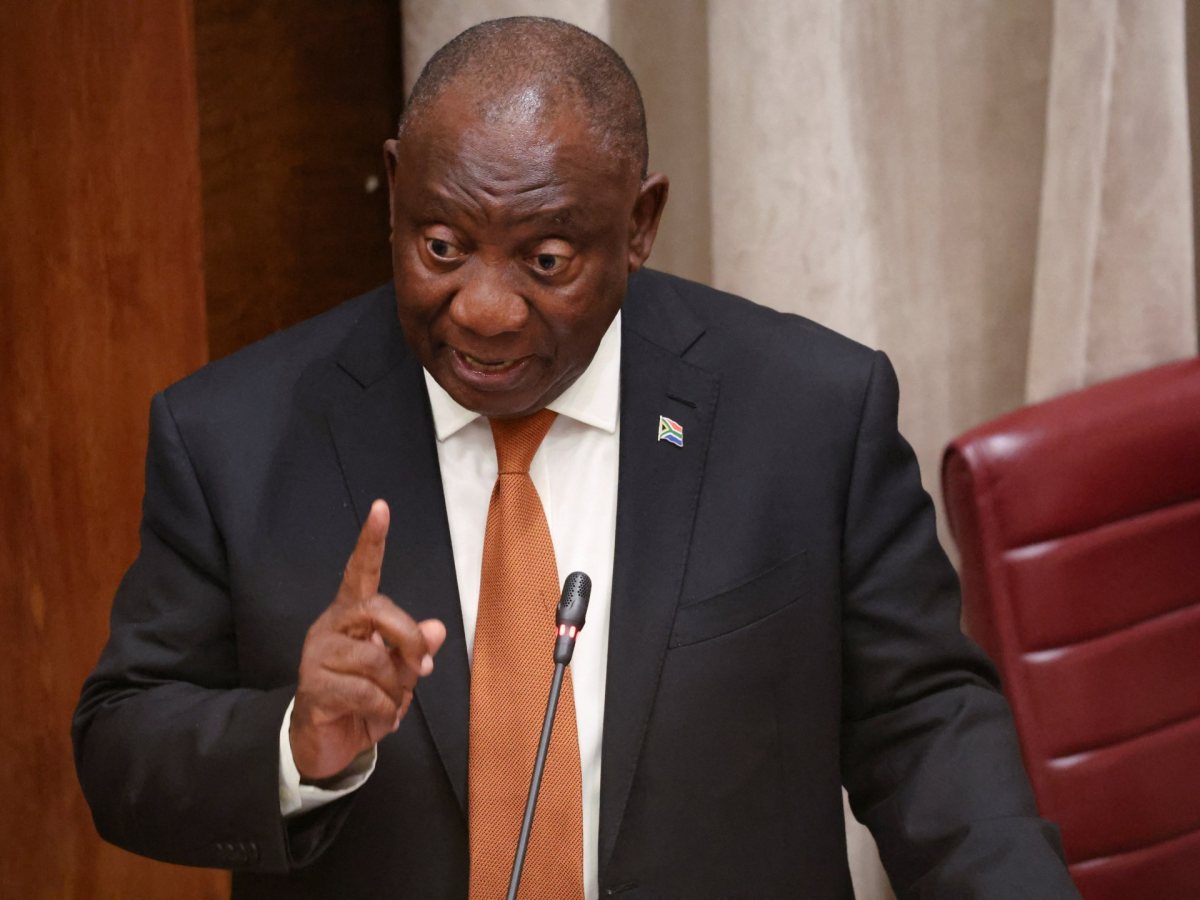
South African President Cyril Ramaphosa has won a legal challenge against an independent parliamentary panel report that had exposed him to possible impeachment over the so-called "Farmgate" scandal, according to Al Jazeera.
The Western Cape High Court on Wednesday declared unlawful the 2022 findings of the panel, which had accused the president of a conflict of interest linked to large sums of cash stolen from a sofa at his Phala Phala game farm in 2020.
The decision gives Ramaphosa significant political relief at a difficult time for both him and his African National Congress (ANC), which has suffered a series of electoral setbacks.
Panel 'misconstrued its functions'
Reading the court's unanimous judgement, Judge Nolwazi Mabindla-Boqwana said the panel had gone beyond what it was legally permitted to do.
"The court found that the panel fundamentally misconstrued its functions," the judge said.
She added that the panel had asked itself the wrong questions and committed several material errors of law.
In a statement, the Presidency said Ramaphosa "notes" the ruling and will study it. The statement described his pursuit of a judicial review as the exercise of a constitutional right and stressed his respect for the rule of law and the independence of the judiciary.
The African Transformation Movement, a party that supports impeaching the president, criticised the judgement, Al Jazeera reported.
How the scandal unfolded
The affair surfaced when a former intelligence chief reported to police that Ramaphosa had allegedly tried to conceal the theft of millions of US dollars in cash from his farm, initially putting the figure at about $4 million.
Ramaphosa has consistently denied any wrongdoing. He has said that $580,000 was stolen and that the money came from the sale of buffaloes. The case nonetheless raised questions over why such a large amount of cash had been hidden in furniture.
The 2022 panel report found that the president had failed to report the theft through proper channels, had breached the constitution in relation to paid work from his farm, and had directed his presidential protection unit to carry out police work.
Impeachment process in limbo
The ruling follows a series of legal twists. In May, the Constitutional Court revived impeachment proceedings, finding that a 2022 parliamentary vote to halt the process was invalid and ordering Parliament to establish an impeachment inquiry.
In July, however, the Western Cape High Court temporarily suspended that inquiry until it delivered its decision on Ramaphosa's challenge to the panel report.
With the panel's findings now set aside, the basis on which the impeachment threat rested has been removed.
Pressure on the ANC
The scandal has been an embarrassment for a leader who took office pledging to fight corruption and restore the reputation of the former liberation movement.
The ANC won about 31 percent of the vote in this month's local elections, its poorest showing ever in such polls. The result extends a decline that saw the party lose its national parliamentary majority in 2024 for the first time since the end of apartheid.
Ramaphosa, 74, has been head of state since 2018, and his second presidential term ends in 2029. The ANC is set to choose a new leader next year, when Ramaphosa will step down after two five-year terms at the helm of the party.
This story was prepared by the Hamasta Newsdesk with AI assistance, based on reporting by Al Jazeera. Read the original report. Photo: Al Jazeera.




Know what people say about you.
Media monitoring, audience insights and strategic communication for your brand.


More in International
See all
Kremlin silent on leaked data suggesting up to 700,000 Russian troops killed in Ukraine
AI-generated images in voter register raise alarm ahead of Nigeria's 2027 election
Johannesburg memorial honours Phumzile Mlambo-Ngcuka, South Africa's first woman deputy president
Nigeria: Dozens killed as raids and revenge attacks hit Borgu villages in Niger State
Ugandan activist eyeing 2031 presidency says she was detained at Entebbe Airport
Global Community Remarks
0