
Ruto Signs Pension Law Opening Mortgages and Medical Cover to Civil Servants

President William Ruto has signed into law a bill that overhauls the retirement benefits of public servants, widening the products available to teachers, police officers, military personnel and other government workers, according to Kenyans.co.ke.
The President assented to the Public Service Superannuation Scheme (Amendment) Bill 2025 on Thursday, November 26. Among its key provisions are a planned post-retirement medical fund, a mortgage facility financed through members' own pension savings, and a route for contract employees to join the scheme.
The bill was sponsored by National Assembly Majority Leader and Kikuyu MP Kimani Ichung'wah. It was tabled in the National Assembly on October 8, 2025, and later passed with amendments.
Scheme renamed as a Fund
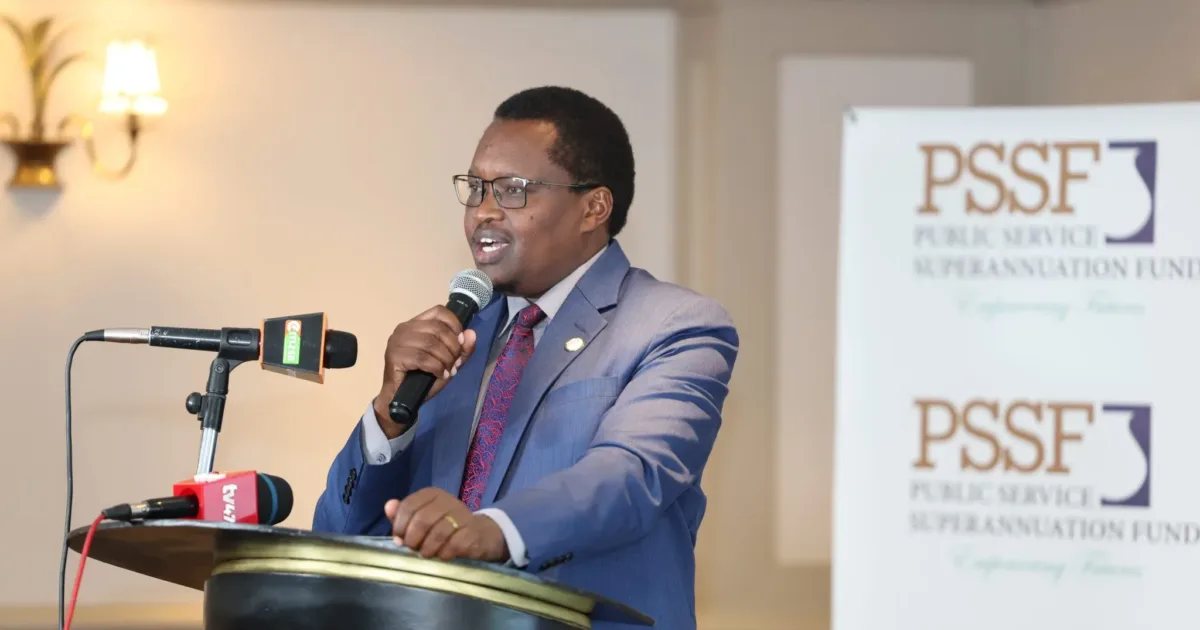
Under the new law, the existing Public Service Superannuation Scheme (PSSS) becomes the Public Service Superannuation Fund (PSSF). The change is meant to bring the law in line with the terminology used in the local and regional pensions industry, where retirement arrangements are usually called funds.
The Fund may offer a broader range of retirement products. These include the medical fund, the mortgage facility, and any other benefits approved by the Retirement Benefits Authority (RBA).
Contract workers brought in
In one of the most significant changes, government employees on fixed-term contracts can now join the Fund so that their gratuity is managed within it.
If such an employee asks in writing, the employer must send the worker's monthly accrued gratuity into their retirement savings account. Kenyans.co.ke reports that the provision follows National Treasury Circular No. 9 of 2024, which had recommended a legal framework for this arrangement.
Rather than receiving a single taxable gratuity payment when a contract ends, these workers will see their savings grow over time through investment returns. The law describes the change as one that "promotes inclusivity by extending retirement savings opportunities" to staff not on permanent and pensionable terms.
Penalties for defaulting employers
The law also seeks to tighten compliance. Where an employer fails to deduct or remit a worker's contribution, the amount may be recovered in later months, and the employer must pay a penalty equal to the Fund's return for the previous financial year. The aim is to protect members from losses caused by an employer's default.
Members will additionally be allowed to make voluntary contributions on top of their regular monthly deductions, a move expected to encourage saving and enlarge the pool of money available for investment.
Board and management changes
The law sets out stricter qualifications for board members. The relevant Cabinet Secretary must appoint the board chairperson and two independent members through a competitive and transparent process, while considering regional representation and gender balance.
Board members will serve four-year terms, renewable once. The chief executive will serve a five-year term, also renewable once, and must meet qualifications specified in the law.
Caps on manager fees
According to the report, the law limits self-administration of the Fund to no more than 15 per cent, a measure intended to cut fees paid to external fund managers and keep more money for members.
Annual fees are also capped. Fund managers may charge no more than 0.1 per cent of the Fund's asset value, while custodians are limited to 0.01 per cent.
These fee limits will not apply only to the public service Fund. Through a consequential amendment to the Retirement Benefits Act, all registered pension schemes in the country will be required to follow the same caps on what they pay fund managers and custodians.
This story was prepared by the Hamasta Newsdesk with AI assistance, based on reporting by Kenyans.co.ke. Read the original report. Photo: Kenyans.co.ke.
Every moment, captured beautifully.
Events, corporate portraits, products and editorial shoots by our newsroom photographers.






More in Business
See all
Treasury clears Sh1.2bn owed to civil servants' pension scheme PSSF

Civil servants' pension fund pays members 17.99pc interest as it diversifies
PSSF assets jump 41.6pc to Sh343.8bn as civil servants get 17.99pc return
.jpeg)
Thousands march in rain-soaked Lisbon demanding higher wages and pensions
MPs give University of Nairobi 14 days to explain Sh1.4bn unremitted pensions and unpaid PAYE
Global Community Remarks
0