
KVA Warns Livestock Bill 2026 Threatens Disease Control,Exports
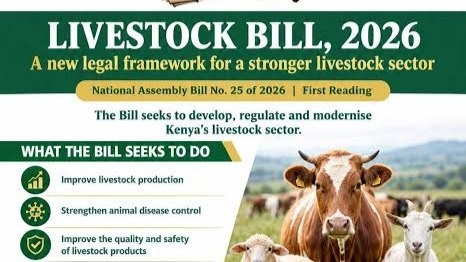
The Kenya Veterinary Association(KVA)has raised concerns over the proposed Livestock bill 2026,warning that contentious provisions could undermine animal disease control systems ,create conflicting regulatory authorities and threaten Kenya's international livestock trade if Parliament fails to address the identified gaps.
The association argues that the proposed legislation could introduce overlapping responsibilities between established institutions and existing statutory bodies ,particularly in animal disease surveillance ,quarantine enforcement ,livestock movement restrictions and veterinary certification.
OVERLAPPING REGULATORY MANDATES
KVA says the proposed framework could create confusion over institutional responsibilities, weakening coordination among authorities responsible for protecting animal health. The association warns that conflicting mandates could delay responses to disease outbreaks, complicate enforcement of quarantine measures and undermine effective monitoring of livestock movements across the country.
DVS AUTHORITY AT THE CENTRE OF THE DEBATE
KVA President Dr Kelvin Osore has called on Parliament to retain the Director of Veterinary Services (DVS) as the overall authority on animal health matters, arguing that a clearly defined chain of command is essential in managing disease outbreaks and safeguarding Kenya's livestock sector.
Osore maintains that allowing multiple institutions to exercise overlapping powers could weaken accountability and create operational challenges when urgent veterinary interventions are required.
INTERNATIONAL LIVESTOCK TRADE AT RISK
The association further warns that weaknesses in disease surveillance, veterinary certification and quarantine management could undermine confidence in Kenya's livestock products within international markets. Such challenges could expose livestock exporters to trade restrictions, certification disputes and reduced access to foreign markets.
KVA is therefore urging Parliament to review and amend the contentious provisions before the Bill advances, insisting that the country's animal health regulatory framework must remain coordinated, accountable and capable of responding effectively to disease threats.
The proposed legislation has consequently placed animal health governance, institutional accountability and the future of Kenya's livestock trade at the centre of the debate.





Show the impact of your work.
Impact stories, campaign videos and community engagement for NGOs and programmes.

More in Health
See all
Most raw chicken sold in Nairobi butcheries carries harmful bacteria, KVA study finds
Senators push for more cash as livestock department faces KSh12.78bn budget gap
Kenya moves to set up a national disease control agency as Ebola response widens
.jpeg)
Bungoma Strengthens Disease Control Programmes Amid Funding Challenges
Pesticide Bill splits industry and green groups as Kenya seeks to protect exports
Global Community Remarks
0