
Pesticide Bill splits industry and green groups as Kenya seeks to protect exports
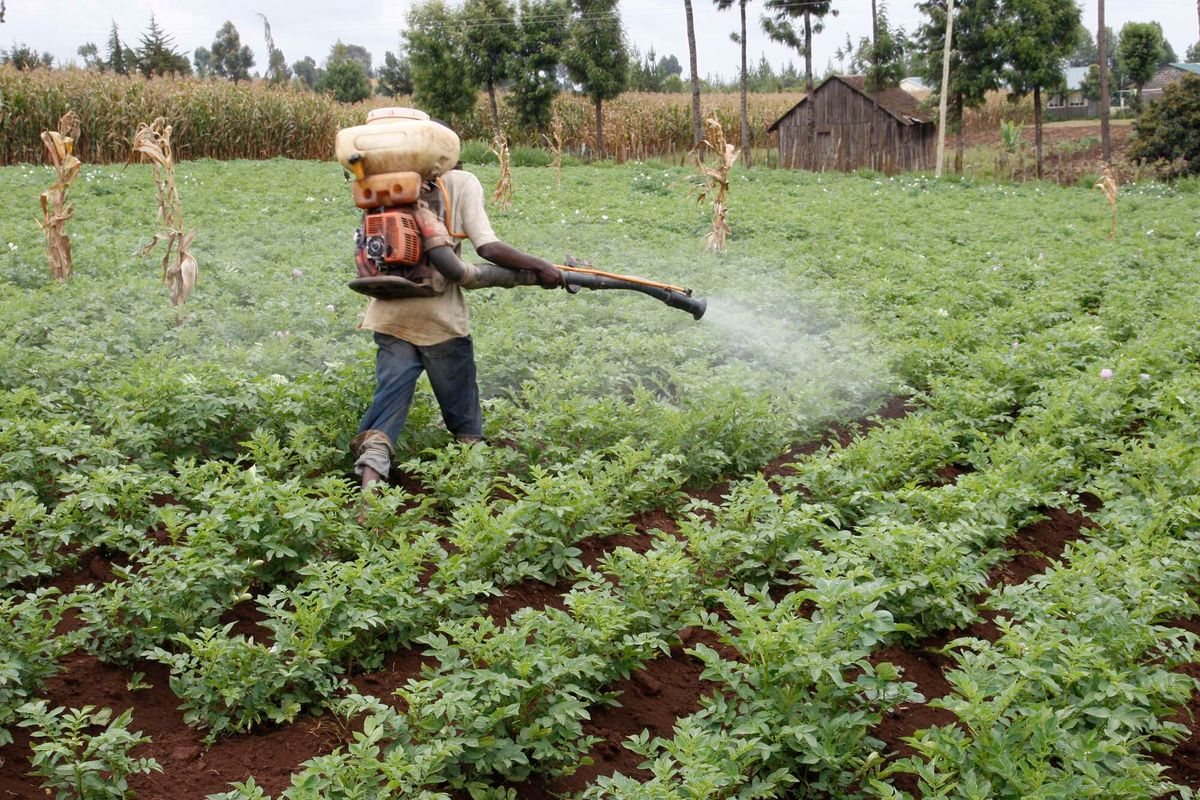
A proposed law to overhaul Kenya's regulation of pesticides has opened a rift between the agrochemicals industry and environmental campaigners. The two sides disagree over how far the country should go in restricting hazardous products, Business Daily reports.
The Pest Control Products Bill, 2025, now before the National Assembly, would replace a law that has been in place for 44 years. It responds to growing worries about the effect of agrochemicals on public health and the environment, and about access to markets for Kenya's fresh produce exports.
A stronger regulator and a role for counties
The Bill proposes a regulatory authority with wider powers. It would assess, register, classify, certify, ban and monitor pesticides from production to disposal. It would also advise on maximum residue limits and track residues in food and the environment.
The Bill also brings pesticide regulation in line with devolution under the 2010 Constitution. County governments would handle local enforcement and license premises. They would also set up sites for pesticide waste and disposal, and train agro-dealers and farmers in responsible use and integrated pest management.
Export losses drive reform
The push comes as Kenyan produce faces growing scrutiny abroad. Agriculture and Food Authority data shows vegetable export earnings fell by 53.83 percent, from Sh50.9 billion in 2023 to Sh23.5 billion in 2024. Over the same period, more consignments were intercepted for exceeding the pesticide residue limits set by the European Union.
The EU also tightened border checks on Kenyan vegetables. Inspection frequency at designated entry points rose from 5 percent to 15 percent.
The National Assembly Committee on Agriculture and Livestock tabled its report on the Bill in October. It said the framework would help Kenya meet its obligations under the Rotterdam, Stockholm and Basel Conventions and World Trade Organisation rules. The committee added that this would reduce the risk of cargo rejections in premium markets.
Industry welcomes the Bill
aaK-GROW/CropLife Kenya represents manufacturers, importers and distributors of pest control products. In its submission to the committee, the lobby appeared largely satisfied with the Bill. It said the Bill sets out clear provisions for banning products in line with international practice. The lobby also proposed that the Bill create room for collaboration with counties on farmer training, waste management and the fight against counterfeits.
Campaigners cite loopholes
Environmental groups argue the Bill is too soft on manufacturers and allows highly toxic substances to stay on sale. They also say it places too much of the burden of managing risk on farmers and consumers.
Christine Gatwiri is project coordinator at the Route to Food Initiative, a programme of the Heinrich Böll Foundation. She objected to reserving a seat for the agrochemicals industry association on the board of the proposed Pest Control Products Authority, warning that it raises the risk of conflicts of interest. She also challenged the Bill's reliance on protective gear, asking how many smallholder farmers can afford it.
Ms Gatwiri said the Bill does not define highly hazardous pesticides. Without a definition, she argued, the regulator cannot identify and phase them out. A 2023 Route to Food study of 310 pesticide products used in Kenya found that 195, or 63 percent, contained one or two such active ingredients. It also found that 44 percent of the volume of pesticides used locally had already been banned in Europe.
A coalition including Route to Food, PELUM Kenya and the Biodiversity and Biosafety Association of Kenya has petitioned Parliament for amendments. Dr Daniel Maingi, director of Growth Partners Africa, said they want a clause barring products banned or severely restricted in their country of origin. Any existing registration of such a product would be revoked within 90 days. The groups also want a precautionary approach, so that a lack of full scientific certainty does not delay protective action.
Warnings over food production
Some experts caution against sweeping bans. In 2021, the Tegemeo Institute, affiliated with Egerton University, estimated that banning about 200 agrochemicals linked to health harms would cut food production by 40 percent. Senior researcher Dr Timothy Njagi was quoted as warning that Kenya could lose the equivalent of 16 percent of its GDP.
Campaigners instead favour biopesticides, integrated pest management and agroecology. The Ministry of Agriculture launched a National Agroecology Strategy in 2024, and at least five counties have adopted agroecology policies.
Pramila Mwibanda of ISFAA Kenya said biopesticide makers face several obstacles. These include high registration costs, multiple regulators and guidelines borrowed from conventional products. She called for a regulatory environment that helps these alternatives scale up.
This story was prepared by the Hamasta Newsdesk with AI assistance, based on reporting by Business Daily. Read the original report. Photo: Business Daily.
Every moment, captured beautifully.
Events, corporate portraits, products and editorial shoots by our newsroom photographers.





More in Business
See all
Mélenchon open to Greens alliance as Tondelier offer splits France's left

Kenya's exports to the US double to Sh116bn as solar cells join coffee and apparel
Tunisia's olive oil exports surge nearly 50% after record harvest

Industry leaders urge Africa to channel pension billions into cash-strapped SMEs

US lawmakers seek tougher AI chip controls as Washington tightens exports
Global Community Remarks
0