
Sweden's Kristersson nears second term after Centre Party backs his coalition
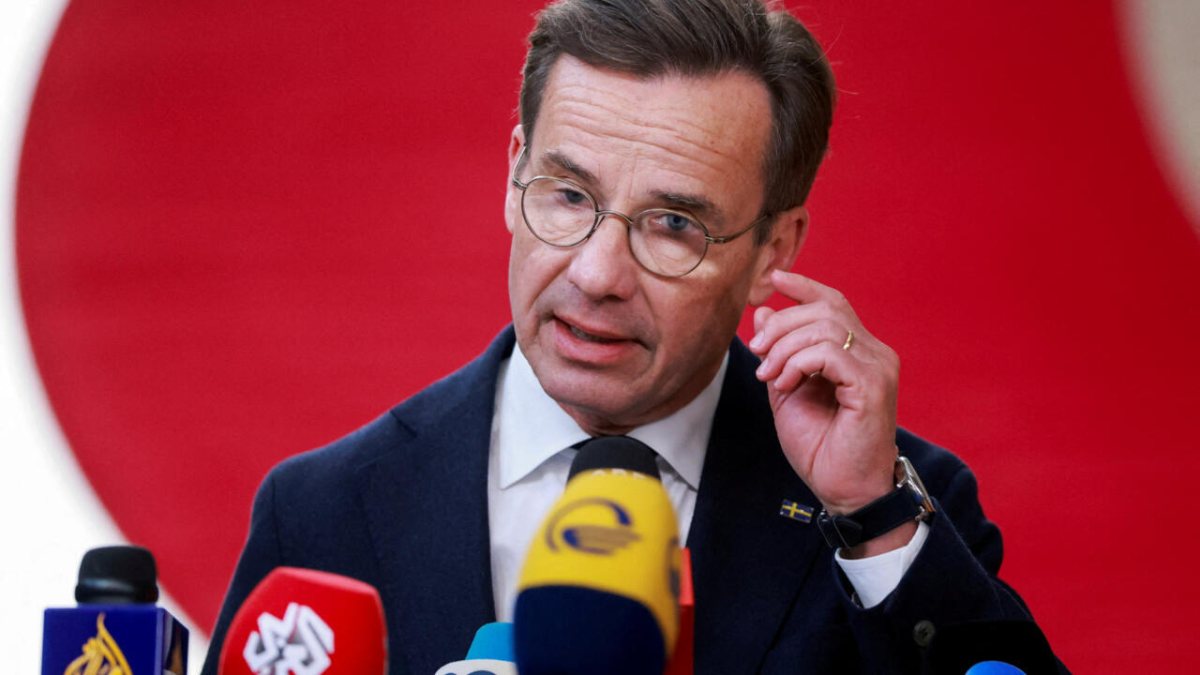
Sweden's outgoing prime minister, Ulf Kristersson, is on course for a second term after the Centre Party threw its weight behind a new four-party minority government he intends to lead, according to France 24.
Members of parliament are scheduled to vote on his nomination on Monday. The vote comes almost three months after a general election that left the country without a clear path to a new administration.
The Centre Party's highest decision-making body gave its approval on Sunday. That endorsement provides the conservative leader with the support he needs to clear Monday's vote, France 24 reported.
A new centre-right line-up
Under the proposal, Kristersson would head a centre-right cabinet drawn from his own Moderates, the Centre Party, the Christian Democrats and the Liberals.
Notably, the far-right Sweden Democrats would not hold seats in the new government. The anti-immigration party propped up Kristersson's 2022-2026 administration and had considerable sway over its policies.
Centre Party leader Elisabeth Thand Ringqvist told reporters that her party had picked the arrangement it believed would give its policies the most influence and serve Sweden best. She described the deal as a coalition in which four parties would share responsibility for running the country.
Months of deadlock
Talks on forming a government had stalled since the September election. In that poll, the centre-left opposition took 176 seats against 173 for Kristersson's right-wing bloc, which then still included the Sweden Democrats.
The four centre-left parties spent more than two months attempting to put together an administration but could not bridge their deep differences, according to France 24.
The Centre Party had for months refused to work with any government shaped by either the Sweden Democrats or the socialist Left Party, complicating efforts on both sides.
Sunday's decision is a significant setback for Social Democratic leader Magdalena Andersson. Until recently, the Centre Party had backed her as its choice for prime minister.
A fragile minority
If Kristersson is confirmed as expected, his government would control only 136 seats in parliament. That is well below the 175 needed for a majority, meaning the coalition would still have to rely on the Sweden Democrats to get some legislation passed.
The Sweden Democrats have indicated they will not stand in Kristersson's way on Monday.
Sweden operates a system known as negative parliamentarism. Under this rule, a nominee for prime minister is approved unless an absolute majority of lawmakers actively votes against them, rather than needing a majority in favour.
Opposition anger
The opposition reacted sharply to the Centre Party's move. Left Party leader Nooshi Dadgostar said on social media that the party had pledged to its voters not to become dependent on the Sweden Democrats, and accused it of going back on that commitment.
Andersson also criticised the outcome.
"This is not what a majority of the Swedish people wanted," the Social Democrat leader said.
Monday's vote is expected to bring an end to one of the longer periods of political uncertainty in recent Swedish politics, though the narrow parliamentary base of the incoming government suggests further negotiations on individual laws lie ahead.
This story was prepared by the Hamasta Newsdesk with AI assistance, based on reporting by France 24. Read the original report. Photo: France 24.





Show the impact of your work.
Impact stories, campaign videos and community engagement for NGOs and programmes.

More in International
See all
Sweden Bars Berry Pickers and Personal Assistants From Work Permits
Democrats secure biggest US House majority since 1992 after North Carolina win
'Legislative razor wire': Democrats seize both House and Senate in historic rout as Texas, Kansas and Maine turn blue
Americans vote tomorrow in midterms that will decide Congress for Trump's last two years as polls favour Democrats
US Democrats say Kirkland & Ellis gave Trump administration $11.8m in free legal work
Global Community Remarks
0