
Treasury's Sh5.4 trillion plan for 2027/28: Recurrent spending crosses Sh4 trillion as development budget shrinks

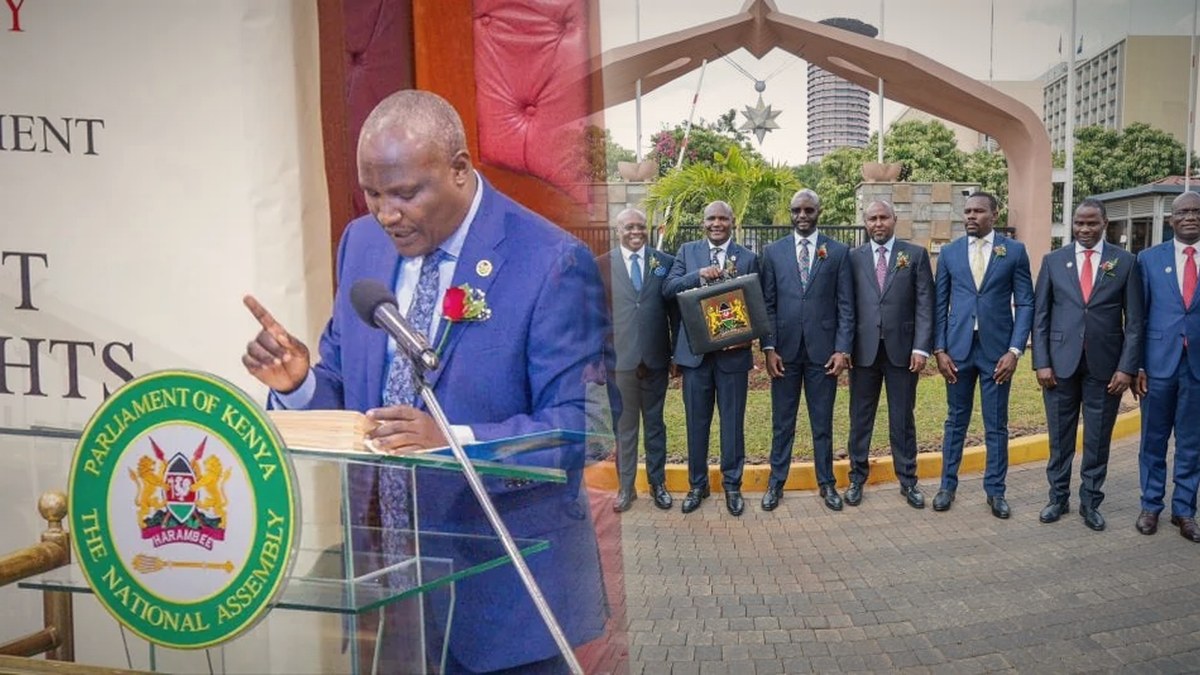
Kenya's government will spend more than Sh4 trillion on salaries, debt costs and day-to-day operations in the 2027/28 financial year for the first time, under a draft budget framework released by the National Treasury that also trims money set aside for roads, dams and other development projects.
The draft 2027 Budget Policy Statement (BPS) puts total expenditure and net lending at about Sh5.416 trillion, equivalent to 23.6 per cent of gross domestic product (GDP). That is up from Sh4.82 trillion in the current 2026/27 budget and higher than the Sh5.323 trillion pencilled in only two months ago in the Budget Review and Outlook Paper.
Recurrent up, development down
Recurrent spending is projected at Sh4.021 trillion, or 17.5 per cent of GDP, up from the Sh3.887 trillion estimated in August. Development spending, by contrast, has been cut to Sh915.8 billion, about 4 per cent of GDP, from Sh958 billion in the earlier paper.
Counties are set to receive Sh473.5 billion in transfers, while Sh5 billion is earmarked for the Contingency Fund, according to Pulse Kenya's reading of the document.
The shift means that a growing share of every shilling the government raises will go to running the state and servicing debt, leaving less for the capital projects that drive long-term growth. The 2027/28 budget will also be implemented in the run-up to and aftermath of the August 2027 General Election.
Revenue rises, but not fast enough
The Treasury expects total revenue, including money retained by agencies, to rise to Sh4.004 trillion, about 17.4 per cent of GDP, up from an earlier projection of Sh3.943 trillion. Ordinary revenue, mainly taxes collected by the Kenya Revenue Authority, is forecast at Sh3.249 trillion.
Even so, spending is growing faster. The fiscal deficit is projected at Sh1.353 trillion, or 5.9 per cent of GDP, wider than the 5.7 per cent projected in August and above the 5.5 per cent targeted for the current year. The Treasury projects the gap to narrow gradually to 5.4 per cent in 2028/29, 5.1 per cent in 2029/30 and 4.9 per cent in 2030/31.
Turning to foreign lenders
The biggest change is in how the shortfall will be financed. Net domestic borrowing has been cut to Sh929.1 billion from Sh1.085 trillion, while net external borrowing has been raised to Sh423.8 billion, from Sh235.9 billion in the earlier outlook.
The move would ease some of the government's pressure on the local debt market, where heavy state borrowing has competed with businesses and households for credit. But it increases exposure to foreign loans just as the International Monetary Fund has warned about the rising cost of borrowing for African governments.
The Treasury says it will support revenue through tax-policy and revenue-administration reforms, and that its strategy is to restrain spending, raise collections and slow the growth of debt while protecting essential services.
Grey list commitments
The draft also restates the government's push to get Kenya off the Financial Action Task Force (FATF) grey list, on which the country was placed in February 2024. The Business Daily reports that the Treasury commits to improving the disclosure of the real owners of companies and trusts, and to stepping up money laundering investigations and prosecutions. Financial Reporting Centre Director-General Naphtaly Rono told Parliament this month that Kenya had addressed 19 of 21 items on its FATF action plan and could exit the list by April 2027.
Public comments
The figures remain estimates and may change as the budget process proceeds. The Treasury has invited the public to comment on the draft under the Public Finance Management Act. Pulse Kenya reports the window closes on October 28 and that the final statement must be tabled in Parliament by November 16 under a revised calendar that takes the election into account; other outlets have cited November 16 as the deadline for comments.
Photos: The Eastleigh Voice, Capital FM


Grow an audience that listens.
Social media management, digital campaigns and online storytelling that converts.



More in Business
See all
Taxpayers face Sh180bn bill if Rironi-Mau Summit highway deal is ever cancelled, Treasury says
NSE adds 333,000 investors in nine months as stockbrokers rake in up to Sh14bn from bull run
Firms and wealthy Kenyans pile Sh1.52 trillion into dollar accounts as election and global shocks loom
Kenya's public debt climbs to Sh13.48 trillion, up 55% since Ruto took office
Housing Board cancels sale of shops at Eldoret Pioneer estate, nine days after Ruto handed over keys
KenGen names commercial boss Ronoh Kibet as next CEO to succeed retiring Peter Njenga
Global Community Remarks
0