
Olympic and world marathon champion Peres Jepchirchir provisionally suspended after EPO test

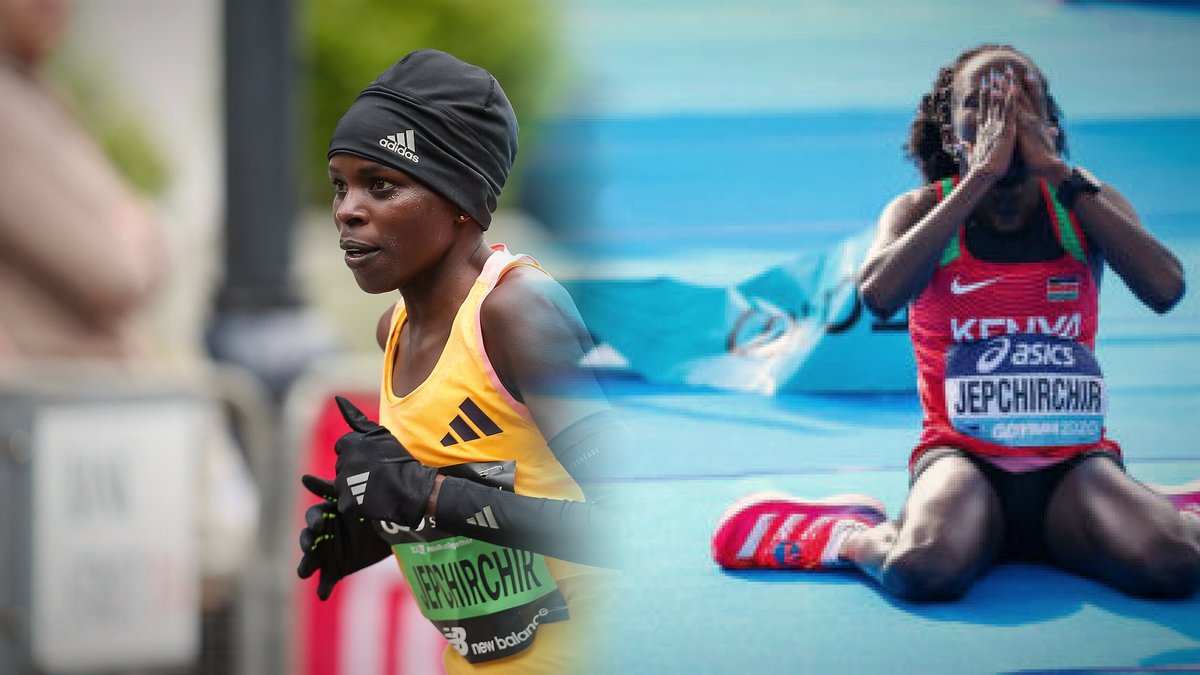
Kenya's athletics fraternity is reeling after reigning world marathon champion and Tokyo Olympic gold medallist Peres Jepchirchir was provisionally suspended by the Athletics Integrity Unit (AIU) over a positive test for erythropoietin (EPO), one of the most notorious performance-enhancing substances in endurance sport.
The AIU, the independent body that manages anti-doping for World Athletics, announced the suspension on Friday, October 23. It said an out-of-competition sample collected from the 33-year-old in Kenya, before she won the Sydney Marathon on August 30, had returned an adverse analytical finding for EPO.
A provisional suspension is not a final verdict. It bars the athlete from competing while the case is heard, and Jepchirchir retains the right to contest the finding and to due process before any sanction is imposed.
One of the sport's most decorated runners
Few Kenyan athletes of her generation have collected as many major titles. Jepchirchir won Olympic marathon gold at the Tokyo Games held in 2021 and, weeks later, the New York City Marathon. She went on to win Boston in 2022 and London in 2024, and added the Sydney title this year, a race she won in 2:18:31, more than three minutes ahead of compatriot Irine Cheptai, according to Australia's AAP news agency.
She is also the reigning world champion, having outkicked Ethiopia's Tigst Assefa to win the 2025 world title in Tokyo in 2:24:43, and a three-time world half marathon champion, with victories in Cardiff (2016), Gdynia (2020) and Riga (2023), The Standard reported. Her recent seasons had been interrupted by a string of injuries, including hip, lower-leg and ankle problems and a stress fracture after the Valencia Marathon last December.
Because the sample predates her Sydney victory, that title could be annulled if a ban is eventually confirmed.
Agent: 'It's only right'
Her Italian agent, Gianni Demadonna, said he felt terrible about the development. In a statement carried by AAP, he said: "it's only right that an athlete who uses the performance enhancing drugs should be disqualified."
Demadonna also gave the US running site LetsRun an account of the day the sample was taken, which local outlet athletics.co.ke summarised on Saturday. According to the agent, the sample was collected on July 17, and doping control officers waited about two hours after a security guard stopped them from entering her home. He said an AIU representative in Kenya called him to warn: "If Peres does not open the door, we have to take action." He said the athlete later explained she had not opened the door "because they haven't said who they are." The testers eventually collected the sample. The AIU itself has not publicly given a collection date, and the account comes only from the agent.
Sydney Marathon organisers said they were "extremely disappointed" to learn of the suspension. "Jepchirchir is entitled to due process, and we will make no further comment on the case until that process has concluded," they said, adding: "Our commitment to clean sport is unwavering."
Another blow for Kenya
The case lands just months after Kenya was awarded the right to host the 2029 World Athletics Championships in Nairobi. Barnaba Korir, Athletics Kenya's youth development director and a vice-president of the National Olympic Committee of Kenya, told AFP it was "a big disappointment coming soon after we were awarded the World Athletics Championship in 2029." He added: "We don't know what is happening with our athletes."
Jepchirchir becomes the second major Kenyan marathon star caught up in a doping case in roughly a year, after former world record holder Ruth Chepngetich was banned for three years last October after admitting to using a prohibited substance. More than 140 Kenyan athletes have been sanctioned since the AIU was set up in 2017, and the Anti-Doping Agency of Kenya (ADAK) has said it is stepping up testing.
The AIU will now take the case through its disciplinary process. Under the World Anti-Doping Code, the standard sanction for a first intentional violation involving a substance such as EPO is a four-year ban.
Photos: Katie Chan / Wikimedia Commons (CC BY-SA 4.0); The Standard
Every moment, captured beautifully.
Events, corporate portraits, products and editorial shoots by our newsroom photographers.





More in Sports
See all
Antonelli wins US Grand Prix and can be crowned F1 champion in Mexico with a ninth-place finish

Harry Kane wins 2026 Ballon d'Or in London, first Englishman to claim the award in 25 years

Obiri and Kipruto lead Kenyan charge as final New York City Marathon fields confirmed, Hassan out

Athletics Kenya backs AIU over Jepchirchir suspension, vows zero tolerance as foreign runners demand tougher action

Kwemoi breaks Venice Marathon record as Kenyans win in Venice and Casablanca, Biwott third in Frankfurt
Kenya U-16 rugby boys to take on world's top schools at HSBC International Schools Sevens in London
Global Community Remarks
0