
Kenya says it has not endorsed UAE's Lana Nusseibeh for UN Secretary-General after Mudavadi statement

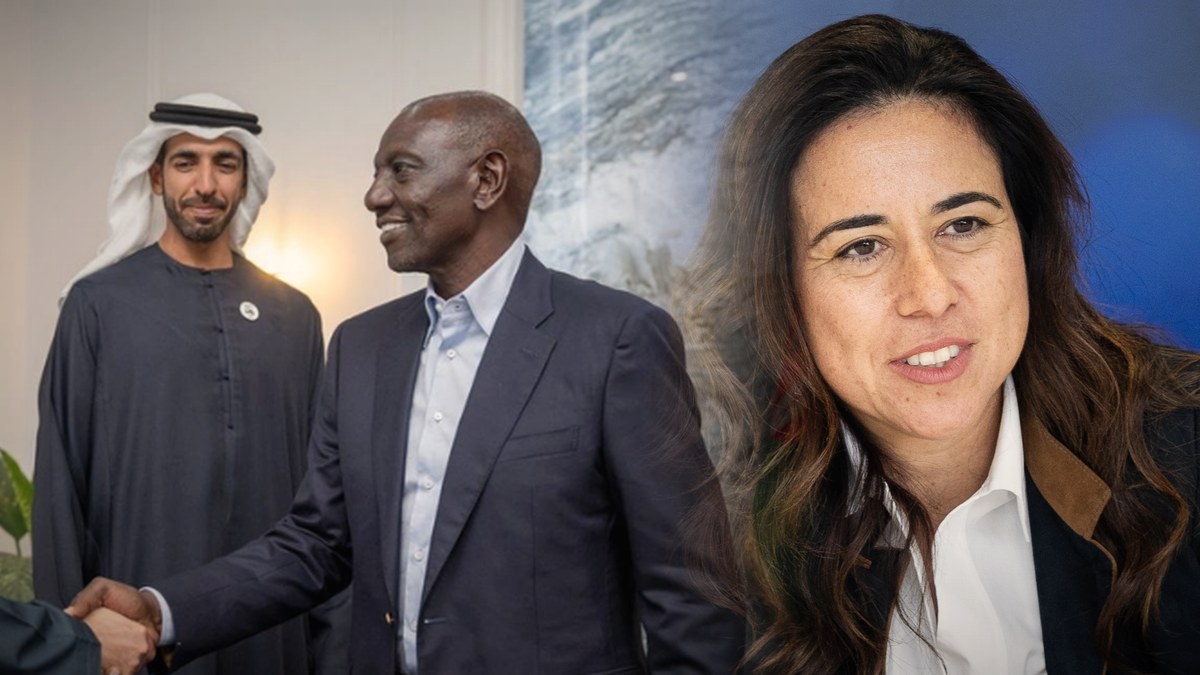
Kenya has denied that it has endorsed United Arab Emirates diplomat Lana Nusseibeh in the race to succeed António Guterres as United Nations Secretary-General, a day after a Foreign Affairs ministry announcement that Prime Cabinet Secretary Musalia Mudavadi had welcomed her candidacy sparked claims that Nairobi had picked a side.
In a statement on Tuesday, October 27, Foreign Affairs Principal Secretary Korir Sing'oei said the government had not thrown its weight behind any of the contenders and was still following the campaigns.
"Quite the contrary, Kenya has not expressed support for any candidate at this point. We are following keenly the ongoing campaigns for UNSG, including the expression of interest by new candidates," Sing'oei said, as quoted by The Kenya Times.
The PS added that he was confident a candidate able to lead the UN at what he called a critical juncture would eventually win the backing of Kenya and most other member states.
How the confusion arose
Claims that Kenya had endorsed the Emirati diplomat spread on social media on Monday, October 26, Kenyans.co.ke reported. They gained traction after the Office of the Ministry of Foreign Affairs announced that Mudavadi, who doubles as Foreign Affairs Cabinet Secretary, had welcomed Nusseibeh's candidature on Kenya's behalf, citing her diplomatic experience.
"Kenya looks forward to working with her to strengthen the partnership with the United Nations and Africa," Mudavadi was quoted as saying.
The statement came days after President William Ruto hosted a senior UAE delegation at State House, Nairobi. The Kenya Times identified the visiting official as Sheikh Shakhboot bin Nahyan Al Nahyan, Minister of State in the UAE's Ministry of Foreign Affairs. Some outlets went as far as reporting that Kenya had backed the UAE nominee, prompting Tuesday's clarification.
A crowded, deadlocked race
The UAE formally nominated Nusseibeh, its Minister of State for Foreign Affairs and a former Permanent Representative to the UN, last week. International outlets including Semafor and Al-Monitor reported that the nomination was made after several rounds of Security Council straw polls failed to produce a candidate acceptable to all five permanent members.
Her entry has stirred debate because, by custom, the post rotates between regions and many member states consider it Latin America's turn. Costa Rica's Rebeca Grynspan, who heads UN Trade and Development, and Argentina's Rafael Grossi, Director-General of the International Atomic Energy Agency, are among the leading contenders. Nusseibeh would be the first woman to hold the post.
Closer to home, Uganda's former diplomat and politician Olara Otunnu is also in the race, and Kenyans.co.ke noted concerns that any perceived Kenyan endorsement of the UAE candidate could cause friction with Kampala.
Why Nairobi's position matters
Guterres leaves office on December 31, 2026, after two five-year terms, and his successor is due to take over in January 2027. Under the UN Charter, the General Assembly appoints the Secretary-General on the recommendation of the Security Council.
Kenya has a large stake in the outcome. Nairobi hosts the United Nations Office at Nairobi, the only UN headquarters in the Global South, as well as the headquarters of the UN Environment Programme and UN-Habitat. In May this year, Ruto and Guterres launched a Sh44 billion (about US$340 million) expansion of the Gigiri complex.
The government has also been a vocal advocate of reforms to give Africa permanent representation on the Security Council, a cause any incoming Secretary-General will be pressed to champion.
Ruto's administration has cultivated close ties with Abu Dhabi, including trade and investment agreements, and the President has made several visits to the Gulf state. Tuesday's clarification suggests Nairobi wants to keep its options open as the contest heads into its decisive weeks.
Photos: President Ruto with a UAE delegation at State House, Nairobi (PCS); Lana Nusseibeh (Jennifer Jacquemart/European Union, Wikimedia Commons, CC BY 4.0)


Take your event live to thousands.
Multi-camera live streams, panel discussions and digital broadcasts with professional crews.




More in Politics
See all
Why Ruto's four-day Gusii tour was called off, and the Serena meeting rattling Matiang'i's camp
New poll: Ruto leads Sifuna by a single point as Linda Mwananchi overtakes UDA in party ranking

Runyenjes MP Karemba says he won't run on UDA ticket in 2027, to name new party in two months

Ruto pegs 50,000 January internships at Sh20,000-Sh25,000 a month, warns 'brokers' over KPC shares
Otieno Mak'Onyango, ex-Alego Usonga MP and journalist detained after 1982 coup attempt, dies in Nairobi

Livestreaming row heads to court as opposition vows polling-station tallies and Kindiki says State won't make 2027 vote 'opaque'
Global Community Remarks
0